

Cuco Bayo vs Cuco Chico
Cacomantis sonneratii frente a Cuculus poliocephalus
Juega un quiz con Cuco Bayo y Cuco Chico
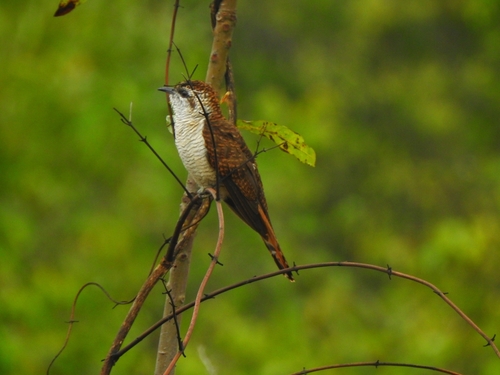 Cuco Bayo
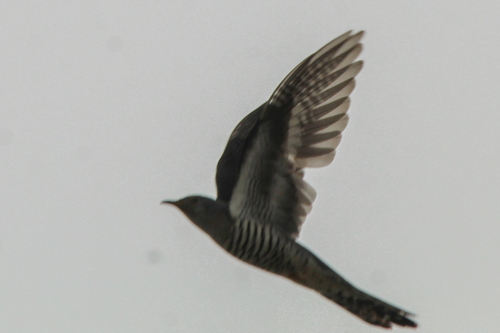 Cuco Chico
En breve
La marca de campo más confiable para separar el Cuco Bayo del Cuco Chico es el audaz supercilio blanco (ceja) y las partes superiores rufas fuertemente barradas del Cuco Bayo, que contrastan con la apariencia mucho más sencilla, menos rufa y más uniformemente grisácea del Cuco Chico. Los jóvenes Cuco Bayo también muestran bordes de plumas blancos y un mandíbulas inferior pálida, mientras que los jóvenes Cuco Chico carecen de estas características. En vuelo o posados, la cola del Cuco Bayo está distintivamente barrada con una banda negra subterminal y puntas blancas, a diferencia de la cola más uniforme del Cuco Chico. La estructura también ayuda: el Cuco Bayo tiene un pico más largo, ligeramente curvado hacia abajo y un aspecto generalmente más compacto y de cola corta. Los llamados son muy diferentes, con el Cuco Bayo emitiendo un silbido agudo de cuatro notas, mientras que la canción del Cuco Chico es una frase clásica de 'cuco' repetida.
Consejos de identificación
- Supercilio blanco (ceja): El Cuco Bayo siempre muestra un audaz supercilio blanco sobre una línea ocular oscura; el Cuco Chico carece de esto, teniendo una cara sencilla. Esto es visible en aves posadas de todas las edades.
- Partes superiores rufas y barradas: El Cuco Bayo adulto es de un brillante color rufa o bayo arriba con amplias barras oscuras en la cabeza y la espalda; el Cuco Chico es mucho más sencillo y grisáceo o marrón arriba, con pocas o ninguna barra.
- Patrón de la cola: El Cuco Bayo tiene una cola graduada con un centro marrón oscuro, una banda negra subterminal y puntas blancas en las plumas. La cola del Cuco Chico es más uniforme, careciendo de barras audaces y puntas blancas. Esto es visible tanto en aves posadas como volando.
- Marcas juveniles: El joven Cuco Bayo muestra bordes blancos en las plumas del cuerpo superior y un mandíbulas inferior pálida, que están ausentes en los jóvenes Cuco Chico. Busca estas características en aves jóvenes a finales del verano o principios del otoño.
- Forma del pico: El Cuco Bayo tiene un pico largo, ligeramente curvado hacia abajo, con una mandíbulas superior negra y una base gris verdosa en la mandíbulas inferior (pálida en los juveniles). El pico del Cuco Chico es más corto y recto.
- Partes inferiores: El Cuco Bayo tiene partes inferiores blanquecinas con finas estriaciones; el Cuco Chico es más uniforme por debajo, careciendo de finas estrías.
- Color del iris: El Cuco Bayo tiene un iris amarillo; el iris del Cuco Chico es generalmente oscuro, pero esto es difícil de ver en el campo.
- Color de las patas: El Cuco Bayo tiene tarsos grises; esta no es una marca de campo fuerte, pero puede ayudar en vistas cercanas.
- Estructura general: El Cuco Bayo es compacto y de cola corta en comparación con el Cuco Chico, que tiene alas ligeramente más largas y es más delgado.
- Comportamiento de posado: El Cuco Bayo a menudo canta desde ramas expuestas, especialmente en la temporada de cría; el Cuco Chico es más secreto y menos propenso a posarse abiertamente.
- Hábitat: Si se encuentra en un bosque montañoso bien arbolado en el subcontinente indio durante el monzón, es más probable que sea el Cuco Bayo; el Cuco Chico es más migratorio y está más extendido, especialmente en Asia Oriental y los Himalayas.
- Voz: El silbido de cuatro notas del Cuco Bayo es muy diferente de la canción clásica de 'cuco' del Cuco Chico. Si escuchas el llamado, la identificación es sencilla.
- Estacionalidad: El Cuco Bayo a menudo está presente en India durante el monzón, mientras que el Cuco Chico es un visitante de verano en los Himalayas y pasa el invierno en África y Sri Lanka.
- Sexos: Ambas especies son sexualmente monomórficas; no confíes en las diferencias de sexo para la identificación.
- Trampas: Los morfos hepáticos (rufos) de otros cucos Cacomantis pueden parecerse al Cuco Bayo, pero el Cuco Chico no muestra estos morfos hepáticos ni fuertes barras. Siempre verifica el supercilio blanco y el patrón de la cola.
Tamaño
Ambas especies son similares en longitud total (alrededor de 22 cm para el Cuco Bayo), y son cucos de tamaño pequeño a mediano. El Cuco Bayo es aproximadamente del mismo tamaño que otros cucos Cacomantis, mientras que el Cuco Chico también es pequeño pero puede parecer ligeramente más delgado y con alas más largas. No hay una diferencia de tamaño fuerte para usar en el campo; la estructura y el plumaje son más confiables.
Plumaje
El joven Cuco Bayo es distintivo con bordes blancos en las plumas del cuerpo superior y un mandíbulas inferior pálida; estas características no están presentes en los jóvenes Cuco Chico. Los adultos del Cuco Bayo son de un brillante color rufa o bayo arriba, con audaces barras oscuras en la cabeza y la espalda, y un prominente supercilio blanco sobre una línea ocular oscura. El ala es más oscura, y la cola es graduada con un centro marrón oscuro, banda negra subterminal y puntas blancas. Las partes inferiores son blanquecinas con finas estriaciones. En contraste, los adultos del Cuco Chico son mucho más sencillos, con partes superiores grisáceas o marrones, careciendo del fuerte rufa y las barras, y no muestran un supercilio blanco. Su cola está menos marcada, careciendo de las audaces barras y puntas blancas. Los sexos son similares en ambas especies, pero el patrón del Cuco Bayo siempre es más llamativo.
Comportamiento
Ambos son parásitos de cría y pueden verse solos o cantando desde posaderos expuestos. Los machos del Cuco Bayo a menudo cantan desde ramas prominentes durante la temporada de cría, y su forrajeo implica tanto la recolección como emboscadas aéreas para insectos. El Cuco Chico también se escucha a menudo más que se ve, pero tiende a ser más secreto y menos propenso a posarse al aire libre durante largos períodos. El estilo de vuelo no se contrasta fuertemente en las notas, pero el Cuco Bayo puede parecer más compacto y de cola corta.
Hábitat
El Cuco Bayo se encuentra en áreas bien arboladas, principalmente en colinas bajas y bosques del subcontinente indio y el sudeste asiático. Se ve más a menudo en bosques montañosos y prefiere la cobertura densa. El Cuco Chico es nativo de Asia Oriental y los Himalayas, invernando tan lejos como el este de África y Sri Lanka, y es más migratorio. Se puede encontrar en una variedad de hábitats boscosos, pero está menos ligado a terrenos montañosos que el Cuco Bayo. Es posible que haya superposición en Sri Lanka y partes de los Himalayas, pero el Cuco Bayo es más probable que se encuentre en bosques montañosos, especialmente durante el monzón.
Voz
El Cuco Bayo emite un silbido distintivo y agudo de cuatro notas, transcrito como 'wee-ti wee-tee' o 'smoke-yer-pepper', con cada nota cayendo en tono. La canción del Cuco Chico es una frase clásica de 'cuco' repetida, muy diferente en ritmo y tono. La voz es un separador altamente confiable si se escucha bien.