

Motmot

クリイロヒメカッコウ 対 ホトトギス

Cacomantis sonneratii 対 Cuculus poliocephalus

クリイロヒメカッコウとホトトギスのクイズ
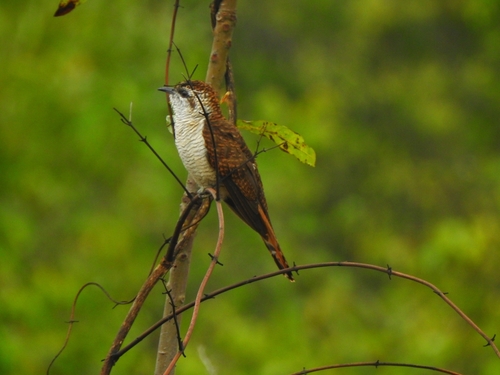
クリイロヒメカッコウ (Cacomantis sonneratii) クリイロヒメカッコウ
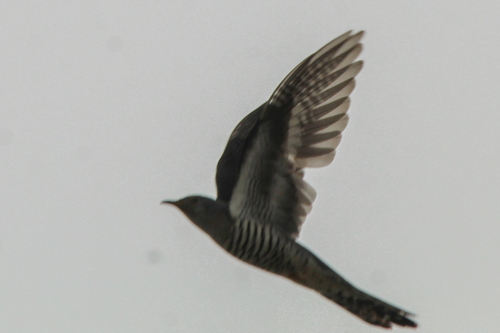
ホトトギス (Cuculus poliocephalus) ホトトギス

メディア

読み込み中…

要点

バンドヒメカッコウとホトトギスを区別する最も信頼できるフィールドマークは、バンドヒメカッコウの太くて白いスーペルシリウム(眉毛)と強く縞模様のある赤褐色の上面であり、これはホトトギスのはるかに地味で、赤褐色が少なく、より均一な灰色の外観と対照的です。幼鳥のバンドヒメカッコウは白い羽毛の縁取りと淡い下顎を示しますが、ホトトギスの幼鳥にはこれらの特徴がありません。飛んでいる時や止まっている時、バンドヒメカッコウの尾は明確に縞模様があり、終端近くに黒い帯と白い先端がありますが、ホトトギスの尾はより均一です。構造も役立ちます:バンドヒメカッコウは長く、わずかに下向きのくちばしを持ち、一般的によりコンパクトで短尾の外観です。鳴き声は非常に異なり、バンドヒメカッコウは高音の4音の口笛を発し、ホトトギスの歌はクラシックな繰り返しの「ククー」というフレーズです。

識別のコツ

  1. 白いスーペルシリウム(眉毛): バンドヒメカッコウは常に暗いアイラインの上に太く白い眉毛を示します;ホトトギスはこれを欠き、地味な顔をしています。これはすべての年齢の止まっている鳥に見られます。
  2. 赤褐色で縞模様のある上面: 成鳥のバンドヒメカッコウは明るい赤褐色またはベイ色で、頭部と背中に広い暗い縞模様があります;ホトトギスははるかに地味で、上面は灰色または茶色がかっていますが、縞模様はほとんどありません。
  3. 尾の模様: バンドヒメカッコウは暗い茶色の中心、終端近くの黒い帯、羽毛の白い先端を持つ段階的な尾を持っています。ホトトギスの尾はより均一で、はっきりした縞模様や白い先端がありません。これは止まっている鳥と飛んでいる鳥の両方で見られます。
  4. 幼鳥のマーク: 幼鳥のバンドヒメカッコウは上体の羽毛に白い縁取りと淡い下顎を示し、ホトトギスの幼鳥にはこれらがありません。晩夏または初秋の若い鳥でこれらを探してください。
  5. くちばしの形: バンドヒメカッコウは黒い上顎と緑がかった灰色の下顎の基部(幼鳥では淡い)を持つ長く、わずかに下向きのくちばしを持っています。ホトトギスのくちばしは短く、まっすぐです。
  6. 腹部: バンドヒメカッコウは細かい縞模様のある白っぽい腹部を持っています;ホトトギスはより均一で、細かい縞模様がありません。
  7. 虹彩の色: バンドヒメカッコウは黄色の虹彩を持っています;ホトトギスの虹彩は通常暗いですが、これはフィールドでは見えにくいです。
  8. 脚の色: バンドヒメカッコウは灰色のタルシを持っています;これは強いフィールドマークではありませんが、近くで見ると役立つかもしれません。
  9. 全体の構造: バンドヒメカッコウは、わずかに長い翼を持つスリムなホトトギスと比較して、コンパクトで短尾です。
  10. 止まる行動: バンドヒメカッコウは繁殖期に特に露出した枝から歌うことが多いです;ホトトギスはより秘密主義で、オープンに止まる可能性が低いです。
  11. 生息地: インド亜大陸のモンスーンの間に良く木が生えた丘の森林にいる場合、バンドヒメカッコウの方が可能性が高いです;ホトトギスはより移動性があり、特に東アジアやヒマラヤで広く分布しています。
  12. 声: バンドヒメカッコウの4音の口笛は、ホトトギスのクラシックな「ククー」歌とは非常に異なります。呼び声を聞いた場合、識別は簡単です。
  13. 季節性: バンドヒメカッコウはモンスーンの間にインドにしばしば現れますが、ホトトギスはヒマラヤの夏の訪問者で、アフリカやスリランカで冬を越します。
  14. 性別: 両種は性別的に単形であり、識別のために性差に頼らないでください。
  15. 落とし穴: 他のCacomantisカッコウの肝色(赤褐色)型はバンドヒメカッコウに似ることがありますが、ホトトギスはこれらの肝色型や強い縞模様を示しません。常に白いスーペルシリウムと尾の模様を確認してください。

大きさ

両種は全体の長さが似ており(バンドヒメカッコウは約22 cm)、小型から中型のカッコウです。バンドヒメカッコウは他のCacomantisカッコウとほぼ同じサイズですが、ホトトギスも小型ですが、わずかにスリムで長い翼に見えることがあります。フィールドで使用するための強いサイズ差はなく、構造と羽毛がより信頼性があります。

羽色

幼鳥のバンドヒメカッコウは上体の羽毛に白い縁取りと淡い下顎があり、これらの特徴はホトトギスの幼鳥には存在しません。成鳥のバンドヒメカッコウは明るい赤褐色またはベイ色で、頭部と背中に大胆な暗い縞模様があり、暗いアイラインの上に目立つ白いスーペルシリウムがあります。翼はより暗く、尾は暗い茶色の中心、終端近くの黒い帯、白い先端を持つ段階的な形状です。腹部は細かい縞模様のある白っぽいです。それに対して、ホトトギスの成鳥ははるかに地味で、灰色または茶色がかった上面を持ち、強い赤褐色や縞模様がなく、白いスーペルシリウムも示しません。彼らの尾はあまりはっきりとした模様がなく、はっきりした縞模様や白い先端がありません。両種の性別は似ていますが、バンドヒメカッコウの模様は常により際立っています。

行動

両種は抱卵寄生者であり、単独で見られたり、露出した止まり木から歌ったりすることがあります。バンドヒメカッコウのオスは繁殖期に目立つ枝から歌うことが多く、彼らの採餌は昆虫の採集と空中での急襲を含みます。ホトトギスもよく聞かれますが、見られることは少なく、より秘密主義で、長時間オープンに止まる可能性が低いです。飛行スタイルは音符の中で強く対比されることはありませんが、バンドヒメカッコウはよりコンパクトで短尾に見えることがあります。

生息環境

バンドヒメカッコウは、主にインド亜大陸と東南アジアの低い丘や森林の良く木が生えた地域に生息しています。丘の森林で最もよく見られ、密なカバーを好みます。ホトトギスは東アジアとヒマラヤに生息し、東アフリカやスリランカまで冬を越し、より移動性があります。さまざまな森林生息地で見られますが、バンドヒメカッコウほど丘陵地形に依存していません。スリランカやヒマラヤの一部で重複が可能ですが、バンドヒメカッコウは特にモンスーンの間に丘の森林で見られる可能性が高いです。

声

バンドヒメカッコウは、各音が音程を下げる特徴的で高音の4音の口笛を発し、「ウィーティ ウィーティ」または「スモーク・ヤー・ペッパー」と書き取られます。ホトトギスの歌はクラシックな繰り返しの「ククー」というフレーズで、リズムとトーンが非常に異なります。声は、よく聞こえた場合、非常に信頼できる識別要因です。

より良い説明を送る

比較と同じ項目を使ってください。文章はすぐに公開されます。

The most reliable field mark to separate Banded Bay Cuckoo from Lesser Cuckoo is the bold white supercilium (eyebrow) and strongly barred rufous upperparts of the Banded Bay Cuckoo, which contrast with the much plainer, less rufous, and more uniformly grayish appearance of the Lesser Cuckoo. Juvenile Banded Bay Cuckoos also show white feather fringes and a pale lower mandible, while Lesser Cuckoo juveniles lack these features. In flight or perched, the Banded Bay Cuckoo’s tail is distinctly barred with a subterminal black band and white tips, unlike the Lesser Cuckoo’s more uniform tail. Structure also helps: Banded Bay Cuckoo has a longer, slightly decurved bill and a generally more compact, short-tailed look. Calls are very different, with Banded Bay Cuckoo giving a high-pitched, four-note whistle, while Lesser Cuckoo’s song is a classic, repeated 'cuckoo' phrase.

  1. White supercilium (eyebrow): Banded Bay Cuckoo always shows a bold white eyebrow above a dark eye-line; Lesser Cuckoo lacks this, having a plain face. This is visible on perched birds of all ages.
  2. Rufous and barred upperparts: Adult Banded Bay Cuckoo is bright rufous or bay above with broad dark barring across the head and back; Lesser Cuckoo is much plainer and grayer or brownish above, with little or no barring.
  3. Tail pattern: Banded Bay Cuckoo has a graduated tail with a dark brown center, a subterminal black band, and white tips to the feathers. Lesser Cuckoo’s tail is more uniform, lacking bold barring and white tips. This is visible in both perched and flying birds.
  4. Juvenile marks: Juvenile Banded Bay Cuckoo shows white fringes to the upper body feathers and a pale lower mandible, which are absent in Lesser Cuckoo juveniles. Look for these on young birds in late summer or early autumn.
  5. Bill shape: Banded Bay Cuckoo has a long, slightly decurved bill with a black upper mandible and greenish-grey base to the lower mandible (pale in juveniles). Lesser Cuckoo’s bill is shorter and straighter.
  6. Underparts: Banded Bay Cuckoo has whitish underparts with fine striations; Lesser Cuckoo is more uniform below, lacking fine streaking.
  7. Iris color: Banded Bay Cuckoo has a yellow iris; Lesser Cuckoo’s iris is usually dark, but this is hard to see in the field.
  8. Leg color: Banded Bay Cuckoo has grey tarsi; this is not a strong field mark but may help in close views.
  9. Overall structure: Banded Bay Cuckoo is compact and short-tailed compared to the slightly longer-winged, slimmer Lesser Cuckoo.
  10. Perching behavior: Banded Bay Cuckoo often sings from exposed branches, especially in the breeding season; Lesser Cuckoo is more secretive and less likely to perch openly.
  11. Habitat: If in well-wooded hill forest in the Indian subcontinent during the monsoon, Banded Bay Cuckoo is more likely; Lesser Cuckoo is more migratory and widespread, especially in East Asia and the Himalayas.
  12. Voice: Banded Bay Cuckoo’s four-note whistle is very different from the classic 'cuckoo' song of Lesser Cuckoo. If you hear the call, identification is straightforward.
  13. Seasonality: Banded Bay Cuckoo is often present in India during the monsoon, while Lesser Cuckoo is a summer visitor to the Himalayas and winters in Africa and Sri Lanka.
  14. Sexes: Both species are sexually monomorphic; do not rely on sex differences for identification.
  15. Pitfalls: Hepatic (rufous) morphs of other Cacomantis cuckoos can resemble Banded Bay Cuckoo, but Lesser Cuckoo does not show these hepatic morphs or strong barring. Always check for the white supercilium and tail pattern.

Both species are similar in overall length (about 22 cm for Banded Bay Cuckoo), and are small to medium-sized cuckoos. Banded Bay Cuckoo is about the same size as other Cacomantis cuckoos, while Lesser Cuckoo is also small but may appear slightly slimmer and longer-winged. There is no strong size difference to use in the field; structure and plumage are more reliable.

Juvenile Banded Bay Cuckoo is distinctive with white fringes to the upper body feathers and a pale lower mandible; these features are not present in Lesser Cuckoo juveniles. Adults of Banded Bay Cuckoo are bright rufous or bay above, with bold dark barring across the head and back, and a prominent white supercilium over a dark eye-line. The wing is darker, and the tail is graduated with a dark brown center, subterminal black band, and white tips. The underparts are whitish with fine striations. In contrast, Lesser Cuckoo adults are much plainer, with grayish or brownish upperparts, lacking the strong rufous and barring, and do not show a white supercilium. Their tail is less distinctly marked, lacking the bold barring and white tips. Sexes are alike in both species, but the Banded Bay Cuckoo’s patterning is always more striking.

Both are brood parasites and can be seen singly or singing from exposed perches. Banded Bay Cuckoo males often sing from prominent branches during the breeding season, and their foraging involves both gleaning and aerial sallies for insects. Lesser Cuckoo is also often heard rather than seen, but tends to be more secretive and less likely to perch out in the open for long periods. Flight style is not strongly contrasted in the notes, but Banded Bay Cuckoo may appear more compact and short-tailed.

Banded Bay Cuckoo is found in well-wooded areas, mainly in lower hills and forests of the Indian subcontinent and Southeast Asia. It is most often seen in hill forests and is partial to dense cover. Lesser Cuckoo is native to East Asia and the Himalayas, wintering as far as East Africa and Sri Lanka, and is more migratory. It can be found in a variety of wooded habitats, but is less tied to hilly terrain than Banded Bay Cuckoo. Overlap is possible in Sri Lanka and parts of the Himalayas, but Banded Bay Cuckoo is more likely in hill forests, especially during the monsoon.

Banded Bay Cuckoo gives a distinctive, high-pitched four-note whistle, transcribed as 'wee-ti wee-tee' or 'smoke-yer-pepper', with each note falling in pitch. Lesser Cuckoo’s song is a classic, repeated 'cuckoo' phrase, very different in rhythm and tone. Voice is a highly reliable separator if heard well.

変更を破棄しますか?

保存していない編集があります。今離れると失われます。

クリイロヒメカッコウ · ホトトギス · 苦手な鳥