

Motmot

Band-tailed Barbthroat vs Long-billed Hermit

Threnetes ruckeri versus Phaethornis longirostris

Play a quiz with Band-tailed Barbthroat and Long-billed Hermit
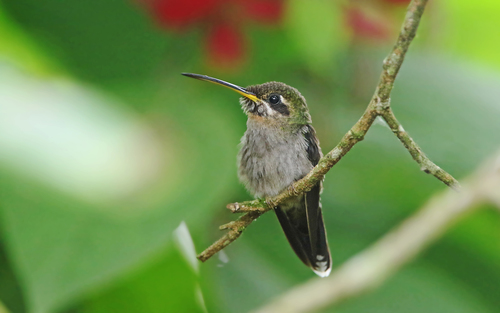
Band-tailed Barbthroat (Threnetes ruckeri) Band-tailed Barbthroat
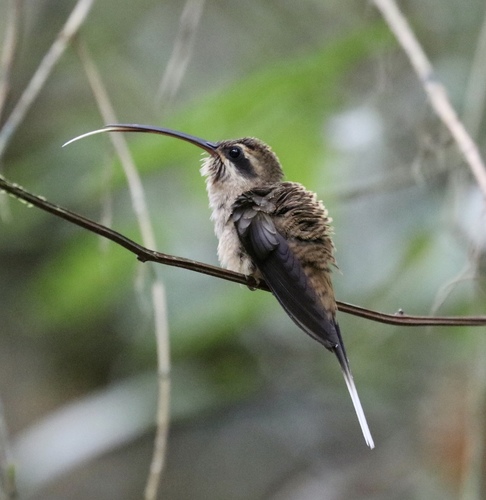
Long-billed Hermit (Phaethornis longirostris) Long-billed Hermit

Media

Loading…

In short

The most reliable field mark to separate Band-tailed Barbthroat from Long-billed Hermit is the tail: Band-tailed Barbthroat shows a dark tail with bold white bases and tips forming a distinct black 'band' near the end, while Long-billed Hermit has long central tail feathers with prominent white tips but lacks the banded effect. Bill shape is also key: Band-tailed Barbthroat has a nearly straight bill (slightly decurved in females), whereas Long-billed Hermit sports a much longer, strongly decurved bill. In perched or flight views, note the Barbthroat's ochraceous throat patch and more compact, straight-billed look versus the Hermit's long, drooping tail and overall lankier jizz. Both species are trap-line feeders in similar habitats, but their structure and tail patterns are the most consistent field clues.

Identification tips

  1. Tail pattern (all ages): Band-tailed Barbthroat always shows a dark tail with bold white bases and tips, forming a sharp black 'band' near the end—look for this in both perched and spread-tail flight views. Long-billed Hermit lacks this band; instead, it has long central tail feathers with large white tips and less contrast on the rest of the tail.
  2. Tail shape and length: Long-billed Hermit has very long, drooping central tail feathers that extend well beyond the rest of the tail, giving a 'paddle' or 'streamer' look, especially obvious when perched or displaying. Band-tailed Barbthroat's tail is shorter, more squared, and lacks elongated central feathers.
  3. Bill shape: Band-tailed Barbthroat has a nearly straight bill (slightly more decurved in females), while Long-billed Hermit's bill is much longer and strongly decurved, often appearing proportionally oversized for the head. This is one of the most reliable structural differences in the field.
  4. Throat patch: Band-tailed Barbthroat shows an ochraceous to orange throat patch (varies by subspecies), which stands out against otherwise grayish underparts. Long-billed Hermit lacks a discrete throat patch; its underparts are brownish to grayish, sometimes with an ochraceous wash but never a sharply defined patch.
  5. Ear patch and malar stripe: Band-tailed Barbthroat has a dark ear patch and a dusky malar stripe, adding facial contrast. Long-billed Hermit lacks these features, with a more uniform face.
  6. Upperparts: Both are greenish, but the Barbthroat is more bronze-green, while the Hermit can appear duller or more metallic green depending on subspecies.
  7. Juvenile marks: Young Barbthroats have ochraceous feather edges but retain the banded tail; Hermit juveniles do not show unique marks that aid separation.
  8. Size and jizz: Long-billed Hermit is longer and lankier, with a stretched look due to its bill and tail. Barbthroat is more compact and proportionate.
  9. Perched posture: Hermit often perches with its long tail drooping conspicuously below the perch; Barbthroat's tail is shorter and less obvious.
  10. Flight style: Both are agile, but Hermit's long tail and bill make its flight appear more ungainly and 'dragged out' compared to the Barbthroat's neater, more direct flight.
  11. Vocalizations: Listen for the Barbthroat's fast, complex phrases with trills (especially in Pacific Costa Rica) versus the Hermit's monotonous, upslurred 'sweeup' or 'tchee' series. Calls are also distinctive: Hermit's sharp 'week!' or thin 'seep' is unlike Barbthroat's song.
  12. Lekking behavior: If you see males displaying in a group with tail-wiggling and aggressive bill use, it's the Hermit; Barbthroat does not lek.
  13. Habitat overlap: Both can occur in the same habitats and elevations, so do not rely on context alone.
  14. Sex differences: Both sexes are similar in plumage, but female Barbthroat has a slightly more decurved bill; female Hermit has a shorter, more curved bill than male Hermit, but both sexes show the long, decurved shape.
  15. Subspecies variation: Barbthroat's throat patch is largest and brightest orange in T. r. ventosus; Hermit subspecies vary in underpart color and tail length, but none develop the Barbthroat's banded tail.

Size

Long-billed Hermit is notably larger and longer overall (13–16 cm) compared to the Band-tailed Barbthroat (10–11 cm). Despite this, their masses overlap (Barbthroat: 5–7 g; Hermit: 4–7.5 g), but the Hermit's greater length is mostly due to its elongated bill and especially its long central tail feathers. In the field, the Hermit appears lankier and more stretched, while the Barbthroat is more compact and proportionate.

Plumage

Juvenile and adult Band-tailed Barbthroats of all subspecies show a dark tail with broad white bases and tips, creating a sharp black band near the end—this is visible in both perched and spread-tail flight views. Young birds have ochraceous feather edges but retain the banded tail pattern. The throat patch varies by subspecies but is always ochraceous to orange and contrasts with the grayish underparts. In contrast, Long-billed Hermit (all ages) has long central tail feathers with large white tips but lacks a banded effect; the rest of the tail is less contrasting, and the uppertail coverts have dark and ochre bands. The Hermit's underparts are brownish to grayish, sometimes ochraceous in southern birds, but never as sharply marked as the Barbthroat's throat patch. Both species have greenish upperparts, but only the Barbthroat shows a distinct dark ear patch and malar stripe.

Behaviour

Both species are classic 'trap-line' feeders, moving through circuits of flowers for nectar and small arthropods. However, Long-billed Hermit males gather in leks during the breeding season, where they sing and display their long tails, a behavior not described for Band-tailed Barbthroat. Both nest under drooping leaves, but only the Hermit is noted for communal lekking and aggressive bill use among males.

Habitat

Both species inhabit the understory and edges of humid forests, old second growth, and semi-open areas, often at similar elevations (sea level up to ~1,200 m for Barbthroat, up to 1,500 m or more for Hermit depending on region). Their ranges overlap in Central America and western Colombia/Ecuador, so habitat alone is not diagnostic. The Hermit may be found in a slightly broader range of forest types, including cloud and gallery forests.

Voice

Band-tailed Barbthroat gives a fast, high-pitched phrase of 5–10 notes, repeated with pauses (e.g., 'tzi-tzi-tsee-ee-tsi-tzi-tzi'), with Pacific slope birds in Costa Rica adding trills. Long-billed Hermit sings a continuous series of single, piercing, upslurred 'sweeup' notes, or, in some regions, sparrow-like 'tchee..tchee..tchee..' chipping. The Hermit's calls are sharp and explosive ('week!' or thin 'seep'), often given in flight. Barbthroat's song is more complex and variable, while Hermit's is more monotonous and piercing.

Submit a better description

Use the same sections as the comparison. Your text is published immediately.

The most reliable field mark to separate Band-tailed Barbthroat from Long-billed Hermit is the tail: Band-tailed Barbthroat shows a dark tail with bold white bases and tips forming a distinct black 'band' near the end, while Long-billed Hermit has long central tail feathers with prominent white tips but lacks the banded effect. Bill shape is also key: Band-tailed Barbthroat has a nearly straight bill (slightly decurved in females), whereas Long-billed Hermit sports a much longer, strongly decurved bill. In perched or flight views, note the Barbthroat's ochraceous throat patch and more compact, straight-billed look versus the Hermit's long, drooping tail and overall lankier jizz. Both species are trap-line feeders in similar habitats, but their structure and tail patterns are the most consistent field clues.

  1. Tail pattern (all ages): Band-tailed Barbthroat always shows a dark tail with bold white bases and tips, forming a sharp black 'band' near the end—look for this in both perched and spread-tail flight views. Long-billed Hermit lacks this band; instead, it has long central tail feathers with large white tips and less contrast on the rest of the tail.
  2. Tail shape and length: Long-billed Hermit has very long, drooping central tail feathers that extend well beyond the rest of the tail, giving a 'paddle' or 'streamer' look, especially obvious when perched or displaying. Band-tailed Barbthroat's tail is shorter, more squared, and lacks elongated central feathers.
  3. Bill shape: Band-tailed Barbthroat has a nearly straight bill (slightly more decurved in females), while Long-billed Hermit's bill is much longer and strongly decurved, often appearing proportionally oversized for the head. This is one of the most reliable structural differences in the field.
  4. Throat patch: Band-tailed Barbthroat shows an ochraceous to orange throat patch (varies by subspecies), which stands out against otherwise grayish underparts. Long-billed Hermit lacks a discrete throat patch; its underparts are brownish to grayish, sometimes with an ochraceous wash but never a sharply defined patch.
  5. Ear patch and malar stripe: Band-tailed Barbthroat has a dark ear patch and a dusky malar stripe, adding facial contrast. Long-billed Hermit lacks these features, with a more uniform face.
  6. Upperparts: Both are greenish, but the Barbthroat is more bronze-green, while the Hermit can appear duller or more metallic green depending on subspecies.
  7. Juvenile marks: Young Barbthroats have ochraceous feather edges but retain the banded tail; Hermit juveniles do not show unique marks that aid separation.
  8. Size and jizz: Long-billed Hermit is longer and lankier, with a stretched look due to its bill and tail. Barbthroat is more compact and proportionate.
  9. Perched posture: Hermit often perches with its long tail drooping conspicuously below the perch; Barbthroat's tail is shorter and less obvious.
  10. Flight style: Both are agile, but Hermit's long tail and bill make its flight appear more ungainly and 'dragged out' compared to the Barbthroat's neater, more direct flight.
  11. Vocalizations: Listen for the Barbthroat's fast, complex phrases with trills (especially in Pacific Costa Rica) versus the Hermit's monotonous, upslurred 'sweeup' or 'tchee' series. Calls are also distinctive: Hermit's sharp 'week!' or thin 'seep' is unlike Barbthroat's song.
  12. Lekking behavior: If you see males displaying in a group with tail-wiggling and aggressive bill use, it's the Hermit; Barbthroat does not lek.
  13. Habitat overlap: Both can occur in the same habitats and elevations, so do not rely on context alone.
  14. Sex differences: Both sexes are similar in plumage, but female Barbthroat has a slightly more decurved bill; female Hermit has a shorter, more curved bill than male Hermit, but both sexes show the long, decurved shape.
  15. Subspecies variation: Barbthroat's throat patch is largest and brightest orange in T. r. ventosus; Hermit subspecies vary in underpart color and tail length, but none develop the Barbthroat's banded tail.

Long-billed Hermit is notably larger and longer overall (13–16 cm) compared to the Band-tailed Barbthroat (10–11 cm). Despite this, their masses overlap (Barbthroat: 5–7 g; Hermit: 4–7.5 g), but the Hermit's greater length is mostly due to its elongated bill and especially its long central tail feathers. In the field, the Hermit appears lankier and more stretched, while the Barbthroat is more compact and proportionate.

Juvenile and adult Band-tailed Barbthroats of all subspecies show a dark tail with broad white bases and tips, creating a sharp black band near the end—this is visible in both perched and spread-tail flight views. Young birds have ochraceous feather edges but retain the banded tail pattern. The throat patch varies by subspecies but is always ochraceous to orange and contrasts with the grayish underparts. In contrast, Long-billed Hermit (all ages) has long central tail feathers with large white tips but lacks a banded effect; the rest of the tail is less contrasting, and the uppertail coverts have dark and ochre bands. The Hermit's underparts are brownish to grayish, sometimes ochraceous in southern birds, but never as sharply marked as the Barbthroat's throat patch. Both species have greenish upperparts, but only the Barbthroat shows a distinct dark ear patch and malar stripe.

Both species are classic 'trap-line' feeders, moving through circuits of flowers for nectar and small arthropods. However, Long-billed Hermit males gather in leks during the breeding season, where they sing and display their long tails, a behavior not described for Band-tailed Barbthroat. Both nest under drooping leaves, but only the Hermit is noted for communal lekking and aggressive bill use among males.

Both species inhabit the understory and edges of humid forests, old second growth, and semi-open areas, often at similar elevations (sea level up to ~1,200 m for Barbthroat, up to 1,500 m or more for Hermit depending on region). Their ranges overlap in Central America and western Colombia/Ecuador, so habitat alone is not diagnostic. The Hermit may be found in a slightly broader range of forest types, including cloud and gallery forests.

Band-tailed Barbthroat gives a fast, high-pitched phrase of 5–10 notes, repeated with pauses (e.g., 'tzi-tzi-tsee-ee-tsi-tzi-tzi'), with Pacific slope birds in Costa Rica adding trills. Long-billed Hermit sings a continuous series of single, piercing, upslurred 'sweeup' notes, or, in some regions, sparrow-like 'tchee..tchee..tchee..' chipping. The Hermit's calls are sharp and explosive ('week!' or thin 'seep'), often given in flight. Barbthroat's song is more complex and variable, while Hermit's is more monotonous and piercing.

Discard your changes?

You have unsaved edits. If you leave now, those changes will be lost.

Band-tailed Barbthroat · Long-billed Hermit · My Tricky Birds