

Band-tailed Barbthroat vs Long-billed Hermit
Threnetes ruckeri contro Phaethornis longirostris
Fai un quiz con Band-tailed Barbthroat e Long-billed Hermit
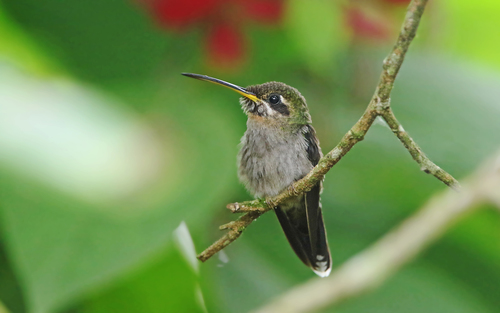 Band-tailed Barbthroat
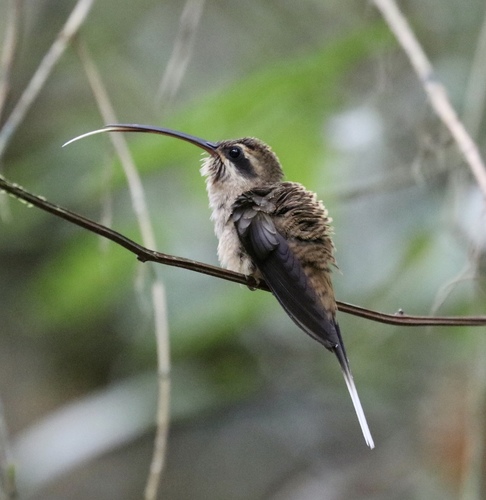 Long-billed Hermit
In breve
Il segno di campo più affidabile per separare il Band-tailed Barbthroat dal Long-billed Hermit è la coda: il Band-tailed Barbthroat mostra una coda scura con basi e punte bianche audaci che formano un distintivo 'nastro' nero vicino alla fine, mentre il Long-billed Hermit ha lunghe penne centrali della coda con punte bianche prominenti ma manca dell'effetto a bande. La forma del becco è anche fondamentale: il Band-tailed Barbthroat ha un becco quasi dritto (leggermente ricurvo nelle femmine), mentre il Long-billed Hermit presenta un becco molto più lungo e fortemente ricurvo. In vista da posato o in volo, nota la macchia della gola ocra del Barbthroat e l'aspetto più compatto e con becco dritto rispetto alla lunga coda pendente del Hermit e al suo aspetto complessivamente più snello. Entrambe le specie si nutrono in modo simile in habitat simili, ma la loro struttura e i modelli della coda sono gli indizi di campo più consistenti.
Consigli di identificazione
- Tail pattern (all ages): Il Band-tailed Barbthroat mostra sempre una coda scura con basi e punte bianche audaci, formando un netto 'nastro' nero vicino alla fine—cerca questo sia in vista posata che in volo con la coda aperta. Il Long-billed Hermit manca di questo nastro; invece, ha lunghe penne centrali della coda con grandi punte bianche e meno contrasto sul resto della coda.
- Tail shape and length: Il Long-billed Hermit ha penne centrali della coda molto lunghe e pendenti che si estendono ben oltre il resto della coda, dando un aspetto a 'paddle' o 'streamer', particolarmente evidente quando è posato o in mostra. La coda del Band-tailed Barbthroat è più corta, più squadrata e manca di penne centrali allungate.
- Bill shape: Il Band-tailed Barbthroat ha un becco quasi dritto (leggermente più ricurvo nelle femmine), mentre il becco del Long-billed Hermit è molto più lungo e fortemente ricurvo, spesso apparendo proporzionalmente sovradimensionato per la testa. Questa è una delle differenze strutturali più affidabili sul campo.
- Throat patch: Il Band-tailed Barbthroat mostra una macchia della gola ocra a arancione (varia a seconda della sottospecie), che si distingue rispetto a parti inferiori altrimenti grigie. Il Long-billed Hermit manca di una macchia della gola discreta; le sue parti inferiori sono brune a grigie, a volte con una sfumatura ocra ma mai con una macchia ben definita.
- Ear patch and malar stripe: Il Band-tailed Barbthroat ha una macchia auricolare scura e una striscia malare scura, aggiungendo contrasto facciale. Il Long-billed Hermit manca di queste caratteristiche, con un volto più uniforme.
- Upperparts: Entrambi sono verdastri, ma il Barbthroat è più verde bronzo, mentre il Hermit può apparire più opaco o di un verde metallico a seconda della sottospecie.
- Juvenile marks: I giovani Barbthroat hanno bordi delle piume ocra ma mantengono il modello della coda a bande; i giovani Hermit non mostrano segni unici che aiutano a separarli.
- Size and jizz: Il Long-billed Hermit è più lungo e snello, con un aspetto allungato a causa del suo becco e della coda. Il Barbthroat è più compatto e proporzionato.
- Perched posture: Il Hermit spesso si posa con la sua lunga coda che pende in modo evidente sotto il posatoio; la coda del Barbthroat è più corta e meno evidente.
- Flight style: Entrambi sono agili, ma la lunga coda e il becco del Hermit fanno apparire il suo volo più goffo e 'strascicato' rispetto al volo più ordinato e diretto del Barbthroat.
- Vocalizations: Ascolta le frasi veloci e complesse del Barbthroat con trilli (soprattutto nella Costa Rica del Pacifico) rispetto alla serie monotona e sollevata del Hermit 'sweeup' o 'tchee'. I richiami sono anche distintivi: il 'week!' acuto del Hermit o il sottile 'seep' sono diversi dalla canzone del Barbthroat.
- Lekking behavior: Se vedi maschi che si esibiscono in gruppo con movimenti della coda e uso aggressivo del becco, è il Hermit; il Barbthroat non fa lek.
- Habitat overlap: Entrambi possono verificarsi negli stessi habitat e altitudini, quindi non fare affidamento solo sul contesto.
- Sex differences: Entrambi i sessi sono simili nel piumaggio, ma la femmina del Barbthroat ha un becco leggermente più ricurvo; la femmina del Hermit ha un becco più corto e più curvo rispetto al maschio del Hermit, ma entrambi i sessi mostrano la forma lunga e ricurva.
- Subspecies variation: La macchia della gola del Barbthroat è la più grande e luminosa arancione in T. r. ventosus; le sottospecie del Hermit variano nel colore delle parti inferiori e nella lunghezza della coda, ma nessuna sviluppa la coda a bande del Barbthroat.
Taglia
Il Long-billed Hermit è notevolmente più grande e lungo nel complesso (13–16 cm) rispetto al Band-tailed Barbthroat (10–11 cm). Nonostante ciò, le loro masse si sovrappongono (Barbthroat: 5–7 g; Hermit: 4–7,5 g), ma la maggiore lunghezza del Hermit è dovuta principalmente al suo becco allungato e soprattutto alle lunghe penne centrali della coda. Sul campo, il Hermit appare più snello e allungato, mentre il Barbthroat è più compatto e proporzionato.
Piumaggio
I giovani e gli adulti Band-tailed Barbthroat di tutte le sottospecie mostrano una coda scura con ampie basi e punte bianche, creando un netto nastro nero vicino alla fine—questo è visibile sia in vista posata che in volo con la coda aperta. Gli uccelli giovani hanno bordi delle piume ocra ma mantengono il modello della coda a bande. La macchia della gola varia a seconda della sottospecie ma è sempre ocra a arancione e contrasta con le parti inferiori grigie. Al contrario, il Long-billed Hermit (tutte le età) ha lunghe penne centrali della coda con grandi punte bianche ma manca di un effetto a bande; il resto della coda è meno contrastante, e le copritrici della coda superiore hanno bande scure e ocra. Le parti inferiori del Hermit sono brune a grigie, a volte ocra negli uccelli meridionali, ma mai così nettamente marcate come la macchia della gola del Barbthroat. Entrambe le specie hanno parti superiori verdastre, ma solo il Barbthroat mostra una distintiva macchia auricolare scura e una striscia malare.
Comportamento
Entrambe le specie sono classici 'trap-line' feeders, muovendosi attraverso circuiti di fiori per nettare e piccoli artropodi. Tuttavia, i maschi del Long-billed Hermit si radunano in lek durante la stagione degli amori, dove cantano e mostrano le loro lunghe code, un comportamento non descritto per il Band-tailed Barbthroat. Entrambi nidificano sotto foglie pendenti, ma solo il Hermit è noto per il lekking comunitario e l'uso aggressivo del becco tra i maschi.
Habitat
Entrambe le specie abitano il sottobosco e i margini delle foreste umide, vecchie seconde crescita e aree semiaperte, spesso a altitudini simili (livello del mare fino a ~1.200 m per il Barbthroat, fino a 1.500 m o più per il Hermit a seconda della regione). I loro areali si sovrappongono in America Centrale e nella Colombia/Ecuador occidentale, quindi l'habitat da solo non è diagnostico. Il Hermit può essere trovato in una gamma leggermente più ampia di tipi di foresta, comprese le foreste nuvolose e galleria.
Voce
Il Band-tailed Barbthroat emette una frase veloce e acuta di 5–10 note, ripetuta con pause (ad es., 'tzi-tzi-tsee-ee-tsi-tzi-tzi'), con gli uccelli della costa pacifica in Costa Rica che aggiungono trilli. Il Long-billed Hermit canta una serie continua di note singole, penetranti e sollevate 'sweeup', o, in alcune regioni, un cinguettio simile a quello di un passero 'tchee..tchee..tchee..'. I richiami del Hermit sono acuti ed esplosivi ('week!' o sottile 'seep'), spesso emessi in volo. La canzone del Barbthroat è più complessa e variabile, mentre quella del Hermit è più monotona e penetrante.
Band-tailed Barbthroat · Long-billed Hermit · I miei uccelli difficili