

Australian Yellow White-eye vs Silvereye
Zosterops luteus versus Zosterops lateralis
Play a quiz with Australian Yellow White-eye and Silvereye
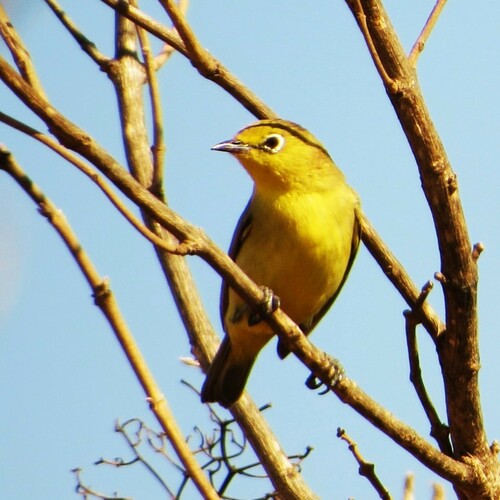 Australian Yellow White-eye
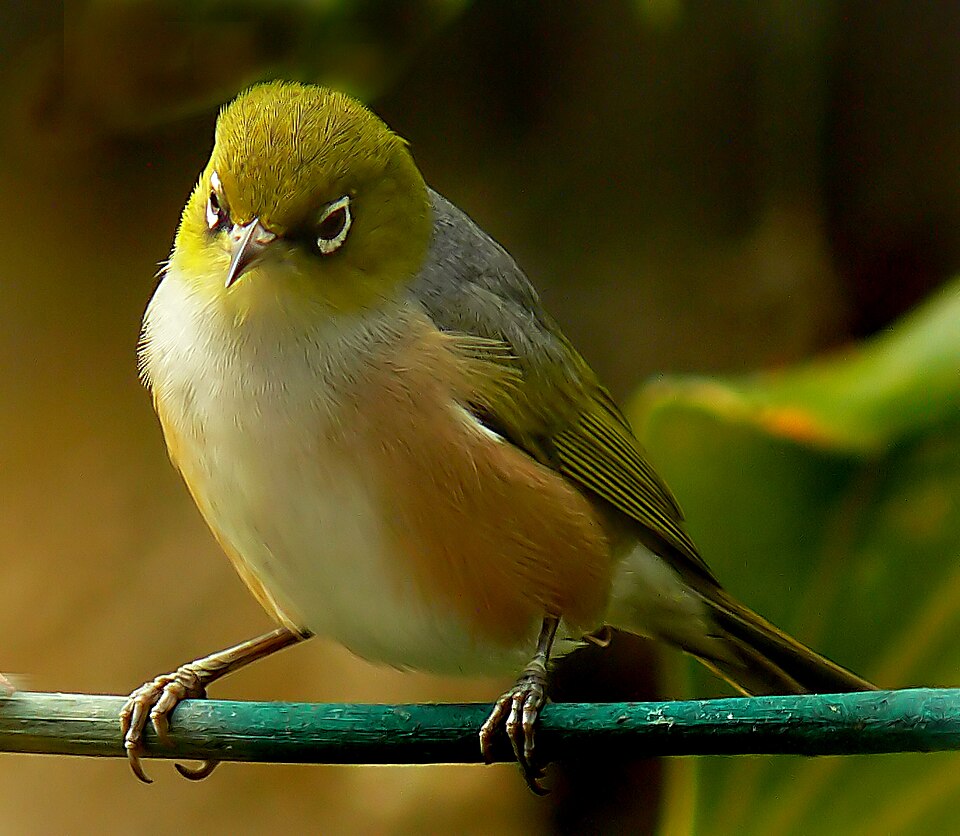 Silvereye
In short
The most reliable field mark to separate Australian Yellow White-eye from Silvereye is the underpart color: Australian Yellow White-eye is bright yellow below and on the lores, while Silvereye shows much duller, often greyish or buff underparts with variable flanks. Both species have a white eye-ring, but the Australian Yellow White-eye’s is set off by a dark loral stripe and more vivid yellow face. Structure is similar, but Silvereye is slightly larger and more variable in plumage, especially in Australia. In flight or perched, focus on underpart and face color for the quickest separation.
Identification tips
- Underpart color: Australian Yellow White-eye has bright yellow underparts and lores, while Silvereye’s underparts are usually paler, often greyish or buff, with variable chestnut or pale flanks. This is the single most reliable mark in all ages.
- Facial pattern: Look for the dark loral stripe setting off the white eye-ring in Australian Yellow White-eye. Silvereye lacks a strong dark loral stripe and often has a more muted face with less yellow.
- Eye-ring: Both have a conspicuous white eye-ring, but in Australian Yellow White-eye it is more crisply bordered and set off by the yellow face and dark loral stripe; in Silvereye, the ring is also bold but not as sharply defined by contrasting face colors.
- Upperparts: Australian Yellow White-eye is bright olive above; Silvereye is more variable, with olive-green or greyish back and wings, sometimes with a more greyish cast.
- Flank color: Silvereye can show chestnut or buff flanks, especially in some subspecies, which is never shown by Australian Yellow White-eye.
- Undertail: Silvereye’s undertail can be white or yellow, while Australian Yellow White-eye’s is yellow, matching the rest of the underparts.
- Bill and tongue: Both have short, sharp bills, but Australian Yellow White-eye’s bill is slightly shorter and more pointed, with a brush-tipped tongue for nectar feeding. This is subtle and rarely diagnostic in the field.
- Size and structure: Silvereye is slightly larger and longer-tailed on average, but overlap is substantial and this is not a reliable field mark unless seen side-by-side.
- Habitat: If seen in dense mangroves in northern Australia, favor Australian Yellow White-eye; in gardens, forests, or away from mangroves, Silvereye is much more likely.
- Geographic range: Australian Yellow White-eye is restricted to northern coastal Australia, especially in mangroves; Silvereye is widespread across Australia, New Zealand, and Pacific islands.
- Behavior: Both are active and gregarious, but Silvereye is more likely to be seen in larger flocks, especially outside the breeding season.
- Seasonal movement: Silvereye is migratory in southern Australia and New Zealand, so large flocks in autumn/winter are likely Silvereye.
- Juvenile/immature confusion: No detailed wing pattern differences are described for young birds, so rely on underpart and face color at all ages.
- Plumage variability: Silvereye is highly variable across its range, especially in Australia; always check for yellow underparts and face to rule out Australian Yellow White-eye.
- Pitfalls: Do not rely solely on the white eye-ring, as both species have it. Always check underpart color and facial pattern for confirmation.
Size
Australian Yellow White-eye averages about 9.7 g in body mass and measures 100–110 mm in length with a wingspan of 52–59 mm. Silvereye is slightly larger, typically 11–13 cm long and around 10 g, so there is some overlap, but Silvereye can appear a touch bulkier and longer-tailed in direct comparison. Size alone is rarely diagnostic in the field due to overlap and variation.
Plumage
Juvenile and immature plumages are not described in detail for either species in the sources, so focus is on adult and general appearance. Australian Yellow White-eye is bright olive above with vivid yellow underparts, yellow lores, and a striking silver-white eye-ring bordered by a dark loral stripe. Silvereye is more variable: upperparts are olive-green or greyish, underparts are paler—ranging from greyish or yellowish throat to buff or chestnut flanks, and the undertail can be white or yellow. The Silvereye’s eye-ring is also prominent but usually not as crisply set off by a dark loral stripe. Both species have a short, sharp bill, but the Australian Yellow White-eye’s face is more uniformly yellow, while Silvereye often shows a more contrasting face with less yellow and more grey or olive tones.
Behaviour
Both species are active, fast-moving, and forage in small flocks, often high in foliage or in shrubbery. Silvereye is highly migratory in parts of its range, especially in southern Australia and New Zealand, forming large flocks in late summer and autumn. Australian Yellow White-eye is more localized and tends to remain in mangrove or coastal habitats. Both species feed on nectar and small insects, but Silvereye is more omnivorous and adaptable in diet and habitat use.
Habitat
Australian Yellow White-eye is strongly tied to subtropical and tropical mangrove forests and coastal northern Australia. It is rarely found far from mangroves or adjacent coastal vegetation. Silvereye is much more widespread and adaptable, found in a wide range of vegetated habitats including forests, scrub, gardens, orchards, and even urban parks throughout Australia, New Zealand, and southwest Pacific islands. If you are in dense mangroves in northern Australia, Australian Yellow White-eye is far more likely; in gardens, forests, or away from mangroves, Silvereye predominates.