

Alström's Warbler vs Two-barred Warbler
Phylloscopus soror versus Phylloscopus plumbeitarsus
Play a quiz with Alström's Warbler and Two-barred Warbler
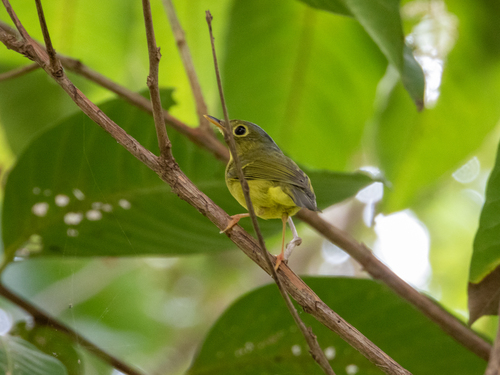 Alström's Warbler
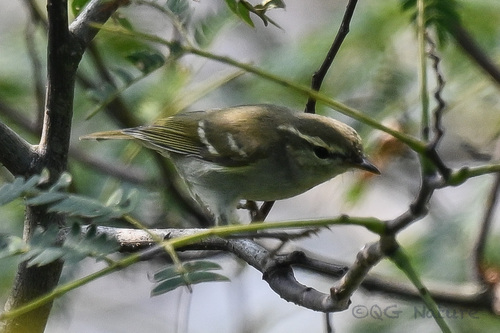 Two-barred Warbler
In short
The most reliable field mark between Alström's Warbler and Two-barred Warbler is the presence or absence of wing bars: Two-barred Warbler shows two prominent pale wing bars on the coverts in all ages, while Alström's Warbler lacks these and instead has a plainer wing. Alström's also has a larger bill, shorter tail, and a more distinct white edging on the outer tail feathers, which can be seen in flight or when the tail is fanned. Both species can appear similar in overall shape and size, but careful attention to the wing pattern and tail structure is key, especially in non-breeding or immature birds. Habitat overlap is possible in migration, so visual field marks are crucial.
Identification tips
- Wing bars are the single most reliable separator: Two-barred Warbler always shows two pale wing bars on the coverts, visible in all ages and seasons. Alström's Warbler never shows these; its wings are plain.
- Check the outer tail feathers: Alström's has a more distinct white edging on the outer tail feathers, especially visible when the bird fans its tail or in flight. Two-barred lacks this feature.
- Bill and tail structure: Alström's Warbler has a larger, heavier bill and a shorter tail compared to Two-barred. This is subtle but can help when birds are side by side or in good views.
- Eye-ring: Alström's shows a distinct yellow eye-ring, sometimes diffused above the eye, which is not a feature of Two-barred.
- Crown and back coloration: Alström's has a greyish-black crown with black stripes and a mix of green around the eyes, while Two-barred is generally plainer above except for the wing bars.
- Underparts: Alström's has a vibrant yellowish-green underside; Two-barred's underparts are not described as distinctive in the notes, so this is a secondary mark.
- Juvenile and first-winter birds: The wing bar pattern is present in Two-barred even in young birds, making this mark reliable for immatures as well as adults.
- Perched vs. in flight: Wing bars on Two-barred are visible both when perched and in flight; Alström's white tail edges may be easier to see in flight or when the tail is spread.
- Habitat and range: If seen in southern China outside the breeding season, both species are possible; do not rely on location alone for identification.
- Size is not a strong separator: Both are similar in overall length and structure; any difference is subtle and easily missed in the field.
- Seasonal confusion: Both species molt before autumn migration, but this does not affect the presence of wing bars in Two-barred. Alström's remains plain-winged year-round.
- Sex differences: Female Alström's is slightly smaller than male, but this is not a reliable field mark.
- Other similar species: Alström's can be confused with other Phylloscopus warblers (Martens's, Gray-crowned, White-speckled, Bianchi's), but among these two, the wing bar difference is decisive.
- When in doubt: If you see two clear wing bars, it's Two-barred. If the wing is plain and you see a strong white tail edge, consider Alström's.
- Pitfalls: Poor light or worn plumage can obscure subtle marks, but the presence or absence of wing bars is robust even in less-than-ideal conditions.
Size
Alström's Warbler is 11–12 cm long, with females slightly smaller than males. There is no direct measurement for Two-barred Warbler in the provided notes, but both are typical Phylloscopus warblers and similar in overall size. Any size difference in the field is subtle and not a reliable separator.
Plumage
The most diagnostic plumage difference is the wing pattern: Two-barred Warbler (of all ages and seasons) shows two pale wing bars formed by the tips of the median and greater coverts, which are obvious in both perched and flying birds. Alström's Warbler lacks these wing bars, presenting a much plainer wing. Instead, Alström's has a greyish-black crown with black stripes, a yellowish-green underside, and a distinct yellow eye-ring (sometimes diffused above the eye). The outer tail feathers of Alström's have a more distinct white lining, especially visible in flight or when the tail is spread, which is not a feature of Two-barred. Both species undergo molt before autumn migration, but this does not alter the wing bar pattern in Two-barred. Juvenile and first-winter birds of Two-barred still show the wing bars, making this mark reliable for all ages.
Behaviour
No distinctive behavioral differences are described in the notes. Both species are typical active Phylloscopus warblers, foraging in foliage and often flicking their wings and tails.
Habitat
Alström's Warbler breeds only in China and winters in Southeast Asia (Thailand, Laos, Cambodia, Vietnam), favoring temperate forests. Two-barred Warbler breeds further north in northern Mongolia, Manchuria, and southern Siberia. Both are migratory and may overlap in southern China during migration, but Alström's is more southerly in winter. Habitat alone is not diagnostic where their ranges overlap.