

Alpine Swift vs Alpine Accentor
Tachymarptis melba versus Prunella collaris
Play a quiz with Alpine Swift and Alpine Accentor
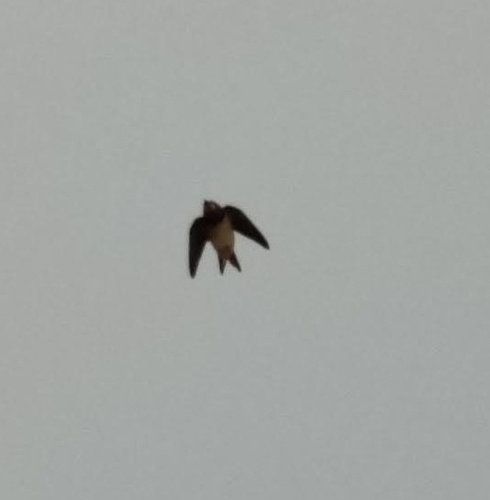 Alpine Swift
 Alpine Accentor
In short
The most reliable way to separate Alpine Swift from Alpine Accentor is by overall structure and flight style: Alpine Swift is a huge, long-winged aerial specialist with a white belly and throat, while Alpine Accentor is a robin-sized, ground-oriented songbird with a streaked brown back and red-brown spotted underparts. In flight, Alpine Swift’s long, crescent-shaped wings and white belly patch stand out even at a distance, whereas Alpine Accentor shows a short, rounded wing and never flashes white below. Juvenile Alpine Swifts may have pale-edged feathers, but still show the same bold white underparts. If seen perched, Alpine Accentor’s all-grey head and fine bill are diagnostic. Habitat overlap is possible in alpine areas, but their behavior and structure are unmistakably different.
Identification tips
- Overall structure: Alpine Swift is a huge, long-winged, crescent-shaped bird in flight; Alpine Accentor is compact, with short, rounded wings and a typical songbird silhouette.
- Flight style: Alpine Swift is almost always in the air, flying powerfully with deep, slow wingbeats; Alpine Accentor is almost always on the ground or perched low, never seen in continuous flight.
- White underparts: Alpine Swift of all ages shows a large, oval white belly patch and white throat, separated by a dark breast band. Alpine Accentor never shows white on the belly or throat.
- Head pattern: Alpine Accentor adults have an all-grey head, contrasting with the streaked brown back; Alpine Swift has a dark brown head and neck with a white throat, separated by a dark band.
- Back and upperparts: Alpine Swift is uniformly dark brown above; Alpine Accentor has a streaked brown back, more like a sparrow.
- Bill shape: Alpine Swift has a broad, short bill suited for aerial insect catching; Alpine Accentor has a fine, pointed bill for picking insects and seeds from the ground.
- Tail shape: Alpine Swift has a short, shallowly forked tail; Alpine Accentor’s tail is straight and notched but never forked like a swift’s.
- Juvenile confusion: Young Alpine Swifts have pale-edged feathers but retain the white belly and throat; young Alpine Accentors are browner but never show white underparts or swift-like structure.
- Wing shape: Alpine Swift’s wings are long, narrow, and swept back, resembling a boomerang; Alpine Accentor’s wings are short and rounded.
- Perched view: Alpine Swift rarely perches except on vertical surfaces; Alpine Accentor is often seen perched on rocks or low bushes.
- Vocalization: Aerial, drawn-out twittering is Alpine Swift; Alpine Accentor is generally quieter and sings from a perch.
- Habitat context: Both can be found in mountains, but Alpine Swift is in the air or nesting on cliffs/buildings; Alpine Accentor is on the ground or in low vegetation.
- Relative size: If seen together, Alpine Swift dwarfs the accentor, being nearly twice as long and several times heavier.
- Feeding behavior: Alpine Swift catches insects on the wing; Alpine Accentor forages on the ground.
- Seasonal confusion: Both species can be present in the same region in summer, but their behavior, structure, and plumage remain diagnostic in all seasons.
Size
Alpine Swift is much larger and heavier (body mass ~96g, length 20–23 cm, wingspan 54–60 cm) than Alpine Accentor (length 15–17.5 cm, robin-sized). Alpine Swift is nearly twice as long and several times heavier, with a wingspan more than three times that of the accentor. Even at a distance, the swift’s size and long wings are obvious. Alpine Accentor is only slightly larger than a dunnock and much smaller than any swift.
Plumage
- Juvenile/immature Alpine Swift: Similar to adults but with pale-edged feathers; still shows the bold white belly and throat, separated by a dark breast band. No age of Alpine Accentor ever shows white underparts or a dark breast band.
- Adult Alpine Swift: Dark brown above, white throat and large oval white belly patch, separated by a dark neck band and brown flanks/undertail. Wings are long, pointed, and blackish at the tips. Tail is short and shallowly forked.
- Adult Alpine Accentor: Streaked brown back, all-grey head, red-brown spotting on underparts, fine pointed bill. Underparts never show white belly or throat; instead, look for red-brown spots and streaks. Young birds are browner overall, especially on head and underparts, but never approach the swift’s pattern.
- In flight: Alpine Swift’s white belly patch is visible from below at all ages; Alpine Accentor shows no white, just streaked and spotted underparts.
Behaviour
Alpine Swift is almost always seen in rapid, powerful flight, often high above ground, rarely perching except on cliffs or buildings. Its flight is deep, slow, and strong compared to smaller swifts. Alpine Accentor is a ground-foraging songbird, often seen hopping among rocks or low vegetation, sometimes perching on rocks or bushes. It never exhibits the continuous aerial behavior of a swift. Alpine Swift drinks and feeds on the wing; Alpine Accentor feeds on insects and seeds on the ground.
Habitat
Both species occur in alpine and mountainous regions of southern Europe and Asia, but Alpine Swift is typically seen in open airspace above cliffs, mountains, or towns, often nesting in crevices or buildings. Alpine Accentor prefers bare mountain slopes with some low vegetation, foraging on the ground or among rocks. Overlap is possible in high-altitude areas, but their microhabitats and behavior differ sharply: swift in the air, accentor on the ground or low perches.
Voice
Alpine Swift gives a drawn-out twittering call, usually heard in flight and reminiscent of other swifts but longer and more powerful. Alpine Accentor’s song is not described in the notes, but as a passerine, it would sing from a perch, not in flight. If you hear a twittering, aerial call, it is Alpine Swift; Alpine Accentor is generally quieter and sings from the ground or a low perch.