

andorinhão-real vs ferreirinha-serrana
Tachymarptis melba versus Prunella collaris
Jogue um quiz com andorinhão-real e ferreirinha-serrana
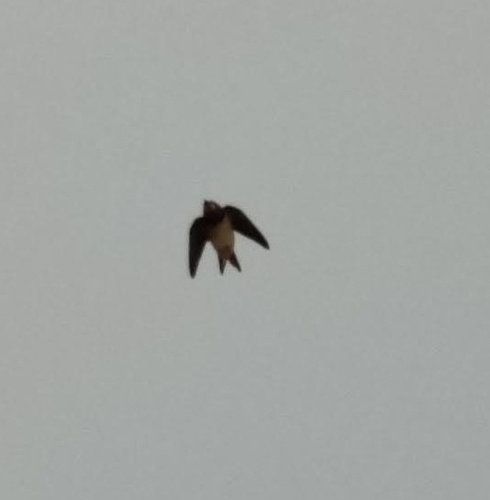 andorinhão-real
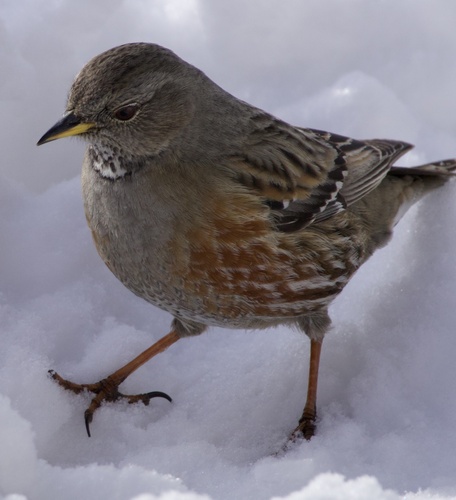 ferreirinha-serrana
Em resumo
A maneira mais confiável de separar o andorinhão-real da ferreirinha-serrana é pela estrutura geral e estilo de voo: o andorinhão-real é um enorme especialista aéreo de asas longas, com barriga e garganta brancas, enquanto a ferreirinha-serrana é um pássaro cantor de tamanho semelhante ao de um robin, orientado para o solo, com costas marrons estriadas e partes inferiores manchadas de marrom-avermelhado. Em voo, as longas asas em forma de crescente do andorinhão-real e a mancha branca na barriga se destacam mesmo à distância, enquanto a ferreirinha-serrana apresenta uma asa curta e arredondada e nunca exibe branco na parte inferior. Os juvenis do andorinhão-real podem ter penas com bordas claras, mas ainda mostram as mesmas partes inferiores brancas marcantes. Se vistos empoleirados, a cabeça toda cinza da ferreirinha-serrana e seu bico fino são diagnósticos. A sobreposição de habitat é possível em áreas alpinas, mas seu comportamento e estrutura são inconfundivelmente diferentes.
Dicas de identificação
- Estrutura geral: O andorinhão-real é um enorme pássaro em forma de crescente, com asas longas em voo; a ferreirinha-serrana é compacta, com asas curtas e arredondadas e um silhueta típica de pássaro cantor.
- Estilo de voo: O andorinhão-real está quase sempre no ar, voando poderosamente com batidas de asas profundas e lentas; a ferreirinha-serrana está quase sempre no chão ou empoleirada baixo, nunca vista em voo contínuo.
- Partes inferiores brancas: O andorinhão-real de todas as idades mostra uma grande mancha oval branca na barriga e garganta brancas, separadas por uma faixa escura no peito. A ferreirinha-serrana nunca mostra branco na barriga ou garganta.
- Padrão da cabeça: Os adultos da ferreirinha-serrana têm uma cabeça toda cinza, contrastando com as costas marrons estriadas; o andorinhão-real tem uma cabeça e pescoço marrons escuros com uma garganta branca, separados por uma faixa escura.
- Costas e partes superiores: O andorinhão-real é uniformemente marron escuro por cima; a ferreirinha-serrana tem costas marrons estriadas, mais parecidas com um pardal.
- Formato do bico: O andorinhão-real tem um bico largo e curto, adequado para capturar insetos no ar; a ferreirinha-serrana tem um bico fino e pontudo para pegar insetos e sementes do chão.
- Formato da cauda: O andorinhão-real tem uma cauda curta e levemente bifurcada; a cauda da ferreirinha-serrana é reta e entalhada, mas nunca bifurcada como a de um andorinhão.
- Confusão juvenil: Os jovens andorinhões-reais têm penas com bordas claras, mas mantêm a barriga e garganta brancas; os jovens ferreirinhas-serranas são mais marrons, mas nunca mostram partes inferiores brancas ou estrutura semelhante à de um andorinhão.
- Formato das asas: As asas do andorinhão-real são longas, estreitas e recuadas, parecendo um bumerangue; as asas da ferreirinha-serrana são curtas e arredondadas.
- Visão empoleirada: O andorinhão-real raramente se empoleira, exceto em superfícies verticais; a ferreirinha-serrana é frequentemente vista empoleirada em rochas ou arbustos baixos.
- Vocalização: O chilrear aéreo e prolongado é do andorinhão-real; a ferreirinha-serrana é geralmente mais silenciosa e canta de um poleiro.
- Contexto de habitat: Ambos podem ser encontrados nas montanhas, mas o andorinhão-real está no ar ou nidificando em penhascos/edifícios; a ferreirinha-serrana está no chão ou em vegetação baixa.
- Tamanho relativo: Se vistos juntos, o andorinhão-real ofusca a ferreirinha, sendo quase duas vezes mais longo e várias vezes mais pesado.
- Comportamento alimentar: O andorinhão-real captura insetos em voo; a ferreirinha-serrana forrageia no chão.
- Confusão sazonal: Ambas as espécies podem estar presentes na mesma região no verão, mas seu comportamento, estrutura e plumagem permanecem diagnósticos em todas as estações.
Tamanho
O andorinhão-real é muito maior e mais pesado (massa corporal ~96g, comprimento 20–23 cm, envergadura 54–60 cm) do que a ferreirinha-serrana (comprimento 15–17,5 cm, tamanho de um robin). O andorinhão-real é quase duas vezes mais longo e várias vezes mais pesado, com uma envergadura mais de três vezes maior que a da ferreirinha. Mesmo à distância, o tamanho e as longas asas do andorinhão são óbvios. A ferreirinha-serrana é apenas ligeiramente maior que uma ferreirinha e muito menor do que qualquer andorinhão.
Plumagem
- Juvenil/imaturo andorinhão-real: Semelhante aos adultos, mas com penas de bordas claras; ainda mostra a barriga e garganta brancas marcantes, separadas por uma faixa escura no peito. Nenhuma idade da ferreirinha-serrana jamais mostra partes inferiores brancas ou uma faixa escura no peito.
- Adulto andorinhão-real: Marron escuro por cima, garganta branca e grande mancha oval branca na barriga, separadas por uma faixa escura no pescoço e flancos/cauda marrons. As asas são longas, pontudas e escuras nas pontas. A cauda é curta e levemente bifurcada.
- Adulto ferreirinha-serrana: Costas marrons estriadas, cabeça toda cinza, manchas marrom-avermelhadas nas partes inferiores, bico fino e pontudo. As partes inferiores nunca mostram barriga ou garganta brancas; em vez disso, procure por manchas e estrias marrom-avermelhadas. Os jovens são mais marrons no geral, especialmente na cabeça e partes inferiores, mas nunca se aproximam do padrão do andorinhão.
- Em voo: A mancha branca na barriga do andorinhão-real é visível de baixo em todas as idades; a ferreirinha-serrana não mostra branco, apenas partes inferiores estriadas e manchadas.
Comportamento
O andorinhão-real é quase sempre visto em voo rápido e poderoso, muitas vezes alto acima do chão, raramente empoleirando-se, exceto em penhascos ou edifícios. Seu voo é profundo, lento e forte em comparação com andorinhões menores. A ferreirinha-serrana é um pássaro cantor que forrageia no chão, frequentemente vista pulando entre rochas ou vegetação baixa, às vezes empoleirando-se em rochas ou arbustos. Ela nunca exibe o comportamento aéreo contínuo de um andorinhão. O andorinhão-real bebe e se alimenta em voo; a ferreirinha-serrana se alimenta de insetos e sementes no chão.
Habitat
Ambas as espécies ocorrem em regiões alpinas e montanhosas do sul da Europa e Ásia, mas o andorinhão-real é tipicamente visto em espaço aéreo aberto acima de penhascos, montanhas ou cidades, frequentemente nidificando em fendas ou edifícios. A ferreirinha-serrana prefere encostas montanhosas nuas com alguma vegetação baixa, forrageando no chão ou entre rochas. A sobreposição é possível em áreas de alta altitude, mas seus microhabitats e comportamento diferem acentuadamente: andorinhão no ar, ferreirinha no chão ou em poleiros baixos.
Voz
O andorinhão-real emite um chamado de chilrear prolongado, geralmente ouvido em voo e reminiscente de outros andorinhões, mas mais longo e poderoso. A canção da ferreirinha-serrana não é descrita nas notas, mas como um passeriforme, ela cantaria de um poleiro, não em voo. Se você ouvir um chamado chilreante e aéreo, é o andorinhão-real; a ferreirinha-serrana é geralmente mais silenciosa e canta do chão ou de um poleiro baixo.
andorinhão-real · ferreirinha-serrana · Minhas aves difíceis