

Motmot

シロハラアマツバメ 対 イワヒバリ

Tachymarptis melba 対 Prunella collaris

シロハラアマツバメとイワヒバリのクイズ
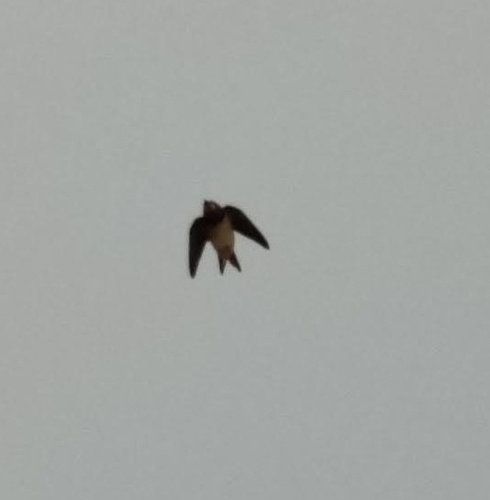
シロハラアマツバメ (Tachymarptis melba) シロハラアマツバメ
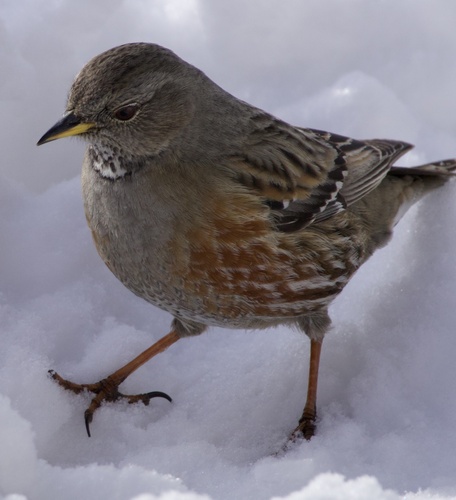
イワヒバリ (Prunella collaris) イワヒバリ

メディア

読み込み中…

要点

アルプスアマツバメとイワヒバリを区別する最も信頼できる方法は、全体的な構造と飛行スタイルによるものです:アルプスアマツバメは、白い腹部と喉を持つ巨大で長い翼の空中専門家であり、イワヒバリは、縞模様の茶色い背中と赤褐色の斑点のある腹部を持つロビンサイズの地上指向の歌鳥です。飛行中、アルプスアマツバメの長い三日月形の翼と白い腹部の斑点は、遠くからでも目立ちますが、イワヒバリは短く丸い翼を示し、下側に白を見せることはありません。幼鳥のアルプスアマツバメは淡い縁取りの羽毛を持つことがありますが、同じ大胆な白い腹部を示します。止まっているのが見られた場合、イワヒバリの全灰色の頭と細いくちばしが診断的です。生息地の重複はアルプス地域で可能ですが、彼らの行動と構造は明らかに異なります。

識別のコツ

  1. 全体的な構造:アルプスアマツバメは、飛行中に巨大で長い翼を持つ三日月形の鳥です;イワヒバリは、短く丸い翼を持つコンパクトな典型的な歌鳥のシルエットです。
  2. 飛行スタイル:アルプスアマツバメはほぼ常に空中にいて、深くゆっくりとした翼のビートで力強く飛びます;イワヒバリはほぼ常に地面にいるか低い位置に止まっていて、連続飛行で見られることはありません。
  3. 白い腹部:すべての年齢のアルプスアマツバメは、大きな楕円形の白い腹部の斑点と白い喉を示し、暗い胸のバンドで区切られています。イワヒバリは腹部や喉に白を示すことはありません。
  4. 頭の模様:イワヒバリの成鳥は全灰色の頭を持ち、縞模様の茶色い背中と対照的です;アルプスアマツバメは、白い喉を持つ暗い茶色の頭と首を持ち、暗いバンドで区切られています。
  5. 背中と上面:アルプスアマツバメは上面が均一に暗い茶色です;イワヒバリは、スズメに似た縞模様の茶色い背中を持っています。
  6. くちばしの形:アルプスアマツバメは、空中で昆虫を捕まえるために適した広く短いくちばしを持っています;イワヒバリは、地面から昆虫や種子を拾うための細く尖ったくちばしを持っています。
  7. 尾の形:アルプスアマツバメは短く浅く分かれた尾を持っています;イワヒバリの尾は直線的で切り込みが入っていますが、アマツバメのように分かれることはありません。
  8. 幼鳥の混乱:若いアルプスアマツバメは淡い縁取りの羽毛を持っていますが、白い腹部と喉を保持しています;若いイワヒバリはより茶色ですが、白い腹部やアマツバメのような構造を示すことはありません。
  9. 翼の形:アルプスアマツバメの翼は長く、狭く、後方に傾いており、ブーメランのようです;イワヒバリの翼は短く丸いです。
  10. 止まっている姿:アルプスアマツバメは垂直な表面以外ではほとんど止まりません;イワヒバリは岩や低い茂みの上に止まっているのがよく見られます。
  11. 鳴き声:空中での引き伸ばされたツイッター音はアルプスアマツバメ;イワヒバリは一般的に静かで、止まっている場所から歌います。
  12. 生息地の文脈:両方は山に見られますが、アルプスアマツバメは空中にいるか、崖や建物に巣を作っています;イワヒバリは地面や低い植物の中にいます。
  13. 相対的なサイズ:一緒に見られた場合、アルプスアマツバメはイワヒバリを圧倒し、ほぼ2倍の長さで、数倍の重さです。
  14. 採餌行動:アルプスアマツバメは空中で昆虫を捕まえます;イワヒバリは地面で採餌します。
  15. 季節的な混乱:両方の種は夏に同じ地域に存在することがありますが、彼らの行動、構造、羽毛はすべての季節で診断的です。

大きさ

アルプスアマツバメは、イワヒバリ(長さ15〜17.5 cm、ロビンサイズ)よりもはるかに大きく重い(体重約96g、長さ20〜23 cm、翼幅54〜60 cm)です。アルプスアマツバメはほぼ2倍の長さで、数倍の重さがあり、翼幅はイワヒバリの3倍以上です。遠くからでも、アマツバメのサイズと長い翼は明らかです。イワヒバリはヨーロッパカヤクグリよりもわずかに大きいだけで、どのアマツバメよりもはるかに小さいです。

羽色

行動

アルプスアマツバメは、ほぼ常に急速で力強い飛行で見られ、高い地面の上で、崖や建物以外ではほとんど止まりません。その飛行は、より小さなアマツバメと比べて深く、遅く、強いです。イワヒバリは地面で採餌する歌鳥であり、岩や低い植物の間を跳ね回っているのがよく見られ、時には岩や茂みの上に止まっています。アマツバメのような連続的な空中行動を示すことはありません。アルプスアマツバメは空中で飲み食いし、イワヒバリは地面で昆虫や種子を食べます。

生息環境

両方の種は南ヨーロッパとアジアのアルプスおよび山岳地域に生息していますが、アルプスアマツバメは通常、崖、山、または町の上の開けた空間で見られ、しばしば隙間や建物に巣を作ります。イワヒバリは、低い植物がある裸の山の斜面を好み、地面や岩の間で採餌します。高地では重複が可能ですが、彼らのマイクロハビタットと行動は明確に異なります:アマツバメは空中に、イワヒバリは地面や低い止まり木にいます。

声

アルプスアマツバメは、通常飛行中に聞かれる引き伸ばされたツイッター音を出し、他のアマツバメを思わせるが、より長く、より力強いです。イワヒバリの歌はメモに記載されていませんが、スズメ目の鳥として、飛行中ではなく止まっている場所から歌うでしょう。空中のツイッター音が聞こえた場合、それはアルプスアマツバメです;イワヒバリは一般的に静かで、地面や低い止まり木から歌います。

より良い説明を送る

比較と同じ項目を使ってください。文章はすぐに公開されます。

The most reliable way to separate Alpine Swift from Alpine Accentor is by overall structure and flight style: Alpine Swift is a huge, long-winged aerial specialist with a white belly and throat, while Alpine Accentor is a robin-sized, ground-oriented songbird with a streaked brown back and red-brown spotted underparts. In flight, Alpine Swift’s long, crescent-shaped wings and white belly patch stand out even at a distance, whereas Alpine Accentor shows a short, rounded wing and never flashes white below. Juvenile Alpine Swifts may have pale-edged feathers, but still show the same bold white underparts. If seen perched, Alpine Accentor’s all-grey head and fine bill are diagnostic. Habitat overlap is possible in alpine areas, but their behavior and structure are unmistakably different.

  1. Overall structure: Alpine Swift is a huge, long-winged, crescent-shaped bird in flight; Alpine Accentor is compact, with short, rounded wings and a typical songbird silhouette.
  2. Flight style: Alpine Swift is almost always in the air, flying powerfully with deep, slow wingbeats; Alpine Accentor is almost always on the ground or perched low, never seen in continuous flight.
  3. White underparts: Alpine Swift of all ages shows a large, oval white belly patch and white throat, separated by a dark breast band. Alpine Accentor never shows white on the belly or throat.
  4. Head pattern: Alpine Accentor adults have an all-grey head, contrasting with the streaked brown back; Alpine Swift has a dark brown head and neck with a white throat, separated by a dark band.
  5. Back and upperparts: Alpine Swift is uniformly dark brown above; Alpine Accentor has a streaked brown back, more like a sparrow.
  6. Bill shape: Alpine Swift has a broad, short bill suited for aerial insect catching; Alpine Accentor has a fine, pointed bill for picking insects and seeds from the ground.
  7. Tail shape: Alpine Swift has a short, shallowly forked tail; Alpine Accentor’s tail is straight and notched but never forked like a swift’s.
  8. Juvenile confusion: Young Alpine Swifts have pale-edged feathers but retain the white belly and throat; young Alpine Accentors are browner but never show white underparts or swift-like structure.
  9. Wing shape: Alpine Swift’s wings are long, narrow, and swept back, resembling a boomerang; Alpine Accentor’s wings are short and rounded.
  10. Perched view: Alpine Swift rarely perches except on vertical surfaces; Alpine Accentor is often seen perched on rocks or low bushes.
  11. Vocalization: Aerial, drawn-out twittering is Alpine Swift; Alpine Accentor is generally quieter and sings from a perch.
  12. Habitat context: Both can be found in mountains, but Alpine Swift is in the air or nesting on cliffs/buildings; Alpine Accentor is on the ground or in low vegetation.
  13. Relative size: If seen together, Alpine Swift dwarfs the accentor, being nearly twice as long and several times heavier.
  14. Feeding behavior: Alpine Swift catches insects on the wing; Alpine Accentor forages on the ground.
  15. Seasonal confusion: Both species can be present in the same region in summer, but their behavior, structure, and plumage remain diagnostic in all seasons.

Alpine Swift is much larger and heavier (body mass ~96g, length 20–23 cm, wingspan 54–60 cm) than Alpine Accentor (length 15–17.5 cm, robin-sized). Alpine Swift is nearly twice as long and several times heavier, with a wingspan more than three times that of the accentor. Even at a distance, the swift’s size and long wings are obvious. Alpine Accentor is only slightly larger than a dunnock and much smaller than any swift.

  • Juvenile/immature Alpine Swift: Similar to adults but with pale-edged feathers; still shows the bold white belly and throat, separated by a dark breast band. No age of Alpine Accentor ever shows white underparts or a dark breast band.
  • Adult Alpine Swift: Dark brown above, white throat and large oval white belly patch, separated by a dark neck band and brown flanks/undertail. Wings are long, pointed, and blackish at the tips. Tail is short and shallowly forked.
  • Adult Alpine Accentor: Streaked brown back, all-grey head, red-brown spotting on underparts, fine pointed bill. Underparts never show white belly or throat; instead, look for red-brown spots and streaks. Young birds are browner overall, especially on head and underparts, but never approach the swift’s pattern.
  • In flight: Alpine Swift’s white belly patch is visible from below at all ages; Alpine Accentor shows no white, just streaked and spotted underparts.

Alpine Swift is almost always seen in rapid, powerful flight, often high above ground, rarely perching except on cliffs or buildings. Its flight is deep, slow, and strong compared to smaller swifts. Alpine Accentor is a ground-foraging songbird, often seen hopping among rocks or low vegetation, sometimes perching on rocks or bushes. It never exhibits the continuous aerial behavior of a swift. Alpine Swift drinks and feeds on the wing; Alpine Accentor feeds on insects and seeds on the ground.

Both species occur in alpine and mountainous regions of southern Europe and Asia, but Alpine Swift is typically seen in open airspace above cliffs, mountains, or towns, often nesting in crevices or buildings. Alpine Accentor prefers bare mountain slopes with some low vegetation, foraging on the ground or among rocks. Overlap is possible in high-altitude areas, but their microhabitats and behavior differ sharply: swift in the air, accentor on the ground or low perches.

Alpine Swift gives a drawn-out twittering call, usually heard in flight and reminiscent of other swifts but longer and more powerful. Alpine Accentor’s song is not described in the notes, but as a passerine, it would sing from a perch, not in flight. If you hear a twittering, aerial call, it is Alpine Swift; Alpine Accentor is generally quieter and sings from the ground or a low perch.

変更を破棄しますか?

保存していない編集があります。今離れると失われます。

シロハラアマツバメ · イワヒバリ · 苦手な鳥