

Albert's Lyrebird vs Superb Lyrebird
Menura alberti versus Menura novaehollandiae
Play a quiz with Albert's Lyrebird and Superb Lyrebird
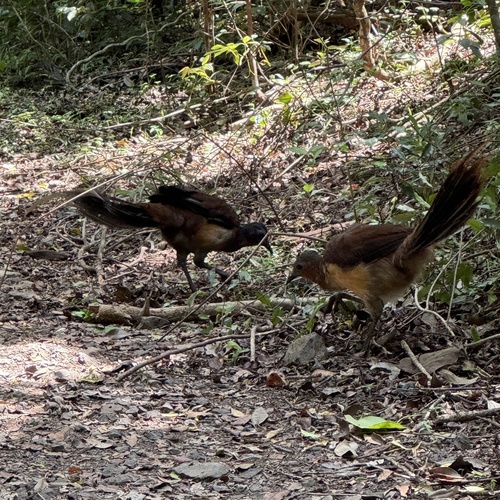 Albert's Lyrebird
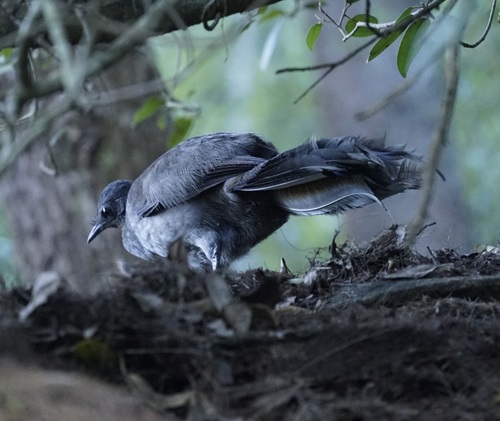 Superb Lyrebird
In short
The most reliable field mark to separate Albert's Lyrebird from Superb Lyrebird is the tail: adult male Superb Lyrebird has a much more elaborate, lyre-shaped tail with long, broad outer feathers and numerous silvery filamentaries, while Albert's Lyrebird lacks the full lyre shape and has a simpler, less ornate tail. Juveniles of both species lack ornamental tails, but Albert's Lyrebird juveniles show richer rufous tones on the throat and forehead, and their tail feathers are narrower and more pointed. Both species are large, ground-dwelling birds of southeast Australian forests, but Albert's Lyrebird is much rarer and restricted to a small area near the NSW/Queensland border. Superb Lyrebird is larger overall, with a brighter tail and more extensive courtship displays.
Identification tips
- Tail shape in adult males: The single best field mark. Superb Lyrebird males have a large, lyre-shaped tail with long, broad outer feathers (lyrates) and numerous silvery filamentaries, fanned in display. Albert's Lyrebird males have a simpler, less lyre-shaped tail, with shorter filamentaries and less dramatic outer feathers. This mark is diagnostic in breeding season displays.
- Tail in adult females: Both have simpler tails, but Albert's Lyrebird female's tail is more pointed and drooping when closed, with long, narrow, tapered median plumes and broad, rounded brown feathers. Superb Lyrebird females have shorter lyrates and lack filamentaries, but the tail is less pointed and less drooping.
- Juvenile tail feathers: Juvenile Albert's Lyrebird has distinctly narrower, more tapered, and pointed tail feathers (except the central pair) compared to Superb Lyrebird juveniles, whose tails are broader and plainer. This is best seen at close range.
- Juvenile head and throat color: Albert's Lyrebird juveniles show richer, more uniform rufous-brown on the chin, throat, and foreneck, and a brighter red-brown wash on the forehead and forecrown. Superb Lyrebird juveniles lack these rufous tones.
- General plumage color: Albert's Lyrebird is chestnut-brown with a rufous undertail, rump, and throat, and a blue-grey eye ring. Superb Lyrebird is darker brown above, with greyish-brown underparts and red-tinged flight feathers. Its tail is brighter overall.
- Size and bulk: Superb Lyrebird is generally larger and bulkier, especially in the tail, but this is subtle and overlaps. Use only as a supporting mark.
- Courtship display: If you see a male performing an elaborate tail-fanning, mound-dancing display with a huge lyre-shaped tail, it is Superb Lyrebird. Albert's Lyrebird displays are less dramatic.
- Habitat and range: Albert's Lyrebird is restricted to a small area of subtropical rainforest near the NSW/Queensland border, usually above 300 m. Superb Lyrebird is widespread in southeast Australian forests. Location is often decisive.
- Behavior: Both are shy and ground-dwelling, but Superb Lyrebird males are more likely to be seen on display mounds in open forest clearings.
- Vocalizations: Both mimic, but Superb Lyrebird's song is louder, more varied, and often synchronized with display. If you hear a complex medley of mimicry and see a displaying bird, it is likely Superb Lyrebird.
- Iris and eye ring: Albert's Lyrebird has a broad blue-grey ring around a dark iris; this is subtle but can help at close range.
- Flight: Both are weak fliers, using wings for balance or short glides. No strong separation in flight jizz.
- Sexual dimorphism: Both species show sexual dimorphism in tail structure, but it is much more pronounced in Superb Lyrebird.
- Season: Ornamental tails are most developed and displayed in breeding season (winter for Superb Lyrebird). Outside breeding season, tails may be less obvious, making identification harder—rely more on structure and range.
- Pitfalls: Juveniles and females of both species can be confusing, especially if the tail is not visible. In such cases, use location, subtle plumage tones, and tail shape/texture if seen.
Size
Superb Lyrebird is the larger of the two: males can reach up to 1 meter (39 in) in length, with females around 86 cm (34 in), and typical adult mass near 980 g. Albert's Lyrebird males reach about 90 cm (35 in), females about 75 cm (30 in), and weigh around 930 g. The difference is subtle in the field, but Superb Lyrebird is generally bulkier, especially in the tail. Both are pheasant-sized, but the tail of the male Superb Lyrebird adds to the impression of size.
Plumage
-
Juveniles: Both species lack ornamental tail feathers when young, but Albert's Lyrebird juveniles have richer, more uniform rufous-brown on the chin, throat, and foreneck, a brighter red-brown wash on the forehead and forecrown, and paler upperparts. Their tail feathers (except the central pair) are distinctly narrower, more tapered, and pointed compared to Superb Lyrebird juveniles, which have plainer, broader tail feathers and lack the rufous tones.
-
Adult males: Superb Lyrebird males have a spectacular tail with long, broad, S-shaped outer feathers ('lyrates'), twelve silvery filamentaries, and two silvery median feathers. The tail is fanned in display and is much more ornate than Albert's. Albert's Lyrebird males have a simpler tail: a central pair of long, ribbon-like plumes, six pairs of filamentary feathers (less luxuriant and shorter than Superb), and a pair of broad, webbed outer feathers, but the overall effect is less lyre-shaped and less showy.
-
Adult females: Both species' females have shorter, simpler tails, but Albert's Lyrebird's is more pointed and drooping when closed, with long, narrow, tapered median plumes and broad brown feathers with rounded tips, lacking filamentaries. Superb Lyrebird females have shorter lyrates and plain, broad feathers instead of filamentaries.
-
General color: Albert's Lyrebird is chestnut-brown with rufous undertail, rump, and throat, and a blue-grey eye ring. Superb Lyrebird is mainly dark brown above, with greyish-brown underparts and red-tinged flight feathers; its tail is brighter than Albert's.
Behaviour
Both species are ground-dwelling and shy, but Superb Lyrebird is especially known for elaborate courtship displays: males build and defend display mounds, fan and vibrate their ornate tails, and perform complex dances synchronized with song. Albert's Lyrebird males also display, but their tail is less spectacular and their displays are less elaborate. Superb Lyrebird males are polygynous, with territories overlapping several females. Both species are weak fliers, using wings mainly for balance or gliding short distances.
Habitat
Albert's Lyrebird is highly restricted to subtropical rainforests in a small area on the border of southeast Queensland and northeast New South Wales, usually at higher elevations (above 300 m). Its range is fragmented and populations are small. Superb Lyrebird is more widespread in southeast Australia, inhabiting a variety of forests, especially wetter areas with dense understory and deep leaf litter. If you are outside the small Albert's Lyrebird range, you are almost certainly seeing Superb Lyrebird.
Voice
Both species are renowned mimics, but Superb Lyrebird is especially famous for its complex, loud, and varied song, incorporating mimicry of many other birds and environmental sounds. Courtship displays of Superb Lyrebird are accompanied by coordinated song and dance. Albert's Lyrebird is also a strong mimic but is less well-studied in this regard. In the field, vocal differences are subtle and not the most reliable separation unless the full display is observed.