

African Openbill vs African Woolly-necked Stork
Anastomus lamelligerus versus Ciconia microscelis
Play a quiz with African Openbill and African Woolly-necked Stork
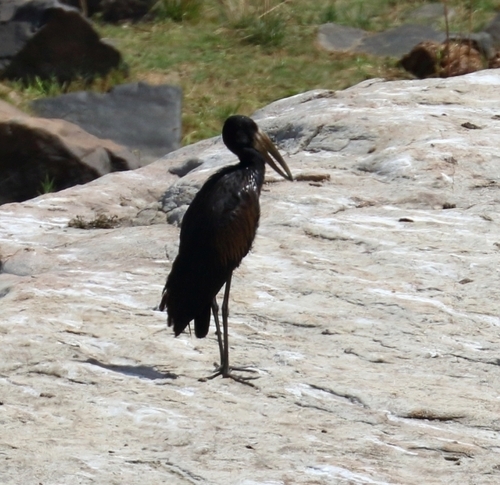 African Openbill
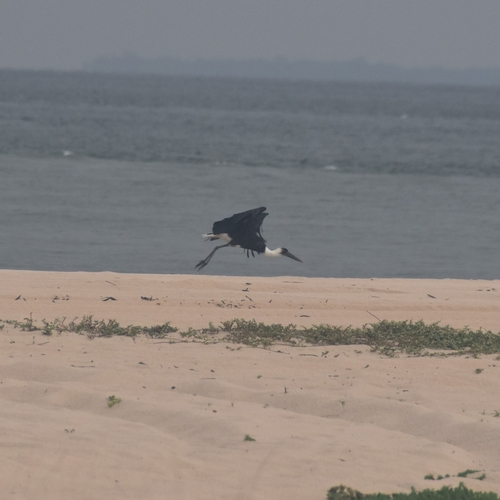 African Woolly-necked Stork
In short
The most reliable field mark to separate African Openbill from African Woolly-necked Stork is the presence of a pure white, fluffy neck and lower belly on the Woolly-necked, contrasting with the all-dark, iridescent plumage of the Openbill. In flight or at rest, the Woolly-necked's white neck and belly stand out even at a distance, while the Openbill is uniformly dark with a greenish gloss and lacks any white. Juvenile Woolly-necked Storks show a feathered, sometimes streaked forehead and a white mark on the forehead, while Openbill juveniles remain all dark. Bill structure is also distinctive: Openbill has a unique, gapped bill, while Woolly-necked's bill is straight and heavy. Both species are broad-winged, long-legged storks, but these plumage and structural differences are clear in the field.
Identification tips
- White Neck and Belly (Woolly-necked only): Look for a pure white, downy neck and lower belly—diagnostic for Woolly-necked Stork of all ages except very young nestlings. Openbill is always all dark.
- All-Dark Plumage (Openbill): African Openbill is uniformly dark, with a greenish or bronze iridescent gloss on wings and chest, and never shows white on the neck or belly at any age.
- Bill Shape: Openbill has a unique, gapped bill (the mandibles do not meet except at the tip), adapted for extracting molluscs. Woolly-necked Stork's bill is straight, heavy, and solid, sometimes with a reddish base but never gapped.
- Juvenile Forehead (Woolly-necked): Juvenile Woolly-necked Storks have a feathered forehead, sometimes streaked, and a prominent white mark in the center at fledging. Juvenile Openbill is all dark, with no white on the forehead.
- Iridescence: Both species show iridescence, but Openbill's is greenish on the wings and chest, while Woolly-necked's is coppery-purple on the fore-neck. Only Woolly-necked has elongated, erectable fore-neck feathers.
- Flight View: In flight, Woolly-necked Stork shows a white neck and belly from below, and a bright orange-red unfeathered band along the underside of the forearm (visible at close range). Openbill in flight is all dark, with no white or colored skin patches.
- Tail: Woolly-necked Stork has a deeply forked white tail, usually covered by black under-tail coverts; Openbill's tail is not described as forked or white.
- Leg Color: Woolly-necked Stork has long red legs; Openbill's leg color is not specified but does not stand out as red.
- Iris Color: Woolly-necked has a deep crimson or wine-red iris; Openbill's iris color is not specified.
- Size and Structure: Woolly-necked Stork is larger and more robust, with a heavier bill and body, while Openbill is smaller and more slender, especially in flight.
- Habitat Context: If seen away from water, especially in agricultural or forested areas, Woolly-necked is more likely. Openbill is more tied to wetlands.
- Behavior: Openbill is more agile in flight, often diving and maneuvering; Woolly-necked can also dive but is generally heavier and more ponderous.
- Vocalizations: Woolly-necked may give whistles or hisses, especially at the nest; Openbill is generally silent.
- Nestling Down: Very young Woolly-necked nestlings are pale grey with buffy down and a black crown; Openbill nestlings are not described in detail but are unlikely to show pale down or a white neck.
- Display Feathers: Openbill's parade feathers are structurally unique, ribbon-like, and create green iridescence; Woolly-necked's display feathers are elongated and coppery, but not ribbon-like.
Size
African Woolly-necked Stork is generally larger, standing 75–92 cm tall, while African Openbill is smaller and more agile in flight [wikipedia]. Both are medium-to-large storks, but the size difference may be subtle unless seen side by side. Woolly-necked Stork also appears heavier and more robust, especially in the body and bill.
Plumage
- Juveniles/Immatures: Juvenile Woolly-necked Storks are duller than adults, with a feathered forehead (sometimes streaked black-and-white) and a prominent white mark in the center of the forehead at fledging age. Their neck remains fluffier and paler than adults. Juvenile African Openbills are all dark, lacking any white on the neck or belly, and do not show the white forehead mark.
- Adults: Adult Woolly-necked Stork is glistening black overall with a white, downy neck, white lower belly, and under-tail coverts. The black 'skull cap' and coppery-purple iridescence on the fore-neck are distinctive. African Openbill adults are uniformly dark with a greenish iridescent gloss, especially on the wings and chest, and lack any white on the neck or belly. Their wing and chest feathers are structurally unique, producing a dark green sheen. Both species show some iridescence, but only Woolly-necked has the coppery fore-neck and white areas.
- In Flight: Woolly-necked Stork shows a white neck and belly from below, and a narrow, bright unfeathered orange-red band along the underside of the forearm, visible at close range. Openbill remains all dark in flight, with no white or bright skin patches.
Behaviour
African Openbill is notably agile for a stork, often performing steep dives and acrobatic maneuvers in flight, especially during descents. It uses both sustained flapping and soaring on thermals. Woolly-necked Stork also soars on thermals, but is described as heavier and sometimes performs 'bat-like' abrupt flights and steep dives, with wind making a loud noise through its quills. Both species fly with necks outstretched, but Openbill's flight is more agile and less ponderous.
Habitat
Both species are widespread in Sub-Saharan Africa and can be found in wetlands, but Woolly-necked Stork uses a wider range of habitats, including marshes in forests, agricultural areas, and even nests on tall trees in non-wetland habitats. Openbill is more closely tied to wetlands and water bodies, especially where molluscs are abundant. Woolly-necked Stork is more likely to be seen away from water, including in agricultural and wooded landscapes.
Voice
Woolly-necked Stork gives bisyllabic whistles during displays and a fierce hissing sound when threatened. No distinctive vocalizations are noted for African Openbill in the provided sources.
African Openbill · African Woolly-necked Stork · My Tricky Birds