

African Openbill vs African Woolly-necked Stork
Anastomus lamelligerus contro Ciconia microscelis
Fai un quiz con African Openbill e African Woolly-necked Stork
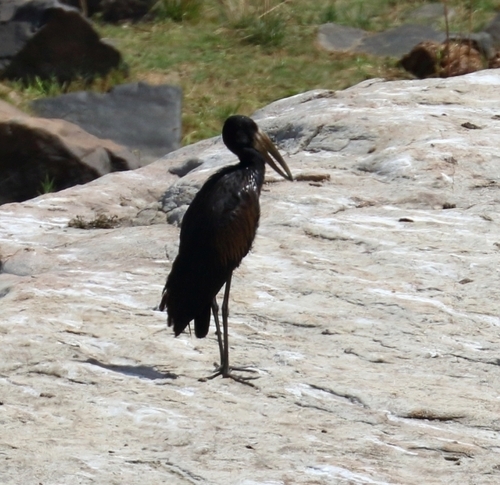 African Openbill
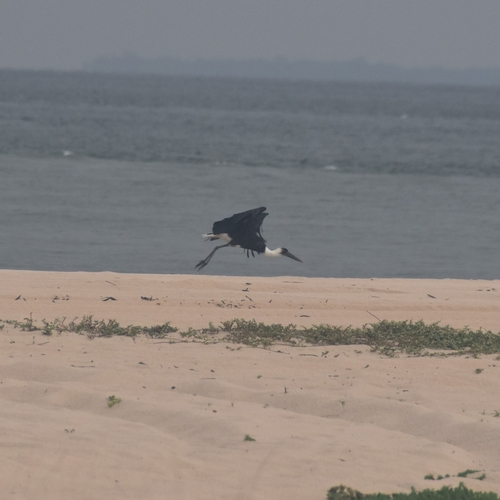 African Woolly-necked Stork
In breve
Il segno distintivo più affidabile per separare l'African Openbill dall'African Woolly-necked Stork è la presenza di un collo e di un ventre inferiore di un bianco puro e soffice sul Woolly-necked, in contrasto con il piumaggio completamente scuro e iridescente dell'Openbill. In volo o a riposo, il collo e il ventre bianchi del Woolly-necked si distinguono anche da lontano, mentre l'Openbill è uniformemente scuro con una lucentezza verdognola e non presenta alcun bianco. I giovani Woolly-necked Storks mostrano una fronte piumata, a volte striata, e un segno bianco sulla fronte, mentre i giovani Openbill rimangono completamente scuri. Anche la struttura del becco è distintiva: l'Openbill ha un becco unico e con fessure, mentre il becco del Woolly-necked è dritto e pesante. Entrambe le specie sono cicogne a larga ala e lunghe gambe, ma queste differenze di piumaggio e strutturali sono chiare sul campo.
Consigli di identificazione
- Collo e Ventre Bianchi (solo Woolly-necked): Cerca un collo e un ventre inferiore di un bianco puro e soffice—diagnostico per il Woolly-necked Stork di tutte le età tranne i nidiacei molto giovani. L'Openbill è sempre completamente scuro.
- Piumaggio Completamente Scuro (Openbill): L'African Openbill è uniformemente scuro, con una lucentezza iridescente verdognola o bronzo su ali e petto, e non mostra mai bianco sul collo o sul ventre a qualsiasi età.
- Forma del Becco: L'Openbill ha un becco unico e con fessure (le mandibole non si incontrano tranne che alla punta), adattato per estrarre i molluschi. Il becco del Woolly-necked Stork è dritto, pesante e solido, a volte con una base rossastra ma mai con fessure.
- Fronte Giovanile (Woolly-necked): I giovani Woolly-necked Storks hanno una fronte piumata, a volte striata, e un segno bianco prominente al centro al momento dell'involo. Il giovane Openbill è completamente scuro, senza bianco sulla fronte.
- Iridescenza: Entrambe le specie mostrano iridescenza, ma quella dell'Openbill è verdognola sulle ali e sul petto, mentre quella del Woolly-necked è color rame-viola sul collo anteriore. Solo il Woolly-necked ha piume del collo anteriore allungate ed erigibili.
- Vista in Volo: In volo, il Woolly-necked Stork mostra un collo e un ventre bianchi dal basso, e una striscia arancione-rossa brillante non piumata lungo la parte inferiore dell'avambraccio (visibile a distanza ravvicinata). L'Openbill in volo è completamente scuro, senza macchie bianche o di pelle colorata.
- Coda: Il Woolly-necked Stork ha una coda bianca profondamente biforcuta, solitamente coperta da copritail neri; la coda dell'Openbill non è descritta come biforcuta o bianca.
- Colore delle Gambe: Il Woolly-necked Stork ha lunghe gambe rosse; il colore delle gambe dell'Openbill non è specificato ma non si distingue come rosso.
- Colore dell'Iride: Il Woolly-necked ha un'iride di un rosso cremisi profondo o rosso vino; il colore dell'iride dell'Openbill non è specificato.
- Dimensioni e Struttura: Il Woolly-necked Stork è più grande e più robusto, con un becco e un corpo più pesanti, mentre l'Openbill è più piccolo e più snello, specialmente in volo.
- Contesto Ambientale: Se visto lontano dall'acqua, specialmente in aree agricole o boschive, è più probabile che sia un Woolly-necked. L'Openbill è più legato agli habitat umidi.
- Comportamento: L'Openbill è più agile in volo, spesso tuffandosi e manovrando; il Woolly-necked può anche tuffarsi ma è generalmente più pesante e più ponderoso.
- Vocalizzazioni: Il Woolly-necked può emettere fischi o sibili, specialmente al nido; l'Openbill è generalmente silenzioso.
- Piumino dei Nidiacei: I nidiacei molto giovani del Woolly-necked sono grigi pallidi con piumino color crema e una corona nera; i nidiacei dell'Openbill non sono descritti in dettaglio ma è improbabile che mostrino piumino pallido o un collo bianco.
- Piume di Esibizione: Le piume da parata dell'Openbill sono strutturalmente uniche, simili a nastri, e creano iridescenza verde; le piume di esibizione del Woolly-necked sono allungate e color rame, ma non simili a nastri.
Taglia
L'African Woolly-necked Stork è generalmente più grande, con un'altezza di 75–92 cm, mentre l'African Openbill è più piccolo e più agile in volo [wikipedia]. Entrambe sono cicogne di dimensioni medie-grandi, ma la differenza di dimensioni può essere sottile a meno che non siano viste fianco a fianco. Il Woolly-necked Stork appare anche più pesante e robusto, specialmente nel corpo e nel becco.
Piumaggio
- Giovani/Immaturi: I giovani Woolly-necked Storks sono più opachi degli adulti, con una fronte piumata (a volte striata di nero e bianco) e un segno bianco prominente al centro della fronte all'età dell'involo. Il loro collo rimane più soffice e pallido rispetto agli adulti. I giovani African Openbills sono completamente scuri, privi di bianco sul collo o sul ventre, e non mostrano il segno bianco sulla fronte.
- Adulti: L'adulto Woolly-necked Stork è nero lucido nel complesso con un collo bianco e soffice, un ventre inferiore bianco e copritail. Il 'cappello' nero e l'iridescenza color rame-viola sul collo anteriore sono distintivi. Gli adulti dell'African Openbill sono uniformemente scuri con una lucentezza iridescente verdognola, specialmente sulle ali e sul petto, e non presentano alcun bianco sul collo o sul ventre. Le loro piume delle ali e del petto sono strutturalmente uniche, producendo una lucentezza verde scuro. Entrambe le specie mostrano una certa iridescenza, ma solo il Woolly-necked ha il collo anteriore color rame e aree bianche.
- In Volo: Il Woolly-necked Stork mostra un collo e un ventre bianchi dal basso, e una striscia arancione-rossa brillante non piumata lungo la parte inferiore dell'avambraccio, visibile a distanza ravvicinata. L'Openbill rimane completamente scuro in volo, senza macchie bianche o di pelle luminosa.
Comportamento
L'African Openbill è notevolmente agile per una cicogna, spesso eseguendo tuffi ripidi e manovre acrobatiche in volo, specialmente durante le discese. Utilizza sia il battito sostenuto che il planare sulle termiche. Il Woolly-necked Stork plana anche sulle termiche, ma è descritto come più pesante e a volte esegue voli 'simili a pipistrelli' improvvisi e tuffi ripidi, con il vento che produce un forte rumore attraverso le sue penne. Entrambe le specie volano con il collo disteso, ma il volo dell'Openbill è più agile e meno ponderoso.
Habitat
Entrambe le specie sono diffuse nell'Africa subsahariana e possono essere trovate in habitat umidi, ma il Woolly-necked Stork utilizza una gamma più ampia di habitat, comprese le paludi nei boschi, le aree agricole e persino i nidi su alberi alti in habitat non umidi. L'Openbill è più strettamente legato agli habitat umidi e ai corpi idrici, specialmente dove i molluschi sono abbondanti. Il Woolly-necked Stork è più probabile che venga visto lontano dall'acqua, comprese le aree agricole e boschive.
Voce
Il Woolly-necked Stork emette fischi bisillabici durante le esibizioni e un forte suono di sibilo quando è minacciato. Non sono state notate vocalizzazioni distintive per l'African Openbill nelle fonti fornite.
African Openbill · African Woolly-necked Stork · I miei uccelli difficili