

Motmot

Abdim's Stork vs Red-throated Wryneck

Ciconia abdimii versus Jynx ruficollis

Play a quiz with Abdim's Stork and Red-throated Wryneck
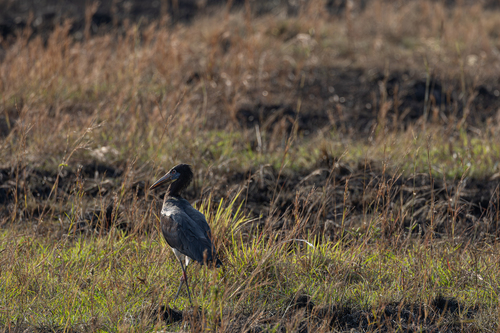
Abdim's Stork (Ciconia abdimii) Abdim's Stork
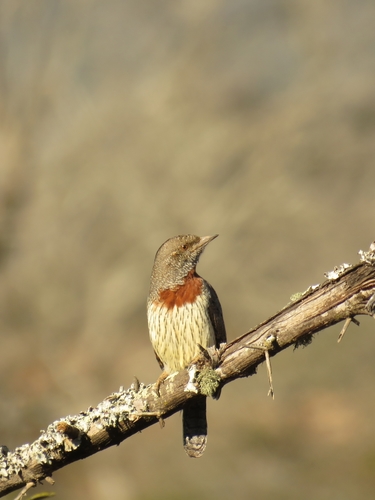
Red-throated Wryneck (Jynx ruficollis) Red-throated Wryneck

Media

Loading…

In short

The most reliable way to separate Abdim's Stork from Red-throated Wryneck is by overall size and structure: Abdim's Stork is a large, long-legged wader, while the wryneck is a small, slim, woodpecker-relative with cryptic plumage. In flight or perched, the stork's black-and-white contrast, long legs, and bare red and blue facial skin (in breeding) are unmistakable against the wryneck's intricately patterned, brownish camouflage and short, fine bill. Juvenile and adult wrynecks both show a red or rufous throat patch (varying by subspecies), which never appears on the stork. If only a quick view is had, focus on bill shape, leg length, and overall jizz: storks stride and soar, wrynecks cling and flit.

Identification tips

  1. Size is the first check: Abdim's Stork is huge (about 1 kg, 73 cm), while Red-throated Wryneck is tiny (52 g, 19 cm). If the bird is anywhere near sparrow or starling size, it's not a stork.
  2. Leg length and posture: Storks have extremely long, visible legs both walking and in flight; wrynecks have short legs, rarely visible, and perch upright on branches.
  3. Bill shape: Stork has a heavy, straight, grey bill; wryneck has a long, thin, pointed bill suited for probing, never heavy or stork-like.
  4. Plumage blocks: Stork is glossy black above, clean white below, with no mottling; wryneck is intricately barred and streaked in browns and greys, with no solid black or white blocks.
  5. Facial skin: In breeding storks, look for red skin in front of the eye and blue near the bill; wrynecks have feathered faces with no bare skin.
  6. Throat patch: Wryneck shows a red or rufous throat and upper breast (extent varies by subspecies), never present in stork.
  7. Flight style: Stork soars and glides on broad wings; wryneck flies with bounding, undulating flight typical of woodpeckers.
  8. Tail and wing shape: Wryneck has a long, fan-shaped tail and short wings; stork has a short tail and long, broad wings.
  9. Perching behavior: Wryneck perches upright, tail and wings down, often on branches; stork stands or walks on the ground, rarely perching in trees.
  10. Foraging behavior: Stork feeds in open fields, wading or walking; wryneck forages mainly on the ground for ants, sometimes probing bark.
  11. Juvenile confusion: Even juvenile wrynecks, though more barred, have the same structure and cryptic pattern; juvenile storks are still large, black-and-white, and long-legged.
  12. Habitat context: In dense woodland, expect wryneck; in open grassland or agricultural fields, expect stork.
  13. Vocalization: If you hear a loud call or hissing from a small bird, it's wryneck; storks are generally silent.
  14. Group size: Storks often in flocks, especially when feeding; wrynecks are solitary or in pairs.
  15. Season and sex: No significant seasonal or sex-based confusion; both species are resident in much of their range, and sexes are similar in the field.

Size

Abdim's Stork is dramatically larger: about 73 cm (29 in) tall and weighing just over 1 kg (2.2 lb), making it the smallest stork, but still massive compared to the Red-throated Wryneck's 19 cm (7.5 in) length and 52 g (1.8 oz) weight. Even at a distance, the stork's size, long legs, and bulk are obvious, while the wryneck is sparrow-sized and slim. There is no overlap in size or silhouette.

Plumage

No age or flight plumage of Red-throated Wryneck remotely resembles Abdim's Stork. Adult and juvenile storks are black above with white underparts, grey legs, and in breeding season, red facial skin in front of the eye and blue near the bill. The stork's legs are long and visible even in flight or at rest. The wryneck, by contrast, is cryptically patterned in browns, greys, and blacks, with a red or rufous throat patch (extent varies by subspecies and age), and a finely barred and mottled appearance above and below. Juvenile wrynecks are darker and more barred, but still show the small bill and cryptic pattern. The wryneck's underparts are white with dark streaks, and the flanks/cinnamon undertail are never clean white as in the stork. The wryneck's wings are brown above and buff below, lacking any bold contrast. In all ages, the stork's black-and-white color blocks and bare skin patches are unique.

Behaviour

Abdim's Stork is usually seen walking in open areas, striding with long legs, or soaring on broad wings. It feeds mainly on insects, often in groups. The Red-throated Wryneck is solitary, perching upright on branches or foraging on the ground for ants, sometimes clinging to trunks in woodpecker fashion. Its flight is undulating, alternating flaps and glides, and it rarely soars. When threatened, the wryneck twists its neck in a snake-like display and may hiss, a behavior not seen in storks.

Habitat

Both species occur in open habitats in sub-Saharan Africa, but Abdim's Stork prefers open country, grasslands, and agricultural fields, often far from trees. The Red-throated Wryneck requires open habitats with scattered trees or clumps of woodland, as it needs vertical surfaces for perching and nesting. Wrynecks are rarely found in treeless expanses, while storks avoid dense woodland.

Voice

No diagnostic vocalizations are described for Abdim's Stork in these notes. Red-throated Wryneck is known for its loud calls from prominent perches, especially during territory advertisement, and for hissing when threatened. If you hear a loud, repeated call or hissing from a small bird in a tree, it's likely the wryneck; storks are generally silent or give only low croaks.

Submit a better description

Use the same sections as the comparison. Your text is published immediately.

The most reliable way to separate Abdim's Stork from Red-throated Wryneck is by overall size and structure: Abdim's Stork is a large, long-legged wader, while the wryneck is a small, slim, woodpecker-relative with cryptic plumage. In flight or perched, the stork's black-and-white contrast, long legs, and bare red and blue facial skin (in breeding) are unmistakable against the wryneck's intricately patterned, brownish camouflage and short, fine bill. Juvenile and adult wrynecks both show a red or rufous throat patch (varying by subspecies), which never appears on the stork. If only a quick view is had, focus on bill shape, leg length, and overall jizz: storks stride and soar, wrynecks cling and flit.

  1. Size is the first check: Abdim's Stork is huge (about 1 kg, 73 cm), while Red-throated Wryneck is tiny (52 g, 19 cm). If the bird is anywhere near sparrow or starling size, it's not a stork.
  2. Leg length and posture: Storks have extremely long, visible legs both walking and in flight; wrynecks have short legs, rarely visible, and perch upright on branches.
  3. Bill shape: Stork has a heavy, straight, grey bill; wryneck has a long, thin, pointed bill suited for probing, never heavy or stork-like.
  4. Plumage blocks: Stork is glossy black above, clean white below, with no mottling; wryneck is intricately barred and streaked in browns and greys, with no solid black or white blocks.
  5. Facial skin: In breeding storks, look for red skin in front of the eye and blue near the bill; wrynecks have feathered faces with no bare skin.
  6. Throat patch: Wryneck shows a red or rufous throat and upper breast (extent varies by subspecies), never present in stork.
  7. Flight style: Stork soars and glides on broad wings; wryneck flies with bounding, undulating flight typical of woodpeckers.
  8. Tail and wing shape: Wryneck has a long, fan-shaped tail and short wings; stork has a short tail and long, broad wings.
  9. Perching behavior: Wryneck perches upright, tail and wings down, often on branches; stork stands or walks on the ground, rarely perching in trees.
  10. Foraging behavior: Stork feeds in open fields, wading or walking; wryneck forages mainly on the ground for ants, sometimes probing bark.
  11. Juvenile confusion: Even juvenile wrynecks, though more barred, have the same structure and cryptic pattern; juvenile storks are still large, black-and-white, and long-legged.
  12. Habitat context: In dense woodland, expect wryneck; in open grassland or agricultural fields, expect stork.
  13. Vocalization: If you hear a loud call or hissing from a small bird, it's wryneck; storks are generally silent.
  14. Group size: Storks often in flocks, especially when feeding; wrynecks are solitary or in pairs.
  15. Season and sex: No significant seasonal or sex-based confusion; both species are resident in much of their range, and sexes are similar in the field.

Abdim's Stork is dramatically larger: about 73 cm (29 in) tall and weighing just over 1 kg (2.2 lb), making it the smallest stork, but still massive compared to the Red-throated Wryneck's 19 cm (7.5 in) length and 52 g (1.8 oz) weight. Even at a distance, the stork's size, long legs, and bulk are obvious, while the wryneck is sparrow-sized and slim. There is no overlap in size or silhouette.

No age or flight plumage of Red-throated Wryneck remotely resembles Abdim's Stork. Adult and juvenile storks are black above with white underparts, grey legs, and in breeding season, red facial skin in front of the eye and blue near the bill. The stork's legs are long and visible even in flight or at rest. The wryneck, by contrast, is cryptically patterned in browns, greys, and blacks, with a red or rufous throat patch (extent varies by subspecies and age), and a finely barred and mottled appearance above and below. Juvenile wrynecks are darker and more barred, but still show the small bill and cryptic pattern. The wryneck's underparts are white with dark streaks, and the flanks/cinnamon undertail are never clean white as in the stork. The wryneck's wings are brown above and buff below, lacking any bold contrast. In all ages, the stork's black-and-white color blocks and bare skin patches are unique.

Abdim's Stork is usually seen walking in open areas, striding with long legs, or soaring on broad wings. It feeds mainly on insects, often in groups. The Red-throated Wryneck is solitary, perching upright on branches or foraging on the ground for ants, sometimes clinging to trunks in woodpecker fashion. Its flight is undulating, alternating flaps and glides, and it rarely soars. When threatened, the wryneck twists its neck in a snake-like display and may hiss, a behavior not seen in storks.

Both species occur in open habitats in sub-Saharan Africa, but Abdim's Stork prefers open country, grasslands, and agricultural fields, often far from trees. The Red-throated Wryneck requires open habitats with scattered trees or clumps of woodland, as it needs vertical surfaces for perching and nesting. Wrynecks are rarely found in treeless expanses, while storks avoid dense woodland.

No diagnostic vocalizations are described for Abdim's Stork in these notes. Red-throated Wryneck is known for its loud calls from prominent perches, especially during territory advertisement, and for hissing when threatened. If you hear a loud, repeated call or hissing from a small bird in a tree, it's likely the wryneck; storks are generally silent or give only low croaks.

Discard your changes?

You have unsaved edits. If you leave now, those changes will be lost.

Abdim's Stork · Red-throated Wryneck · My Tricky Birds