

maria-te-viu vs guaracava-de-barriga-amarela
Tyrannulus elatus versus Elaenia flavogaster
Jogue um quiz com maria-te-viu e guaracava-de-barriga-amarela
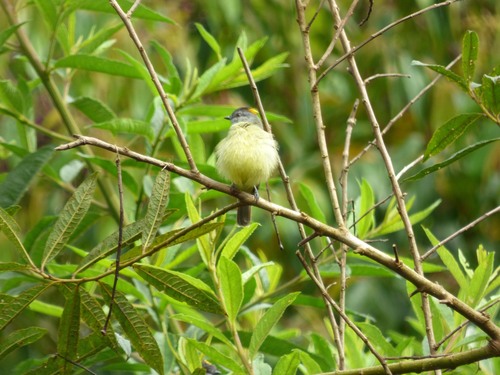 maria-te-viu
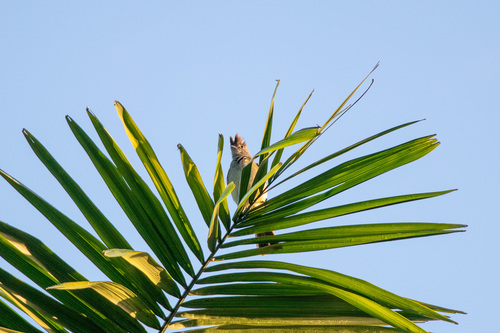 guaracava-de-barriga-amarela
Em resumo
A marca de campo mais confiável para separar a maria-te-viu da guaracava-de-barriga-amarela é o tamanho e a estrutura geral: a maria-te-viu é muito menor, mais compacta e tem um bico e uma cauda proporcionalmente mais curtos. Na plumagem, procure pela distinta faixa de coroa amarela ou amarelo-alaranjada da maria-te-viu, que geralmente é visível, em comparação com a crista espessa da guaracava, que possui uma faixa branca oculta. Ambas têm barras alares, mas as da maria-te-viu são mais brancas e contrastantes. Se você ver o pássaro em voo ou empoleirado, a aparência geral—pequena, ativa e de bico curto em comparação com a maior, com crista e mais pesada—frequentemente confirmará a identificação. Cuidado, pois ambas podem apresentar partes inferiores amarelas e partes superiores oliváceas, então concentre-se no padrão da cabeça e no tamanho.
Dicas de identificação
- O tamanho é a verificação mais rápida: Se o pássaro parecer pequeno e delicado, é quase certamente uma maria-te-viu. Se parecer de tamanho médio e robusto para um matador, suspeite da guaracava-de-barriga-amarela. Isso funciona em todas as idades e em todas as estações.
- Forma e tamanho do bico: A maria-te-viu tem um bico curto, arredondado e preto; o bico da guaracava é mais longo, mais largo na base e frequentemente apresenta uma base mais clara na mandíbula. A forma do bico é especialmente útil quando os pássaros estão empoleirados de perfil.
- Padrão da cabeça: Procure pela faixa de coroa amarela ou amarelo-alaranjada brilhante da maria-te-viu em uma coroa escura (especialmente óbvio nos machos, mas presente em ambos os sexos). A faixa branca da crista da guaracava geralmente está oculta, a menos que a crista esteja levantada; sua coroa é oliva acastanhada e a cabeça geral é mais espessa.
- Supercílios e anel ocular: A maria-te-viu tem um supercílios acinzentado e uma linha ocular escura fina, dando um padrão facial mais nítido. A guaracava tem um anel ocular branco fraco e lores mais claros, mas o rosto é menos marcado.
- Crista: A guaracava frequentemente levanta sua crista espessa, dando uma aparência pontuda ou desgrenhada. A coroa da maria-te-viu é lisa e plana, nunca espessa.
- Barras alares: Ambas as espécies têm duas barras alares pálidas, mas as da maria-te-viu são geralmente mais brilhantes e contrastantes (brancas a amarelo-claras), enquanto as da guaracava são mais opacas e menos distintas.
- Partes inferiores: Ambas têm barrigas amareladas, mas a da maria-te-viu é mais clara e mais uniforme, com um tom oliva no peito. As partes inferiores da guaracava são mais variáveis, com uma garganta cinza pálido, peito oliva cinza e barriga amarela a esbranquiçada.
- Partes superiores: As costas da maria-te-viu são verde-oliva brilhante, enquanto as da guaracava são oliva acastanhada (às vezes mais acastanhada ou cinza dependendo da subespécie).
- Cauda: A cauda da maria-te-viu é curta e compacta; a da guaracava é mais longa e mais proporcional ao seu corpo maior.
- Aparência em voo: A maria-te-viu é rápida, ágil e frequentemente voa na copa das árvores; a guaracava é mais robusta, mais lenta e empoleira-se de forma mais ereta, frequentemente em áreas mais abertas.
- Contexto de habitat: Em áreas muito abertas, áridas ou urbanas, a guaracava é muito mais provável. A maria-te-viu é mais típica de bordas de floresta e florestas úmidas.
- Confusão de sexo/idade: As fêmeas da maria-te-viu são ligeiramente mais claras, mas ainda mostram a faixa amarela da coroa. Os sexos e idades da guaracava são semelhantes, então não confie nas diferenças de sexo.
- Voz (não descrita nas fontes): Se você ouvir um chamado distinto, consulte um guia local, mas não confie na voz para este par, a menos que você os conheça bem.
- Cuidado com a sobreposição: Ambas podem ocorrer na borda da floresta e em florestas semi-abertas, então sempre verifique novamente o tamanho e o padrão da cabeça.
- Plumagem sazonal: Nenhuma mudança sazonal significativa descrita; essas marcas são confiáveis durante todo o ano.
Tamanho
A maria-te-viu é dramaticamente menor: 10–11 cm de comprimento e cerca de 7 g, em comparação com a guaracava-de-barriga-amarela, que mede 15–17 cm e 24 g ([wikidata]). A maria-te-viu parece minúscula, com um bico curto e robusto e proporções compactas, enquanto a guaracava é de tamanho médio, notavelmente mais robusta e tem uma cabeça e crista maiores e mais espessas. Mesmo à distância ou em pouca luz, a diferença de tamanho é impressionante e frequentemente diagnóstica.
Plumagem
- Padrão da asa de juvenil/imaturo: Nenhuma diferença específica de padrão de asa juvenil ou imaturo é descrita para ambas as espécies nas fontes, então concentre-se na plumagem adulta e geral.
- Padrão da cabeça: A maria-te-viu apresenta uma faixa de coroa amarela brilhante a amarelo-alaranjada em uma coroa escura (cinza-ardósia a negra nos machos, mais clara nas fêmeas), com um supercílios acinzentado e uma linha ocular escura fina. A guaracava-de-barriga-amarela tem uma crista espessa com uma faixa branca parcialmente oculta, coroa oliva acastanhada e um anel ocular branco fraco; a faixa branca da crista muitas vezes não é visível, a menos que a crista esteja levantada.
- Partes superiores: As costas da maria-te-viu são verde-oliva brilhante, enquanto a guaracava é oliva acastanhada (mais acastanhada ou cinza em algumas subespécies).
- Barras alares: Ambas têm duas barras alares pálidas, mas as da maria-te-viu são brancas a branco-amareladas e frequentemente mais brilhantes e mais bem definidas; as da guaracava são branco-amareladas, frequentemente menos contrastantes em relação às asas mais escuras.
- Partes inferiores: Ambas têm barrigas amareladas, mas a da maria-te-viu é amarela clara a média com um tom oliva no peito, enquanto a da guaracava é amarela a amarelo-clara ou esbranquiçada, com um peito oliva cinza e garganta cinza pálido.
- Cauda: Ambas têm caudas oliva escuras, mas a da maria-te-viu é mais curta e mais compacta em relação ao tamanho do corpo.
- Variação de sexo/idade: As fêmeas da maria-te-viu são ligeiramente mais claras em geral, especialmente na coroa e nas partes superiores; os sexos da guaracava são semelhantes.
Comportamento
A maria-te-viu é muito ativa, frequentemente voando pela copa das árvores ou níveis intermediários, e tende a empoleirar-se de forma mais horizontal. É rápida e ágil, combinando com seu tamanho diminuto. A guaracava-de-barriga-amarela é mais deliberada, frequentemente levantando sua crista espessa, e empoleira-se de forma mais ereta. A guaracava é mais provável de ser vista em áreas abertas ou semi-abertas, às vezes capturando insetos de poleiros expostos. Seu estilo de forrageio reflete seu tamanho: a maria-te-viu é rápida e semelhante a um rato, enquanto a guaracava é mais ousada e mais óbvia.
Habitat
A maria-te-viu prefere bordas de florestas, florestas abertas e crescimento secundário, mas é mais restrita a florestas úmidas e semiúmidas de terras baixas na América Central e do Sul (excluindo os países mais ao sul). A guaracava-de-barriga-amarela é muito mais generalista, encontrada em uma ampla gama de habitats levemente arborizados, desde arbustos áridos até savanas, jardins e parques, e evita interiores de florestas densas. Se você estiver em uma área muito aberta ou urbana, a guaracava é mais provável; na borda da floresta ou na copa, ambas são possíveis.
maria-te-viu · guaracava-de-barriga-amarela · Minhas aves difíceis