

Motmot

ヒメタイランチョウ 対 キバラシラギクタイランチョウ

Tyrannulus elatus 対 Elaenia flavogaster

ヒメタイランチョウとキバラシラギクタイランチョウのクイズ
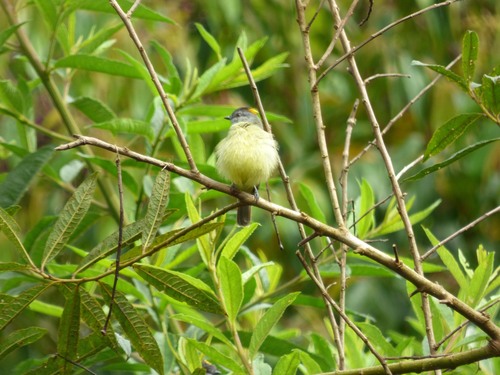
ヒメタイランチョウ (Tyrannulus elatus) ヒメタイランチョウ
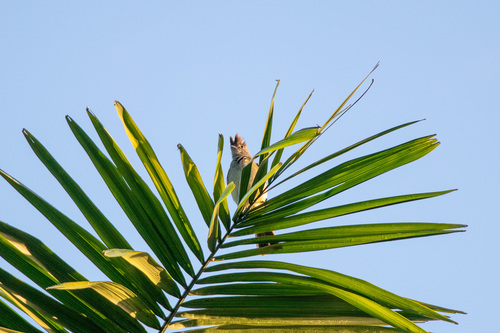
キバラシラギクタイランチョウ (Elaenia flavogaster) キバラシラギクタイランチョウ

メディア

読み込み中…

要点

イエロークラウンタイランチョウとキバラシラギクタイランチョウを区別する最も信頼できるフィールドマークは、全体のサイズと構造です:タイランチョウははるかに小さく、よりコンパクトで、比例的に短いくちばしと尾を持っています。羽毛では、タイランチョウの特徴的な黄色またはオレンジ黄色の冠のストライプを探してください。これは通常見えますが、キバラシラギクタイランチョウのふさふさした冠は隠れた白いストライプを持っています。両方とも翼帯を持っていますが、タイランチョウのものはより白く、対照的です。飛んでいるか止まっている鳥を見ると、全体の印象—小さく、活発で、短いくちばしを持つのに対し、より大きく、冠があり、重い—がしばしば識別を決定づけます。両方とも黄色の下部とオリーブ色の上部を示すことがあるので、頭のパターンとサイズに焦点を当ててください。

識別のコツ

  1. サイズは最も早いチェックです: 鳥が小さくて繊細に見える場合、ほぼ確実にイエロークラウンタイランチョウです。もし中くらいのサイズで、フライキャッチャーとしてはずんぐりしているように見えるなら、キバラシラギクタイランチョウを疑ってください。これはすべての年齢とすべての季節で機能します。
  2. くちばしの形とサイズ: タイランチョウは短く、丸い黒いくちばしを持っています;キバラシラギクタイランチョウのくちばしは長く、基部で広く、しばしば下顎の基部がより淡い色を示します。くちばしの形は、鳥が横から止まっているときに特に役立ちます。
  3. 頭のパターン: タイランチョウの明るい黄色またはオレンジ黄色の冠のストライプを暗い冠の上で探してください(特にオスに明らかですが、両性に存在します)。キバラシラギクタイランチョウの白い冠のストライプは通常隠れており、冠が上がっていない限り見えません;その冠は茶色がかったオリーブ色で、全体の頭はふさふさしています。
  4. スーペリシリウムとアイリング: タイランチョウは灰色がかったスーペリシリウムと薄い暗いアイラインを持ち、よりシャープな顔のパターンを与えます。キバラシラギクタイランチョウは淡い白いアイリングとより淡いロアを持っていますが、顔はあまりシャープにマークされていません。
  5. 冠: キバラシラギクタイランチョウはしばしばふさふさした冠を上げ、尖ったまたは乱れた外観を与えます。タイランチョウの冠は滑らかで平らで、決してふさふさしていません。
  6. 翼帯: 両種は2つの淡い翼帯を持っていますが、タイランチョウのものは通常より明るく、対照的です(白から黄色がかった白)、一方キバラシラギクタイランチョウのものは鈍い黄色がかった白で、あまり目立ちません。
  7. 下部: 両方とも黄色がかった腹部を持っていますが、タイランチョウのものはより淡く、より均一で、胸にオリーブ色の洗いがかかっています。キバラシラギクタイランチョウの下部はより変動があり、淡い灰色の喉、オリーブ色の灰色の胸、黄色から白っぽい腹部を持っています。
  8. 上部: タイランチョウの背中は明るいオリーブグリーンですが、キバラシラギクタイランチョウの背中は茶色がかったオリーブ色です(亜種によってはより茶色または灰色になることがあります)。
  9. 尾: タイランチョウの尾は短くてコンパクトですが、キバラシラギクタイランチョウの尾は長く、より大きな体に比例しています。
  10. 飛行中の印象: タイランチョウは素早く、敏捷で、しばしば樹冠の中をひらひらと飛びます;キバラシラギクタイランチョウはより大きく、遅く、より直立して止まり、しばしばより開けた場所にいます。
  11. 生息地の文脈: 非常に開けた、乾燥した、または都市部では、キバラシラギクタイランチョウがはるかに可能性が高いです。タイランチョウは森林の端や湿った森林に典型的です。
  12. 性別/年齢の混乱: タイランチョウの雌はわずかに淡いですが、依然として黄色の冠のストライプを示します。キバラシラギクタイランチョウの性別と年齢は似ているので、性差に頼らないでください。
  13. 声(情報源には記載されていません): 特徴的な鳴き声が聞こえたら、地元のガイドを確認してくださいが、このペアについて声に頼らないでください、よく知っている場合を除いて。
  14. 重複に注意: 両方とも森林の端や半開放の森林に出現する可能性があるので、常にサイズと頭のパターンを再確認してください。
  15. 季節の羽毛: 重要な季節変化は記載されていません;これらのマークは年間を通じて信頼できます。

大きさ

イエロークラウンタイランチョウは劇的に小さく、長さは10〜11 cm、約7 gで、キバラシラギクタイランチョウの15〜17 cm、24 gと比較されます([wikidata])。タイランチョウは小さく見え、短くて太いくちばしとコンパクトなプロポーションを持っていますが、キバラシラギクタイランチョウは中くらいのサイズで、明らかにずんぐりしており、より大きく、ふさふさした頭と冠を持っています。距離があったり、光が悪い場合でも、サイズのギャップは際立っており、しばしば診断的です。

羽色

行動

イエロークラウンタイランチョウは非常に活発で、しばしば樹冠や中層をひらひらと飛び回り、より水平に止まる傾向があります。小さなサイズに見合った素早さと敏捷性を持っています。キバラシラギクタイランチョウはより慎重で、しばしばふさふさした冠を上げ、より直立して止まります。キバラシラギクタイランチョウは、開けたまたは半開放の場所で見られる可能性が高く、時には露出した止まり木から昆虫を捕まえます。彼らの採餌スタイルはサイズを反映しています:タイランチョウは素早く、マウスのようで、キバラシラギクタイランチョウはより大胆で明白です。

生息環境

イエロークラウンタイランチョウは森林の端、開けた森林、二次成長を好みますが、中央アメリカと南アメリカの湿ったおよび半湿った低地の森林により制限されています(最南端の国を除く)。キバラシラギクタイランチョウははるかに一般的で、乾燥した低木からサバンナ、庭、公園までの広範囲の軽い森林の生息地で見られ、密な森林の内部を避けます。非常に開けたまたは都市部にいる場合、キバラシラギクタイランチョウがより可能性が高いです;森林の端や樹冠では、両方とも可能です。

より良い説明を送る

比較と同じ項目を使ってください。文章はすぐに公開されます。

The most reliable field mark to separate Yellow-crowned Tyrannulet from Yellow-bellied Elaenia is overall size and structure: the tyrannulet is much smaller, more compact, and has a proportionally shorter bill and tail. In plumage, look for the tyrannulet’s distinctive yellow or orange-yellow crown stripe, which is usually visible, versus the elaenia’s bushy crest with a concealed white stripe. Both have wingbars, but the tyrannulet’s are whiter and more contrasting. If you see the bird in flight or perched, the overall jizz—tiny, active, and short-billed versus larger, crested, and heavier—will often clinch the ID. Beware that both can show yellow underparts and olive upperparts, so focus on head pattern and size.

  1. Size is the fastest check: If the bird looks tiny and delicate, it is almost certainly Yellow-crowned Tyrannulet. If it looks medium-sized and chunky for a flycatcher, suspect Yellow-bellied Elaenia. This works at all ages and in all seasons.
  2. Bill shape and size: Tyrannulet has a short, rounded, black bill; elaenia’s bill is longer, broader at the base, and often shows a paler base to the mandible. Bill shape is especially useful when the birds are perched in profile.
  3. Head pattern: Look for the tyrannulet’s bright yellow or orange-yellow crown stripe on a dark crown (especially obvious in males, but present in both sexes). Elaenia’s white crest stripe is usually hidden unless the crest is raised; its crown is brownish olive and the overall head is bushier.
  4. Supercilium and eyering: Tyrannulet has a grayish supercilium and thin dark eye-line, giving a sharper facial pattern. Elaenia has a faint whitish eyering and paler lores, but the face is less sharply marked.
  5. Crest: Elaenia often raises its bushy crest, giving a peaked or tousled look. Tyrannulet’s crown is smooth and flat, never bushy.
  6. Wingbars: Both species have two pale wingbars, but the tyrannulet’s are usually brighter and more contrasting (white to yellowish white), while elaenia’s are duller yellowish white and less distinct.
  7. Underparts: Both have yellowish bellies, but tyrannulet’s is paler and more uniform, with an olive wash on the breast. Elaenia’s underparts are more variable, with a pale gray throat, olive gray breast, and yellow to whitish belly.
  8. Upperparts: Tyrannulet’s back is bright olive-green, while elaenia’s is brownish olive (sometimes browner or grayer depending on subspecies).
  9. Tail: Tyrannulet’s tail is short and compact; elaenia’s is longer and more proportional to its larger body.
  10. Jizz in flight: Tyrannulet is quick, agile, and often flits in the canopy; elaenia is bulkier, slower, and perches more upright, often in more open areas.
  11. Habitat context: In very open, arid, or urban areas, elaenia is much more likely. Tyrannulet is more typical of forest edges and humid woodland.
  12. Sex/age confusion: Tyrannulet females are slightly paler, but still show the yellow crown stripe. Elaenia sexes and ages are similar, so don’t rely on sex differences.
  13. Voice (not described in sources): If you hear a distinctive call, check a local guide, but don’t rely on voice for this pair unless you know them well.
  14. Beware of overlap: Both can occur at forest edge and in semi-open woodland, so always double-check size and head pattern.
  15. Seasonal plumage: No significant seasonal changes described; these marks are reliable year-round.

Yellow-crowned Tyrannulet is dramatically smaller: 10–11 cm long and about 7 g, compared to Yellow-bellied Elaenia’s 15–17 cm and 24 g ([wikidata]). The tyrannulet appears tiny, with a short, stubby bill and compact proportions, while the elaenia is medium-sized, noticeably bulkier, and has a larger, bushier head and crest. Even at a distance or in poor light, the size gap is striking and often diagnostic.

  • Juvenile/immature upperwing pattern: No specific juvenile or immature wing pattern differences are described for either species in the sources, so focus on adult and general plumage.
  • Head pattern: Yellow-crowned Tyrannulet shows a bright yellow to orange-yellow crown stripe on a dark crown (slate-gray to blackish in males, paler in females), with a grayish supercilium and thin dark eye-line. Yellow-bellied Elaenia has a bushy crest with a partially hidden white stripe, brownish olive crown, and a faint whitish eyering; the white crest stripe is often not visible unless the crest is raised.
  • Upperparts: Tyrannulet’s back is bright olive-green, while elaenia is brownish olive (browner or grayer in some subspecies).
  • Wingbars: Both have two pale wingbars, but tyrannulet’s are white to yellowish white and often brighter and more sharply defined; elaenia’s are yellowish white, often less contrasting against duskier wings.
  • Underparts: Both have yellowish bellies, but tyrannulet’s is pale to medium yellow with an olive wash on the breast, while elaenia’s is yellow to pale yellow or whitish, with an olive gray breast and pale gray throat.
  • Tail: Both have dusky olive tails, but the tyrannulet’s is shorter and more compact relative to body size.
  • Sex/age variation: Tyrannulet females are slightly paler overall, especially on the crown and upperparts; elaenia sexes are alike.

Yellow-crowned Tyrannulet is very active, often flitting about in the canopy or mid-levels, and tends to perch more horizontally. It is quick and agile, matching its tiny size. Yellow-bellied Elaenia is more deliberate, often raising its bushy crest, and perches more upright. The elaenia is more likely to be seen in open or semi-open areas, sometimes sallying for insects from exposed perches. Their foraging style reflects their size: tyrannulet is quick and mouse-like, elaenia is bolder and more obvious.

Yellow-crowned Tyrannulet prefers forest edges, open woodlands, and second growth, but is more restricted to humid and semi-humid lowland forests in Central and South America (excluding southernmost countries). Yellow-bellied Elaenia is much more of a generalist, found in a wide range of lightly wooded habitats from arid scrub to savanna, gardens, and parks, and shuns dense forest interiors. If you’re in a very open or urban area, elaenia is more likely; in forest edge or canopy, both are possible.

変更を破棄しますか?

保存していない編集があります。今離れると失われます。

ヒメタイランチョウ · キバラシラギクタイランチョウ · 苦手な鳥