

Mosquerito Coronado vs Fiofío Ventriamarillo
Tyrannulus elatus frente a Elaenia flavogaster
Juega un quiz con Mosquerito Coronado y Fiofío Ventriamarillo
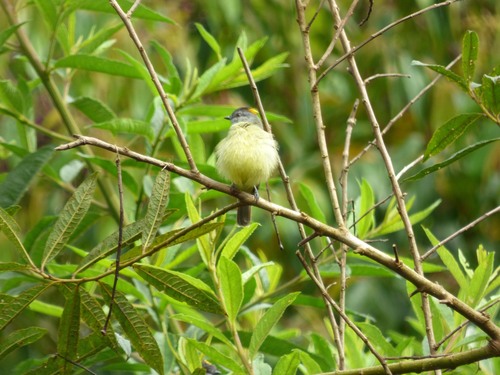 Mosquerito Coronado
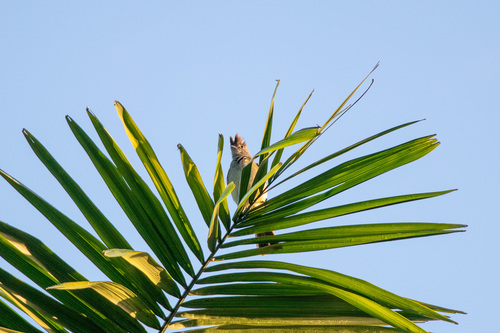 Fiofío Ventriamarillo
En breve
La marca de campo más confiable para separar el Mosquerito Coronado del Fiofío Ventriamarillo es el tamaño y la estructura general: el mosquerito es mucho más pequeño, más compacto y tiene un pico y una cola proporcionalmente más cortos. En el plumaje, busca la distintiva franja de corona amarilla o amarillo-naranja del mosquerito, que suele ser visible, frente a la cresta arbustiva del fiofío con una franja blanca oculta. Ambos tienen barras alares, pero las del mosquerito son más blancas y contrastantes. Si ves al pájaro en vuelo o posado, la apariencia general—pequeño, activo y con pico corto frente a más grande, con cresta y más pesado—frecuentemente confirmará la identificación. Ten cuidado, ya que ambos pueden mostrar partes inferiores amarillas y partes superiores oliváceas, así que concéntrate en el patrón de la cabeza y el tamaño.
Consejos de identificación
- El tamaño es la verificación más rápida: Si el pájaro parece pequeño y delicado, casi con certeza es el Mosquerito Coronado. Si parece de tamaño mediano y robusto para un atrapamoscas, sospecha del Fiofío Ventriamarillo. Esto funciona en todas las edades y en todas las estaciones.
- Forma y tamaño del pico: El mosquerito tiene un pico corto, redondeado y negro; el pico del fiofío es más largo, más ancho en la base y a menudo muestra una base más clara en la mandíbula. La forma del pico es especialmente útil cuando los pájaros están posados de perfil.
- Patrón de la cabeza: Busca la brillante franja de corona amarilla o amarillo-naranja del mosquerito en una corona oscura (especialmente obvio en machos, pero presente en ambos sexos). La franja blanca de la cresta del fiofío suele estar oculta a menos que la cresta esté levantada; su corona es de color oliva marrón y la cabeza en general es más arbustiva.
- Supercilio y anillo ocular: El mosquerito tiene un supercilio grisáceo y una línea ocular oscura delgada, lo que da un patrón facial más nítido. El fiofío tiene un anillo ocular blanquecino tenue y lore más pálidos, pero la cara está menos marcada.
- Cresta: El fiofío a menudo levanta su cresta arbustiva, dando un aspecto puntiagudo o despeinado. La corona del mosquerito es lisa y plana, nunca arbustiva.
- Barras alares: Ambas especies tienen dos barras alares pálidas, pero las del mosquerito suelen ser más brillantes y contrastantes (blancas a amarillo-blanquecinas), mientras que las del fiofío son de un blanco amarillento más apagado y menos distintivas.
- Partes inferiores: Ambos tienen vientres amarillentos, pero el del mosquerito es más pálido y uniforme, con un lavado oliváceo en el pecho. Las partes inferiores del fiofío son más variables, con una garganta gris pálido, pecho gris oliváceo y vientre amarillo a blanquecino.
- Partes superiores: La espalda del mosquerito es de un brillante verde oliva, mientras que la del fiofío es de un oliva marrón (a veces más marrón o gris dependiendo de la subespecie).
- Cola: La cola del mosquerito es corta y compacta; la del fiofío es más larga y más proporcional a su cuerpo más grande.
- Apariencia en vuelo: El mosquerito es rápido, ágil y a menudo revolotea en el dosel; el fiofío es más voluminoso, más lento y se posa más erguido, a menudo en áreas más abiertas.
- Contexto de hábitat: En áreas muy abiertas, áridas o urbanas, el fiofío es mucho más probable. El mosquerito es más típico de los bordes del bosque y los bosques húmedos.
- Confusión de sexo/edad: Las hembras del mosquerito son ligeramente más pálidas, pero aún muestran la franja de corona amarilla. Los sexos y edades del fiofío son similares, así que no confíes en las diferencias de sexo.
- Voz (no descrita en las fuentes): Si escuchas un llamado distintivo, consulta una guía local, pero no confíes en la voz para este par a menos que los conozcas bien.
- Cuidado con la superposición: Ambos pueden ocurrir en el borde del bosque y en bosques semi-abiertos, así que siempre verifica el tamaño y el patrón de la cabeza.
- Plumaje estacional: No se describen cambios estacionales significativos; estas marcas son confiables durante todo el año.
Tamaño
El Mosquerito Coronado es dramáticamente más pequeño: 10–11 cm de largo y alrededor de 7 g, en comparación con los 15–17 cm y 24 g del Fiofío Ventriamarillo ([wikidata]). El mosquerito parece diminuto, con un pico corto y robusto y proporciones compactas, mientras que el fiofío es de tamaño mediano, notablemente más voluminoso y tiene una cabeza y cresta más grandes y arbustivas. Incluso a distancia o en mala luz, la diferencia de tamaño es sorprendente y a menudo diagnóstica.
Plumaje
- Patrón de ala juvenil/inmaduro: No se describen diferencias específicas en el patrón de alas juvenil o inmaduro para ninguna de las especies en las fuentes, así que concéntrate en el plumaje adulto y general.
- Patrón de la cabeza: El Mosquerito Coronado muestra una brillante franja de corona amarilla a amarillo-naranja en una corona oscura (gris pizarra a negruzca en machos, más pálido en hembras), con un supercilio grisáceo y una línea ocular oscura delgada. El Fiofío Ventriamarillo tiene una cresta arbustiva con una franja blanca parcialmente oculta, corona de oliva marrón y un anillo ocular blanquecino tenue; la franja blanca de la cresta a menudo no es visible a menos que la cresta esté levantada.
- Partes superiores: La espalda del mosquerito es de un brillante verde oliva, mientras que la del fiofío es de un oliva marrón (más marrón o gris en algunas subespecies).
- Barras alares: Ambas tienen dos barras alares pálidas, pero las del mosquerito son de blanco a blanco amarillento y a menudo más brillantes y definidas; las del fiofío son de un blanco amarillento, a menudo menos contrastantes contra alas más oscuras.
- Partes inferiores: Ambos tienen vientres amarillentos, pero el del mosquerito es de amarillo pálido a medio con un lavado oliváceo en el pecho, mientras que el del fiofío es de amarillo a amarillo pálido o blanquecino, con un pecho gris oliváceo y garganta gris pálido.
- Cola: Ambos tienen colas oliváceas oscuras, pero la del mosquerito es más corta y compacta en relación con el tamaño del cuerpo.
- Variación de sexo/edad: Las hembras del mosquerito son ligeramente más pálidas en general, especialmente en la corona y partes superiores; los sexos del fiofío son similares.
Comportamiento
El Mosquerito Coronado es muy activo, a menudo revoloteando en el dosel o en niveles intermedios, y tiende a posarse más horizontalmente. Es rápido y ágil, acorde a su pequeño tamaño. El Fiofío Ventriamarillo es más deliberado, a menudo levantando su cresta arbustiva, y se posa más erguido. El fiofío es más probable que se vea en áreas abiertas o semi-abiertas, a veces lanzándose por insectos desde posaderos expuestos. Su estilo de forrajeo refleja su tamaño: el mosquerito es rápido y parecido a un ratón, el fiofío es más audaz y obvio.
Hábitat
El Mosquerito Coronado prefiere los bordes del bosque, bosques abiertos y crecimiento secundario, pero está más restringido a los bosques húmedos y semi-húmedos de tierras bajas en América Central y del Sur (excluyendo los países más al sur). El Fiofío Ventriamarillo es mucho más generalista, encontrado en una amplia gama de hábitats levemente boscosos desde matorrales áridos hasta sabanas, jardines y parques, y evita los interiores densos del bosque. Si estás en un área muy abierta o urbana, es más probable que veas al fiofío; en el borde del bosque o en el dosel, ambos son posibles.
Mosquerito Coronado · Fiofío Ventriamarillo · Mis aves difíciles