

gaturamo-de-barriga-branca vs yellow-throated euphonia
Euphonia minuta versus Euphonia hirundinacea
Jogue um quiz com gaturamo-de-barriga-branca e yellow-throated euphonia
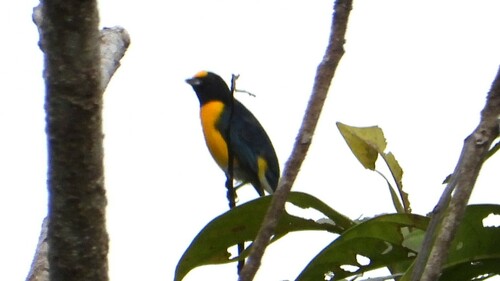 gaturamo-de-barriga-branca
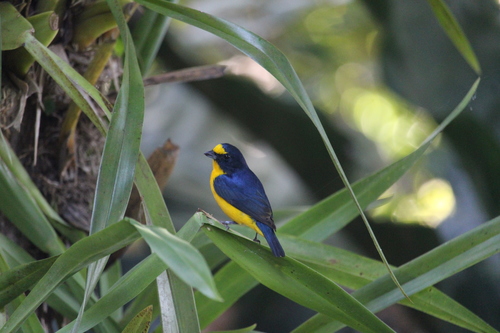 yellow-throated euphonia
Em resumo
A marca de campo mais confiável entre gaturamo-de-barriga-branca e yellow-throated euphonia é a cor e a extensão do vent e das partes inferiores: gaturamo-de-barriga-branca (ambos os sexos) apresenta um vent e coberturas de cauda distintamente brancos, enquanto yellow-throated euphonia tem coberturas de cauda cinza escuro ou oliva-amareladas e nenhum vent branco. Os machos de ambas as espécies são azul-preto brilhante por cima com partes inferiores amarelas, mas a mancha amarela na testa é menor e não alcança o olho no gaturamo-de-barriga-branca, enquanto se estende mais para trás no yellow-throated. As fêmeas são melhor separadas pela extensão do branco nas partes inferiores: as fêmeas do gaturamo-de-barriga-branca têm uma barriga e vent brancos, enquanto as fêmeas do yellow-throated têm um centro esbranquiçado a cinza-claro, mas coberturas de cauda oliva-amareladas. O gaturamo-de-barriga-branca é menor e mais compacto, com um bico e cauda mais curtos. Em voo ou visualizações rápidas, concentre-se na cor do vent e da cauda, e na diferença de tamanho se ambas as espécies estiverem presentes.
Dicas de identificação
- Vent/coberturas de cauda brancas (todas as idades, ambos os sexos): O gaturamo-de-barriga-branca sempre apresenta um vent e coberturas de cauda brancas, uma característica única que não está presente no yellow-throated.
- Coberturas de cauda (yellow-throated): O yellow-throated euphonia tem coberturas de cauda cinza escuro ou oliva-amareladas, nunca brancas.
- Cor da barriga (fêmeas): A fêmea do gaturamo-de-barriga-branca tem uma barriga e vent brancos, enquanto a fêmea do yellow-throated tem um centro esbranquiçado a cinza-claro, mas coberturas de cauda oliva-amareladas.
- Mancha na testa (machos adultos): A mancha amarela na testa do macho do gaturamo-de-barriga-branca é pequena e não alcança o olho; a do yellow-throated se estende até cerca da metade do olho.
- Partes inferiores (machos adultos): O gaturamo-de-barriga-branca tem um centro de barriga e vent brancos; o yellow-throated é amarelo por baixo, sem vent branco.
- Partes superiores (machos adultos): Ambos são azul-preto brilhante por cima, mas o gaturamo-de-barriga-branca pode mostrar um brilho arroxeado na cabeça e na nuca.
- Tamanho e estrutura: O gaturamo-de-barriga-branca é menor e mais compacto (10 g, 9 cm) com um bico mais curto e grosso; o yellow-throated é maior (14 g, 10–12 cm), com cauda mais longa e bico ligeiramente mais longo.
- Balanço da cauda (comportamento): O gaturamo-de-barriga-branca frequentemente balança a cauda enquanto forrageia; o yellow-throated não faz isso.
- Padrão das asas em voo: Ambas as espécies mostram branco na parte inferior das penas da cauda externa, mas a do yellow-throated é uma mancha oval maior; a do gaturamo-de-barriga-branca é mais restrita.
- Coberturas de asa inferior: O yellow-throated tem coberturas de asa inferior brancas; não especificado para o gaturamo-de-barriga-branca.
- Machos imaturos: Ambos começam parecendo fêmeas, mas os machos do yellow-throated desenvolvem primeiro o amarelo na garganta e na barriga, depois o preto na cabeça, com as costas e asas sendo as últimas a se tornarem azul-preto. Use a cor do vent se visível.
- Habitat: Se em floresta aberta, borda ou plantação na América Central, ambos são possíveis; o gaturamo-de-barriga-branca é mais provável em dossel de floresta úmida, mas não exclusivo.
- Vocalizações: Se você ouvir uma canção aguda, picotada ou imitando, ou explosiva "weet" ou "gleer," suspeite do yellow-throated. Silêncio ou canção desconhecida não exclui nenhum dos dois.
- Comparação direta: Se ambas as espécies estiverem presentes, o gaturamo-de-barriga-branca parecerá visivelmente menor e com cauda mais curta.
- Armadilhas: Não confie apenas na mancha amarela na testa—ambos a têm. Sempre verifique a cor do vent e da cauda para a separação mais confiável, especialmente em fêmeas e imaturos.
Tamanho
O gaturamo-de-barriga-branca é distintamente menor e mais leve, com uma média de cerca de 10 g e 9 cm de comprimento, enquanto o yellow-throated euphonia é maior, com cerca de 14 g e 10–12 cm. A diferença é notável em comparação direta, com o yellow-throated parecendo mais robusto e com cauda mais longa. O tamanho do bico também é ligeiramente maior no yellow-throated, mas isso é sutil, a menos que visto lado a lado.
Plumagem
- Juvenis/Imaturos: Os machos imaturos de ambas as espécies se assemelham às fêmeas, com partes superiores verde-oliva e partes inferiores esbranquiçadas ou pálidas. À medida que os machos do yellow-throated amadurecem, eles primeiro desenvolvem amarelo na garganta e na barriga, depois preto na cabeça, com as costas e asas sendo as últimas a se tornarem azul-preto. Os imaturos do gaturamo-de-barriga-branca são menos bem descritos, mas provavelmente semelhantes às fêmeas adultas, com oliva por cima e branco por baixo.
- Machos Adultos: Ambos têm partes superiores azul-preto brilhante e partes inferiores amarelas, mas o gaturamo-de-barriga-branca tem uma pequena mancha amarela na testa que não alcança o olho, enquanto a do yellow-throated se estende até cerca da metade do olho. A marca mais diagnóstica é abaixo: o gaturamo-de-barriga-branca tem um centro de barriga e coberturas de cauda brancas (vent), enquanto o yellow-throated tem partes inferiores amarelas por toda parte e coberturas de cauda cinza escuro ou oliva-amareladas.
- Fêmeas Adultas: As fêmeas do gaturamo-de-barriga-branca são oliva por cima, com uma garganta cinza-esbranquiçada, flancos oliva-amarelados e uma barriga e vent brancos. As fêmeas do yellow-throated são verde-oliva por cima com um brilho fraco, uma garganta e centro da barriga esbranquiçados a cinza-claro, flancos oliva-amarelados e coberturas de cauda pálidas e oliva-amareladas (não brancas). O vent branco é exclusivo do gaturamo-de-barriga-branca.
- Asas em Voo: Ambos têm branco nas teias internas das penas da cauda externa visíveis de baixo, mas a do yellow-throated é descrita como uma grande área branca oval, enquanto a do gaturamo-de-barriga-branca é mais restrita. As coberturas de asa inferior são brancas no yellow-throated; não especificado para o gaturamo-de-barriga-branca.
Comportamento
Ambas as espécies forrageiam ativamente no dossel, frequentemente em pares ou pequenos grupos, e se juntam a bandos de espécies mistas. O gaturamo-de-barriga-branca é notado por quase constantemente balançar sua cauda enquanto forrageia, o que pode ser uma pista comportamental sutil. Não há uma diferença comportamental forte no estilo de voo ou na maneira de forragear entre os dois, mas o gaturamo-de-barriga-branca pode parecer mais compacto e energético devido ao seu tamanho menor.
Habitat
As faixas se sobrepõem na América Central, especialmente do México ao Panamá. O gaturamo-de-barriga-branca é mais amplamente distribuído, ocorrendo do México através da América Central e na maior parte da América do Sul (exceto países do cone sul). O yellow-throated euphonia é restrito ao sudeste do México até o oeste do Panamá e prefere bordas de floresta, floresta aberta e plantações sombreadas, enquanto o gaturamo-de-barriga-branca é mais frequentemente encontrado no dossel de florestas úmidas. Ambos podem ocorrer juntos na América Central, então o habitat sozinho não é diagnóstico.
Voz
O yellow-throated euphonia tem uma canção variada com notas agudas, estridentes e chiadas, frequentemente em padrões picotados de 2–4 notas, e às vezes imita outros pássaros. Chamadas incluem "pidgel-eece" rápido, "chi-bib-bib-bib-bib," e explosivas "weet" ou "gleer." As chamadas das fêmeas são finas, agudas e trêmulas. Nenhuma descrição vocal específica é dada para o gaturamo-de-barriga-branca nas notas, então a voz não é um separador confiável, a menos que as chamadas distintas do yellow-throated sejam reconhecidas.
gaturamo-de-barriga-branca · yellow-throated euphonia · Minhas aves difíceis