

Eufonia Culiblanca vs Eufonia Gorjiamarilla
Euphonia minuta frente a Euphonia hirundinacea
Juega un quiz con Eufonia Culiblanca y Eufonia Gorjiamarilla
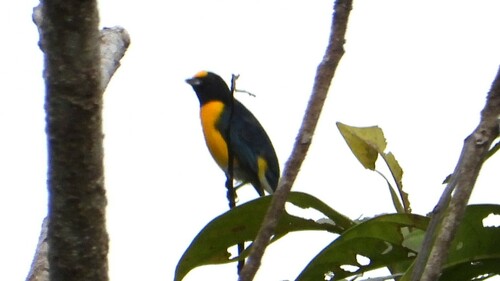 Eufonia Culiblanca
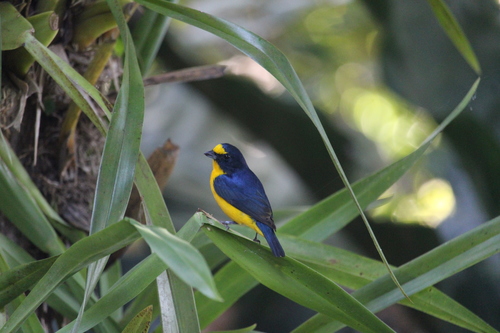 Eufonia Gorjiamarilla
En breve
La marca de campo más confiable entre la Eufonia Culiblanca y la Eufonia Gorjiamarilla es el color y la extensión del ventrículo y las partes inferiores: la Eufonia Culiblanca (ambos sexos) muestra un ventrículo y coberturas de la cola claramente blancos, mientras que la Eufonia Gorjiamarilla tiene coberturas de la cola de color gris oscuro o amarillo oliva y no tiene ventrículo blanco. Los machos de ambas especies son de un negro azulado brillante por encima con partes inferiores amarillas, pero la mancha amarilla en la frente es más pequeña y no llega al ojo en la Eufonia Culiblanca, mientras que se extiende más hacia atrás en la Eufonia Gorjiamarilla. Las hembras se separan mejor por la extensión de blanco en las partes inferiores: las hembras de Eufonia Culiblanca tienen un vientre y ventrículo blancos, mientras que las hembras de Eufonia Gorjiamarilla tienen un centro blanquecino a grisáceo pero coberturas de la cola de color amarillo oliva. La Eufonia Culiblanca es más pequeña y compacta, con un pico y cola más cortos. En vuelo o vistas rápidas, enfóquese en el color del ventrículo y la cola, y la diferencia de tamaño si ambas especies están presentes.
Consejos de identificación
- Ventrículo/coberturas de la cola blancas (todas las edades, ambos sexos): La Eufonia Culiblanca siempre muestra un ventrículo y coberturas de la cola blancos, una característica única que no está presente en la Eufonia Gorjiamarilla.
- Coberturas de la cola (Eufonia Gorjiamarilla): La Eufonia Gorjiamarilla tiene coberturas de la cola de color gris oscuro o amarillo oliva, nunca blancas.
- Color del vientre (hembras): La hembra de Eufonia Culiblanca tiene un vientre y ventrículo blancos, mientras que la hembra de Eufonia Gorjiamarilla tiene un centro blanquecino a grisáceo pero coberturas de la cola de color amarillo oliva.
- Mancha en la frente (machos adultos): La mancha amarilla en la frente del macho de Eufonia Culiblanca es pequeña y no llega al ojo; la de la Eufonia Gorjiamarilla se extiende hasta aproximadamente la mitad del ojo.
- Partes inferiores (machos adultos): La Eufonia Culiblanca tiene un centro del vientre y ventrículo blancos; la Eufonia Gorjiamarilla es amarilla en toda la parte inferior, sin ventrículo blanco.
- Partes superiores (machos adultos): Ambos son de un negro azulado brillante por encima, pero la Eufonia Culiblanca puede mostrar un brillo purpúreo en la cabeza y la nuca.
- Tamaño y estructura: La Eufonia Culiblanca es más pequeña y más compacta (10 g, 9 cm) con un pico más corto y grueso; la Eufonia Gorjiamarilla es más grande (14 g, 10–12 cm), con cola más larga y pico ligeramente más largo.
- Movimiento de la cola (comportamiento): La Eufonia Culiblanca a menudo mueve su cola mientras forrajea; la Eufonia Gorjiamarilla no lo hace.
- Patrón de alas en vuelo: Ambas especies muestran blanco en la parte inferior de las plumas de la cola exterior, pero la de la Eufonia Gorjiamarilla es una mancha ovalada más grande; la de la Eufonia Culiblanca es más restringida.
- Coberturas de las alas: La Eufonia Gorjiamarilla tiene coberturas de las alas blancas; no se especifica para la Eufonia Culiblanca.
- Machos inmaduros: Ambos comienzan pareciendo hembras, pero los machos de Eufonia Gorjiamarilla desarrollan primero amarillo en la garganta y el vientre, luego negro en la cabeza, siendo la espalda y las alas las últimas en volverse negro azulado. Use el color del ventrículo si es visible.
- Hábitat: Si se encuentran en un bosque abierto, borde o plantación en América Central, ambos son posibles; la Eufonia Culiblanca es más probable en el dosel del bosque húmedo, pero no es exclusiva.
- Vocalizaciones: Si escucha una canción aguda, entrecortada o que imita, o un explosivo "weet" o "gleer", sospeche de la Eufonia Gorjiamarilla. El silencio o una canción desconocida no descartan a ninguna de las dos.
- Comparación directa: Si ambas especies están presentes, la Eufonia Culiblanca parecerá notablemente más pequeña y con cola más corta.
- Trampas: No confíe solo en la mancha amarilla en la frente; ambas la tienen. Siempre verifique el color del ventrículo y la cola para la separación más confiable, especialmente en hembras e inmaduros.
Tamaño
La Eufonia Culiblanca es notablemente más pequeña y ligera, promediando alrededor de 10 g y 9 cm de longitud, mientras que la Eufonia Gorjiamarilla es más grande, alrededor de 14 g y 10–12 cm. La diferencia es notable en comparación directa, con la Eufonia Gorjiamarilla apareciendo más robusta y con cola más larga. El tamaño del pico también es ligeramente más grande en la Eufonia Gorjiamarilla, pero esto es sutil a menos que se vean lado a lado.
Plumaje
- Juveniles/Inmaduros: Los machos inmaduros de ambas especies se asemejan a las hembras, con partes superiores de color verde oliva y partes inferiores blanquecinas o pálidas. A medida que los machos de Eufonia Gorjiamarilla maduran, primero desarrollan amarillo en la garganta y el vientre, luego negro en la cabeza, siendo la espalda y las alas las últimas en volverse negro azulado. Los inmaduros de Eufonia Culiblanca están menos bien descritos, pero probablemente son similares a las hembras adultas, con oliva por encima y blanco por debajo.
- Machos Adultos: Ambos tienen partes superiores de un negro azulado brillante y partes inferiores amarillas, pero la Eufonia Culiblanca tiene una pequeña mancha amarilla en la frente que no llega al ojo, mientras que la de la Eufonia Gorjiamarilla se extiende hasta aproximadamente la mitad del ojo. La marca más diagnóstica es la siguiente: la Eufonia Culiblanca tiene un centro del vientre blanco y coberturas de la cola blancas (ventrículo), mientras que la Eufonia Gorjiamarilla tiene partes inferiores amarillas en toda su extensión y coberturas de la cola de color gris oscuro o amarillo oliva.
- Hembras Adultas: Las hembras de Eufonia Culiblanca son de color oliva por encima, con una garganta grisácea sucia, flancos amarillo oliva y un vientre y ventrículo blancos. Las hembras de Eufonia Gorjiamarilla son de color verde oliva por encima con un brillo tenue, una garganta y centro del vientre blanquecinos a grisáceos, flancos de color oliva amarillento y coberturas de la cola de color amarillo oliva pálido (no blancas). El ventrículo blanco es único de la Eufonia Culiblanca.
- Alas en Vuelo: Ambas tienen blanco en las plumas internas de la cola exterior visibles desde abajo, pero la de la Eufonia Gorjiamarilla se describe como un área blanca grande y ovalada, mientras que la de la Eufonia Culiblanca es más restringida. Las coberturas de las alas son blancas en la Eufonia Gorjiamarilla; no se especifica para la Eufonia Culiblanca.
Comportamiento
Ambas especies forrajean activamente en el dosel, a menudo en parejas o pequeños grupos, y se unen a bandadas de especies mixtas. La Eufonia Culiblanca es conocida por mover casi constantemente su cola mientras forrajea, lo que puede ser una pista de comportamiento sutil. No hay una diferencia de comportamiento fuerte en el estilo de vuelo o la forma de forrajear entre las dos, pero la Eufonia Culiblanca puede parecer más compacta y enérgica debido a su tamaño más pequeño.
Hábitat
Los rangos se superponen en América Central, especialmente desde México hasta Panamá. La Eufonia Culiblanca es más amplia, ocurriendo desde México a través de América Central y en la mayor parte de Sudamérica (excepto los países del cono sur). La Eufonia Gorjiamarilla está restringida al sureste de México a través del oeste de Panamá y prefiere bordes de bosque, bosques abiertos y plantaciones sombreadas, mientras que la Eufonia Culiblanca se encuentra más a menudo en el dosel del bosque húmedo. Ambas pueden ocurrir juntas en América Central, por lo que el hábitat por sí solo no es diagnóstico.
Voz
La Eufonia Gorjiamarilla tiene una canción variada con notas agudas, estridentes y chirriantes, a menudo en patrones entrecortados de 2 a 4 notas, y a veces imita a otras aves. Los llamados incluyen "pidgel-eece" rápido, "chi-bib-bib-bib-bib" y explosivos "weet" o "gleer". Los llamados de las hembras son delgados, agudos y trinos. No se proporciona una descripción vocal específica para la Eufonia Culiblanca en las notas, por lo que la voz no es un separador confiable a menos que se reconozcan los llamados distintivos de la Eufonia Gorjiamarilla.
Eufonia Culiblanca · Eufonia Gorjiamarilla · Mis aves difíciles