

White-vented Euphonia vs Yellow-throated Euphonia
Euphonia minuta contro Euphonia hirundinacea
Fai un quiz con White-vented Euphonia e Yellow-throated Euphonia
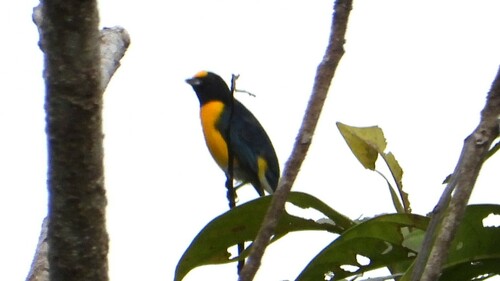 White-vented Euphonia
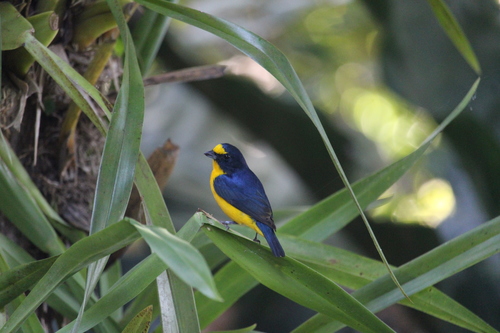 Yellow-throated Euphonia
In breve
Il segno distintivo più affidabile tra White-vented Euphonia e Yellow-throated Euphonia è il colore e l'estensione del vent e delle parti inferiori: White-vented Euphonia (entrambi i sessi) mostra un vent e copritail bianchi distintivi, mentre Yellow-throated Euphonia ha copritail grigio scuro o giallo oliva e nessun vent bianco. I maschi di entrambe le specie sono blu-neri lucidi sopra con parti inferiori gialle, ma la macchia gialla sulla fronte è più piccola e non raggiunge l'occhio in White-vented, mentre si estende più indietro in Yellow-throated. Le femmine sono meglio separate dall'estensione del bianco sulle parti inferiori: le femmine di White-vented hanno un ventre e un vent bianchi, mentre le femmine di Yellow-throated hanno un centro bianco-grigiastro ma copritail giallo oliva. White-vented è più piccola e più compatta, con un becco e una coda più corti. In volo o in visioni rapide, concentrati sul colore del vent e della coda, e sulla differenza di dimensioni se entrambe le specie sono presenti.
Consigli di identificazione
- Vent/copritail bianchi (tutte le età, entrambi i sessi): White-vented Euphonia mostra sempre un vent e copritail bianchi, una caratteristica unica non presente in Yellow-throated.
- Copritail (Yellow-throated): Yellow-throated Euphonia ha copritail grigio scuro o giallo oliva, mai bianchi.
- Colore del ventre (femmine): La femmina di White-vented ha un ventre e un vent bianchi, mentre la femmina di Yellow-throated ha un centro bianco-grigiastro ma copritail giallo oliva.
- Macchia sulla fronte (maschi adulti): La macchia gialla sulla fronte del maschio di White-vented è piccola e non raggiunge l'occhio; quella di Yellow-throated si estende fino a circa la metà dell'occhio.
- Parti inferiori (maschi adulti): White-vented ha un centro del ventre e un vent bianchi; Yellow-throated è gialla in tutto il corpo inferiore, senza vent bianco.
- Parti superiori (maschi adulti): Entrambi sono blu-neri lucidi sopra, ma White-vented può mostrare una lucentezza purpurea sulla testa e sul nape.
- Dimensioni e struttura: White-vented è più piccola e più compatta (10 g, 9 cm) con un becco più corto e spesso; Yellow-throated è più grande (14 g, 10–12 cm), con una coda più lunga e un becco leggermente più lungo.
- Scodinzolio (comportamento): White-vented spesso scodinzola mentre cerca cibo; Yellow-throated no.
- Schema delle ali in volo: Entrambe le specie mostrano bianco sulla parte inferiore delle piume della coda esterna, ma quello di Yellow-throated è una macchia più grande e ovale; quello di White-vented è più ristretto.
- Copritail inferiori: Yellow-throated ha copritail inferiori bianchi; non specificato per White-vented.
- Maschi immaturi: Entrambi iniziano a somigliare a femmine, ma i maschi di Yellow-throated sviluppano prima il giallo sulla gola e sul ventre, poi il nero sulla testa, con il dorso e le ali che diventano blu-neri per ultimi. Usa il colore del vent se visibile.
- Habitat: Se in boschi aperti, margini o piantagioni in America Centrale, entrambe sono possibili; White-vented è più probabile nei canopi forestali umidi ma non esclusivo.
- Vocalizzazioni: Se senti un canto acuto, spezzato o mimetico, o esplosivo "weet" o "gleer," sospetta Yellow-throated. Il silenzio o un canto sconosciuto non escludono nessuna delle due.
- Confronto diretto: Se entrambe le specie sono presenti, White-vented apparirà notevolmente più piccola e con una coda più corta.
- Insidie: Non fare affidamento solo sulla macchia gialla sulla fronte—entrambi ce l'hanno. Controlla sempre il colore del vent e della coda per la separazione più affidabile, specialmente nelle femmine e negli immaturi.
Taglia
White-vented Euphonia è nettamente più piccola e leggera, con una media di circa 10 g e 9 cm di lunghezza, mentre Yellow-throated Euphonia è più grande, con circa 14 g e 10–12 cm. La differenza è evidente nel confronto diretto, con Yellow-throated che appare più robusta e con una coda più lunga. Anche le dimensioni del becco sono leggermente più grandi in Yellow-throated, ma questo è sottile a meno che non siano visti fianco a fianco.
Piumaggio
- Giovanili/Immaturi: I maschi immaturi di entrambe le specie somigliano alle femmine, con parti superiori verde oliva e parti inferiori bianche o pallide. Man mano che i maschi di Yellow-throated maturano, sviluppano prima il giallo sulla gola e sul ventre, poi il nero sulla testa, con il dorso e le ali che diventano blu-neri per ultimi. Gli immaturi di White-vented sono meno ben descritti ma probabilmente simili alle femmine adulte, con oliva sopra e bianco sotto.
- Maschi adulti: Entrambi hanno parti superiori blu-neri lucidi e parti inferiori gialle, ma White-vented ha una piccola macchia gialla sulla fronte che non raggiunge l'occhio, mentre la fronte gialla di Yellow-throated si estende fino a circa la metà dell'occhio. Il segno diagnostico più importante è qui sotto: White-vented ha un centro del ventre bianco e copritail bianchi (vent), mentre Yellow-throated ha parti inferiori gialle in tutto e copritail grigio scuro o giallo oliva.
- Femmine adulte: Le femmine di White-vented sono olive sopra, con una gola grigio-biancastra, fianchi giallo oliva e un ventre e un vent bianchi. Le femmine di Yellow-throated sono verde oliva sopra con una leggera lucentezza, una gola e un centro del ventre bianco-grigiastro, fianchi giallo oliva e copritail giallo oliva pallido (non bianchi). Il vent bianco è unico per White-vented.
- Ali in volo: Entrambi hanno bianco sulle membrane interne delle piume della coda esterna visibile da sotto, ma quello di Yellow-throated è descritto come una grande area bianca a forma ovale, mentre quello di White-vented è più ristretto. Le copritail inferiori sono bianche in Yellow-throated; non specificato per White-vented.
Comportamento
Entrambe le specie cercano attivamente cibo nel canopeo, spesso in coppie o piccoli gruppi, e si uniscono a stormi misti di specie. White-vented Euphonia è nota per scodinzolare quasi costantemente mentre cerca cibo, il che può essere un sottile indizio comportamentale. Non ci sono forti differenze comportamentali nello stile di volo o nel modo di cercare cibo tra le due, ma White-vented può apparire più compatta ed energetica a causa delle sue dimensioni più piccole.
Habitat
Le aree di distribuzione si sovrappongono in America Centrale, specialmente dal Messico a Panama. White-vented Euphonia è più diffusa, presente dal Messico attraverso l'America Centrale e nella maggior parte del Sud America (eccetto i paesi del cono meridionale). Yellow-throated Euphonia è limitata al sud-est del Messico fino a Panama occidentale e preferisce i margini forestali, i boschi aperti e le piantagioni ombreggiate, mentre White-vented è più spesso nel canopeo forestale umido. Entrambe possono verificarsi insieme in America Centrale, quindi l'habitat da solo non è diagnostico.
Voce
Yellow-throated Euphonia ha un canto vario con note acute, stridule e squittenti, spesso in schemi spezzati di 2–4 note, e a volte imita altri uccelli. I richiami includono "pidgel-eece" rapido, "chi-bib-bib-bib-bib," e esplosivo "weet" o "gleer." I richiami delle femmine sono sottili, acuti e trillati. Nessuna descrizione vocale specifica è fornita per White-vented Euphonia nelle note, quindi la voce non è un separatore affidabile a meno che non siano riconosciuti i richiami distintivi di Yellow-throated.
White-vented Euphonia · Yellow-throated Euphonia · I miei uccelli difficili