

white-throated blue swallow vs european/african/eastern red-rumped swallow
Hirundo nigrita versus Cecropis daurica
Jogue um quiz com white-throated blue swallow e european/african/eastern red-rumped swallow
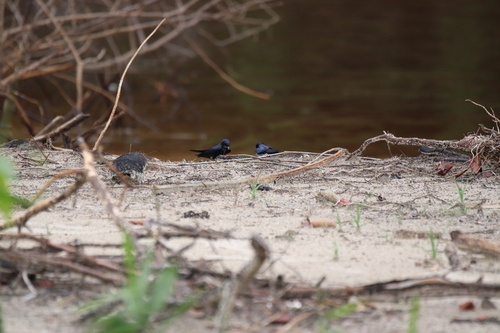 white-throated blue swallow
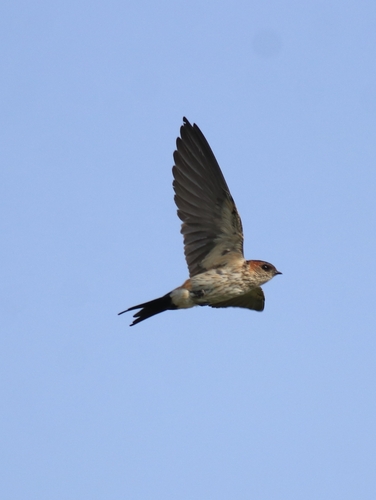 european/african/eastern red-rumped swallow
Em resumo
A marca de campo mais confiável para separar essas duas andorinhas é a presença de um rabo rico em castanho ou avermelhado (e muitas vezes um colar) na european/african/eastern european/african/eastern european/african/eastern red-rumped swallow, que está completamente ausente na white-throated blue swallow. As juvenis da european/african/eastern european/african/eastern european/african/eastern red-rumped swallow são mais opacas e marrons, mas ainda mostram um rabo pálido ou castanho, enquanto a white-throated blue swallow é sempre azul escuro brilhante por cima (às vezes parecendo preta à distância) com uma garganta branca nítida e sem rufo em lugar algum. Em voo, a cauda profundamente bifurcada da european/african/eastern european/african/eastern european/african/eastern red-rumped swallow e o rabo pálido são distintivos, enquanto a white-throated blue swallow é mais uniformemente escura com um babador branco. O habitat também ajuda: a white-throated blue swallow está ligada a rios e córregos de floresta tropical na África, enquanto a european/african/eastern european/african/eastern european/african/eastern red-rumped swallow prefere áreas abertas, montanhosas ou cultivadas na Ásia. Ambas são semelhantes em tamanho e estrutura, então concentre-se na cor do rabo e no padrão da garganta para a separação mais rápida.
Dicas de identificação
- A cor do rabo é a chave: A european/african/eastern european/african/eastern european/african/eastern red-rumped swallow sempre mostra um rabo castanho ou avermelhado (às vezes listrado ou mais claro em algumas subespécies/idades), visível tanto empoleirada quanto em voo. A white-throated blue swallow nunca mostra qualquer rufo ou castanho no rabo—sempre azul escuro brilhante ou negro.
- Garganta e babador: A white-throated blue swallow tem uma garganta e babador brancos nítidos e limpos, contrastando fortemente com as partes superiores azul escuras. A european/african/eastern european/african/eastern european/african/eastern red-rumped swallow tem um rosto e partes inferiores brancas, mas estas são fortemente listradas com linhas escuras e carecem de um babador branco bem definido.
- Forma da cauda: A european/african/eastern european/african/eastern european/african/eastern red-rumped swallow tem uma cauda profundamente bifurcada com penas externas longas (mais curtas em juvenis), enquanto a cauda da white-throated blue swallow também é bifurcada, mas não tão profundamente, e carece das mesmas longas fitas.
- Listras nas partes inferiores: A european/african/eastern european/african/eastern european/african/eastern red-rumped swallow mostra listras escuras pesadas nas partes inferiores brancas, especialmente no peito e flancos. As partes inferiores da white-throated blue swallow são brancas limpas (pelo menos na garganta e babador), sem listras.
- Brilho das partes superiores: A white-throated blue swallow é azul escura brilhante por cima, às vezes parecendo preta à distância. A european/african/eastern european/african/eastern european/african/eastern red-rumped swallow é azul por cima, mas com um rabo rufo contrastante e às vezes um colar rufo.
- Confusão juvenil: As juvenis da european/african/eastern european/african/eastern european/african/eastern red-rumped swallow são mais opacas e marrons, com um rabo mais claro e cauda mais curta, mas ainda mostram algum pálido ou castanho no rabo. A juvenile white-throated blue swallow não é descrita em detalhes, mas todas as idades carecem de qualquer rufo no rabo.
- Visões em voo: Em voo, procure o rabo pálido ou castanho e a cauda longa e bifurcada da european/african/eastern european/african/eastern european/african/eastern red-rumped swallow. A white-throated blue swallow aparece mais uniformemente escura por cima, com uma mancha branca na garganta visível de baixo.
- Contexto do habitat: Se você estiver perto de córregos ou rios de floresta tropical na África, a white-throated blue swallow é possível. Em paisagens abertas, montanhosas ou cultivadas da Ásia, a european/african/eastern european/african/eastern european/african/eastern red-rumped swallow é muito mais provável.
- Distribuição geográfica: A european/african/eastern european/african/eastern european/african/eastern red-rumped swallow é encontrada na Ásia (da Índia a Taiwan), enquanto a white-throated blue swallow é restrita à zona de floresta tropical africana.
- Postura empoleirada: Ambas as espécies podem se empoleirar em fios ou galhos, mas a european/african/eastern european/african/eastern european/african/eastern red-rumped swallow frequentemente mostra seu rabo rufo e partes inferiores listradas quando empoleirada, enquanto a white-throated blue swallow mostra uma garganta branca limpa e partes superiores azuis brilhantes.
- Sem rufo em lugar algum: Se você ver qualquer rufo ou castanho no rabo ou colar, descarte a white-throated blue swallow.
- Sem listras pesadas: Se as partes inferiores estiverem fortemente listradas, é uma european/african/eastern european/african/eastern european/african/eastern red-rumped swallow; a white-throated blue swallow é limpa por baixo (pelo menos na garganta e babador).
- Sem pistas vocais fornecidas: As vocalizações não são descritas nas notas, então não confie em chamadas ou canções para separação.
- Sexos semelhantes: Ambas as espécies têm plumagem semelhante em ambos os sexos, então o sexo não é uma marca de campo útil.
- Movimento sazonal: A white-throated blue swallow é geralmente residente; a european/african/eastern european/african/eastern european/african/eastern red-rumped swallow pode ser migratória ou migrante local, mas isso não é uma marca de campo primária.
Tamanho
Ambas as espécies são semelhantes em tamanho e estrutura geral, típicas de andorinhas de tamanho médio. A european/african/eastern european/african/eastern european/african/eastern red-rumped swallow tem cerca de 19 cm de comprimento com uma cauda profundamente bifurcada, enquanto a white-throated blue swallow também é de tamanho médio, mas medidas precisas não são fornecidas nas notas. Nenhuma diferença significativa em tamanho ou massa é notada que seria útil para separação de campo.
Plumagem
- Pássaros juvenis/imaturos: As juvenis da european/african/eastern european/african/eastern european/african/eastern red-rumped swallow são mais opacas e marrons do que os adultos, com um rabo mais claro ou castanho e penas externas da cauda mais curtas, mas sempre retêm algum pálido ou rufo no rabo. As juvenis da white-throated blue swallow não são descritas em detalhes, mas todas as idades são principalmente azul escura brilhante (às vezes parecendo preta), com uma garganta branca e sem rufo ou castanho em lugar algum.
- Adultos: As adultas da european/african/eastern european/african/eastern european/african/eastern red-rumped swallow têm partes superiores azuis com um rabo avermelhado (castanho) distinto e às vezes um colar avermelhado, partes inferiores brancas fortemente listradas com escuro, e uma cauda profundamente bifurcada. A white-throated blue swallow é azul escura brilhante por cima, com uma garganta e babador brancos nítidos, e sem rufo ou castanho no rabo ou colar. Suas partes inferiores não são listradas. Em voo, o rabo pálido e a cauda bifurcada da european/african/eastern european/african/eastern european/african/eastern red-rumped swallow são proeminentes, enquanto a white-throated blue swallow aparece mais uniformemente escura com uma mancha branca na garganta.
Comportamento
Ambas as espécies são insetívoras aéreas com voo típico de andorinha, mas a white-throated blue swallow é geralmente residente e ligada a cursos d'água em floresta tropical, enquanto a european/african/eastern european/african/eastern european/african/eastern red-rumped swallow é mais migratória e frequentemente vista em áreas abertas, às vezes empoleirada em fios ou galhos expostos. A european/african/eastern european/african/eastern european/african/eastern red-rumped swallow pode ser vista em pequenos grupos, especialmente fora da temporada de reprodução. Nenhuma diferença comportamental significativa é descrita que seria diagnóstica em campo além do contexto do habitat.
Habitat
O habitat é uma pista de apoio forte: a white-throated blue swallow é encontrada durante todo o ano perto de rios tropicais, lagos e córregos de floresta tropical na floresta tropical africana (incluindo a Lacuna de Dahomey), e é geralmente incomum. A european/african/eastern european/african/eastern european/african/eastern red-rumped swallow é encontrada em áreas abertas, frequentemente montanhosas, com clareiras e cultivo em toda a Ásia oriental e sudeste até o nordeste da Índia e Taiwan. Se você estiver em densa floresta tropical africana perto da água, a white-throated blue swallow é possível; em campo aberto asiático, a european/african/eastern european/african/eastern european/african/eastern red-rumped swallow é muito mais provável.
white-throated blue swallow · european/african/eastern red-rumped swallow · Minhas aves difíceis