

Golondrina Negrita vs Golondrina Dáurica Occidental/Africana/Oriental
Hirundo nigrita frente a Cecropis daurica
Juega un quiz con Golondrina Negrita y Golondrina Dáurica Occidental/Africana/Oriental
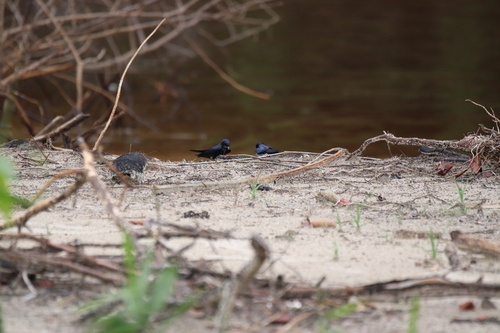 Golondrina Negrita
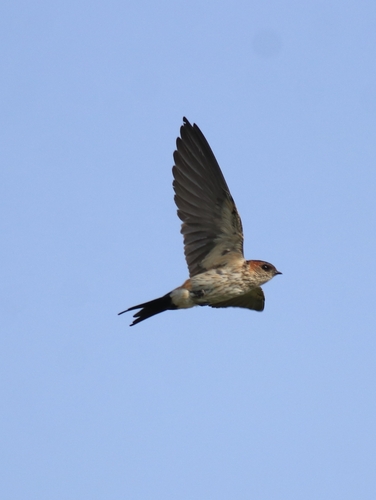 Golondrina Dáurica Occidental/Africana/Oriental
En breve
La marca de campo más confiable para separar estas dos golondrinas es la presencia de un rico rabadilla castaña o rojiza (y a menudo un collar) en la Golondrina Dáurica Occidental, que está completamente ausente en la Golondrina Negrita. Las golondrinas Dáuricas Juveniles son más apagadas y marrones, pero aún muestran una rabadilla pálida o castaña, mientras que la Golondrina Negrita siempre es de un azul oscuro brillante por encima (a veces parece negra a la distancia) con una garganta blanca nítida y sin rufous en ninguna parte. En vuelo, la cola profundamente bifurcada de la Golondrina Dáurica Occidental y su rabadilla pálida son distintivas, mientras que la Golondrina Negrita es más uniformemente oscura con un babero blanco. El hábitat también ayuda: la Golondrina Negrita está vinculada a ríos y arroyos de selva tropical en África, mientras que la Golondrina Dáurica Occidental prefiere áreas abiertas, montañosas o cultivadas en Asia. Ambas son similares en tamaño y estructura, así que concéntrate en el color de la rabadilla y el patrón de la garganta para la separación más rápida.
Consejos de identificación
- El color de la rabadilla es clave: La Golondrina Dáurica Occidental siempre muestra una rabadilla castaña o rojiza (a veces estriada o más pálida en algunas subespecies/edades), visible tanto posada como en vuelo. La Golondrina Negrita nunca muestra ningún rufous o castaño en la rabadilla—siempre es de un azul oscuro brillante o negruzco.
- Garganta y babero: La Golondrina Negrita tiene una garganta y un babero blancos nítidos y limpios, que contrastan fuertemente con las partes superiores de azul oscuro. La Golondrina Dáurica Occidental tiene una cara y partes inferiores blancas, pero estas están fuertemente estriadas con líneas oscuras y carecen de un babero blanco bien definido.
- Forma de la cola: La Golondrina Dáurica Occidental tiene una cola profundamente bifurcada con largas plumas exteriores (más cortas en los juveniles), mientras que la cola de la Golondrina Negrita también es bifurcada pero no tan profundamente, y carece de los mismos streamers largos.
- Estriado de las partes inferiores: La Golondrina Dáurica Occidental muestra un fuerte estriado oscuro en las partes inferiores blancas, especialmente en el pecho y los flancos. Las partes inferiores de la Golondrina Negrita son blancas limpias (al menos en la garganta y el babero), sin estriado.
- Brillo de las partes superiores: La Golondrina Negrita es de un azul oscuro brillante por encima, a veces pareciendo negra a la distancia. La Golondrina Dáurica Occidental es azul por encima pero con una rabadilla rufous contrastante y a veces un collar rufous.
- Confusión juvenil: Las golondrinas Dáuricas Juveniles son más apagadas y marrones, con una rabadilla más pálida y una cola más corta, pero aún muestran algo de pálido o castaño en la rabadilla. La Golondrina Negrita Juvenil no se describe en detalle, pero todas las edades carecen de cualquier rufous en la rabadilla.
- Vistas en vuelo: En vuelo, busca la rabadilla pálida o castaña de la Golondrina Dáurica Occidental y su larga cola bifurcada. La Golondrina Negrita aparece más uniformemente oscura por encima, con un parche de garganta blanca visible desde abajo.
- Contexto de hábitat: Si estás cerca de arroyos o ríos de selva tropical en África, la Golondrina Negrita es posible. En paisajes abiertos, montañosos o cultivados de Asia, la Golondrina Dáurica Occidental es mucho más probable.
- Rango geográfico: La Golondrina Dáurica Occidental se encuentra en Asia (desde India hasta Taiwán), mientras que la Golondrina Negrita está restringida a la zona de selva tropical africana.
- Postura posada: Ambas especies pueden posarse en alambres o ramas, pero la Golondrina Dáurica Occidental a menudo muestra su rabadilla rufous y partes inferiores estriadas cuando está posada, mientras que la Golondrina Negrita muestra una garganta blanca limpia y partes superiores azules brillantes.
- Sin rufous en ninguna parte: Si ves algún rufous o castaño en la rabadilla o el collar, descarta la Golondrina Negrita.
- Sin estriado pesado: Si las partes inferiores están fuertemente estriadas, es una Golondrina Dáurica Occidental; la Golondrina Negrita está limpia por debajo (al menos en la garganta y el babero).
- Sin pistas vocales proporcionadas: Las vocalizaciones no se describen en las notas, así que no confíes en llamadas o canciones para la separación.
- Sexos similares: Ambas especies tienen plumaje similar en ambos sexos, así que el sexo no es una marca de campo útil.
- Movimiento estacional: La Golondrina Negrita es generalmente residente; la Golondrina Dáurica Occidental puede ser migratoria o migrante local, pero esta no es una marca de campo primaria.
Tamaño
Ambas especies son similares en tamaño y estructura general, típicas de golondrinas de tamaño mediano. La Golondrina Dáurica Occidental mide aproximadamente 19 cm de largo con una cola profundamente bifurcada, mientras que la Golondrina Negrita también es de tamaño mediano, pero no se proporcionan medidas precisas en las notas. No se nota ninguna diferencia significativa en tamaño o masa que sea útil para la separación en el campo.
Plumaje
- Aves juveniles/inmaduras: Las golondrinas Dáuricas Juveniles son más apagadas y marrones que los adultos, con una rabadilla más pálida o castaña y plumas de cola exteriores más cortas, pero siempre retienen algo de pálido o rufous en la rabadilla. Las golondrinas Negritas Juveniles no se describen en detalle, pero todas las edades son principalmente de un azul oscuro brillante (a veces pareciendo negro), con una garganta blanca y sin tonos rufous o castaños en ninguna parte.
- Adultos: Las golondrinas Dáuricas Adultas tienen partes superiores azules con una rabadilla distintivamente rojiza (castaña) y a veces un collar rojizo, partes inferiores blancas fuertemente estriadas con oscuro, y una cola profundamente bifurcada. La Golondrina Negrita es de un azul oscuro brillante por encima, con una garganta y un babero blancos nítidos, y sin rufous o castaño en la rabadilla o el collar. Sus partes inferiores no están estriadas. En vuelo, la rabadilla pálida y la cola bifurcada de la Golondrina Dáurica Occidental son prominentes, mientras que la Golondrina Negrita aparece más uniformemente oscura con un parche de garganta blanca.
Comportamiento
Ambas especies son insectívoras aéreas con un vuelo típico de golondrina, pero la Golondrina Negrita es generalmente residente y está vinculada a cursos de agua en la selva tropical, mientras que la Golondrina Dáurica Occidental es más migratoria y a menudo se ve en campo abierto, a veces posada en alambres o ramas expuestas. La Golondrina Dáurica Occidental puede verse en pequeños grupos, especialmente fuera de la temporada de cría. No se describen diferencias de comportamiento importantes que sean diagnósticas en el campo más allá del contexto del hábitat.
Hábitat
El hábitat es una pista de apoyo fuerte: la Golondrina Negrita se encuentra durante todo el año cerca de ríos tropicales, lagos y arroyos de selva tropical en la selva tropical africana (incluido el Dahomey Gap), y es generalmente poco común. La Golondrina Dáurica Occidental se encuentra en áreas abiertas, a menudo montañosas, con claros y cultivos a través del este y sureste de Asia hasta el noreste de India y Taiwán. Si estás en una densa selva tropical africana cerca del agua, la Golondrina Negrita es posible; en el campo abierto asiático, la Golondrina Dáurica Occidental es mucho más probable.
Golondrina Negrita · Golondrina Dáurica Occidental/Africana/Oriental · Mis aves difíciles