

Zwarte zwaluw vs Roodstuitzwaluw
Hirundo nigrita versus Cecropis daurica
Speel een quiz met Zwarte zwaluw en Roodstuitzwaluw
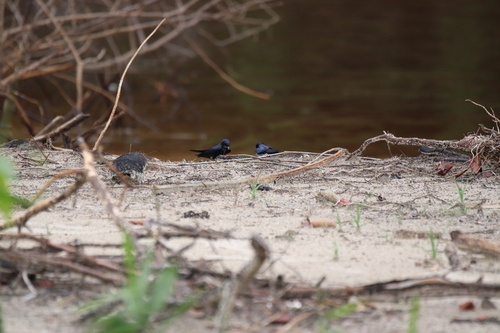 Zwarte zwaluw
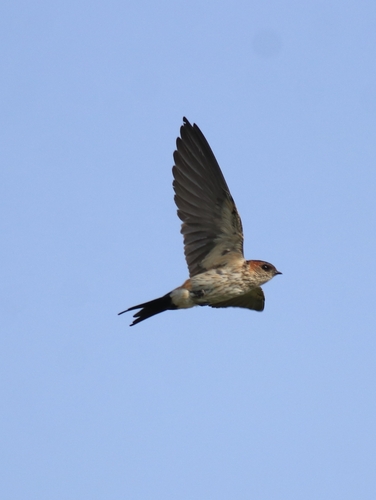 Roodstuitzwaluw
Kort gezegd
Het meest betrouwbare veldkenmerk om deze twee zwaluwen te scheiden is de aanwezigheid van een rijke kastanjebruine of rode stuit (en vaak een kraag) op de Roodstuitzwaluw, die volledig afwezig is bij de Zwarte zwaluw. Juveniele Roodstuitzwaluwen zijn doffer en bruiner, maar tonen nog steeds een bleke of kastanjebruine stuit, terwijl de Zwarte zwaluw altijd glanzend donkerblauw boven is (soms op afstand zwart lijkend) met een scherpe witte keel en nergens roestkleurig. In de vlucht zijn de diep gevorkte staart en de bleke stuit van de Roodstuitzwaluw kenmerkend, terwijl de Zwarte zwaluw meer uniform donker is met een witte bies. Habitat helpt ook: de Zwarte zwaluw is gebonden aan regenwoud rivieren en beken in Afrika, terwijl de Roodstuitzwaluw de voorkeur geeft aan open, heuvelachtige of gecultiveerde gebieden in Azië. Beide zijn vergelijkbaar in grootte en structuur, dus focus op stuitkleur en keelpatroon voor de snelste scheiding.
Herkenningstips
- Stuitkleur is de sleutel: Roodstuitzwaluw toont altijd een kastanjebruine of rode stuit (soms gestreept of bleker in sommige ondersoorten/leeftijden), zichtbaar zowel zittend als in de vlucht. Zwarte zwaluw toont nooit enige roestkleur of kastanjebruin op de stuit—altijd glanzend donkerblauw of zwartachtig.
- Keel en bies: Zwarte zwaluw heeft een scherpe, schone witte keel en bies, die scherp contrasteert met de donkerblauwe bovenzijde. Roodstuitzwaluw heeft een witte kop en onderzijde, maar deze zijn zwaar gestreept met donkere lijnen en missen een scherp gedefinieerde witte bies.
- Staartvorm: Roodstuitzwaluw heeft een diep gevorkte staart met lange buitenveren (korter bij juvenielen), terwijl de staart van de Zwarte zwaluw ook gevorkt is maar niet zo diep, en mist dezelfde lange streamers.
- Strepen op de onderzijde: Roodstuitzwaluw toont zware donkere strepen op de witte onderzijde, vooral op de borst en flanken. De onderzijde van de Zwarte zwaluw is schoon wit (tenzij op de keel en bies), zonder strepen.
- Glans van de bovenzijde: Zwarte zwaluw is glanzend donkerblauw boven, soms op afstand zwart lijkend. Roodstuitzwaluw is blauw boven maar met een contrasterende roestkleurige stuit en soms een roestkleurige kraag.
- Verwarring bij juvenielen: Juveniele Roodstuitzwaluwen zijn doffer en bruiner, met een blekere stuit en kortere staart, maar tonen nog steeds wat bleeks of kastanjebruins op de stuit. Juveniele Zwarte zwaluw is niet in detail beschreven, maar alle leeftijden missen enige roestkleur op de stuit.
- Vluchtzicht: In de vlucht, let op de bleke of kastanjebruine stuit en lange, gevorkte staart van de Roodstuitzwaluw. Zwarte zwaluw lijkt meer uniform donker boven, met een witte keelvlek zichtbaar van onderaf.
- Habitatcontext: Als je in de buurt bent van regenwoud beken of rivieren in Afrika, is de Zwarte zwaluw mogelijk. In open, heuvelachtige of gecultiveerde Aziatische landschappen is de Roodstuitzwaluw veel waarschijnlijker.
- Geografisch bereik: Roodstuitzwaluw wordt aangetroffen in Azië (van India tot Taiwan), terwijl de Zwarte zwaluw beperkt is tot de Afrikaanse tropische regenwoudzone.
- Zittende houding: Beide soorten kunnen op draden of takken zitten, maar Roodstuitzwaluw toont vaak zijn roestkleurige stuit en gestreepte onderzijde wanneer hij zit, terwijl de Zwarte zwaluw een schone witte keel en glanzend blauwe bovenzijde toont.
- Geen roestkleur ergens: Als je enige roestkleur of kastanjebruin op de stuit of kraag ziet, sluit de Zwarte zwaluw uit.
- Geen zware strepen: Als de onderzijde zwaar gestreept is, is het een Roodstuitzwaluw; Zwarte zwaluw is schoon onder (tenzij op de keel en bies).
- Geen stem aanwijzingen gegeven: Vocalisaties zijn niet beschreven in de notities, dus vertrouw niet op roepen of zang voor scheiding.
- Geslachten vergelijkbaar: Beide soorten hebben vergelijkbaar verenkleed in beide geslachten, dus geslacht is geen nuttig veldkenmerk.
- Seizoensgebonden beweging: Zwarte zwaluw is over het algemeen resident; Roodstuitzwaluw kan migrerend of lokale migrant zijn, maar dit is geen primair veldkenmerk.
Grootte
Beide soorten zijn vergelijkbaar in algehele grootte en structuur, typisch voor middelgrote zwaluwen. De Roodstuitzwaluw is ongeveer 19 cm lang met een diep gevorkte staart, terwijl de Zwarte zwaluw ook middelgroot is, maar precieze metingen zijn niet gegeven in de notities. Er wordt geen significante verschil in grootte of massa opgemerkt dat nuttig zou zijn voor veldscheiding.
Verenkleed
- Juveniele/onvolwassen vogels: Juveniele Roodstuitzwaluwen zijn doffer en bruiner dan volwassenen, met een blekere of kastanjebruine stuit en kortere buitenstaartveren, maar behouden altijd wat bleeks of roestkleurigs op de stuit. Juveniele Zwarte zwaluwen zijn niet in detail beschreven, maar alle leeftijden zijn voornamelijk glanzend donkerblauw (soms zwart lijkend), met een witte keel en geen roestkleur of kastanjebruine tinten ergens.
- Volwassenen: Volwassen Roodstuitzwaluwen hebben blauwe bovenzijde met een duidelijke kastanjebruine (roestkleurige) stuit en soms een roestkleurige kraag, witte onderzijde zwaar gestreept met donker, en een diep gevorkte staart. De Zwarte zwaluw is glanzend donkerblauw boven, met een scherpe witte keel en bies, en geen roestkleur of kastanjebruin op de stuit of kraag. De onderzijde is niet gestreept. In de vlucht zijn de bleke stuit en gevorkte staart van de Roodstuitzwaluw prominent, terwijl de Zwarte zwaluw meer uniform donker lijkt met een witte keelvlek.
Gedrag
Beide soorten zijn luchtinsecteneters met typische zwaluwvlucht, maar de Zwarte zwaluw is over het algemeen resident en gebonden aan waterlopen in regenwoud, terwijl de Roodstuitzwaluw meer migrerend is en vaak in open land wordt gezien, soms zittend op draden of blootgestelde takken. De Roodstuitzwaluw kan in kleine groepen worden gezien, vooral buiten het broedseizoen. Er zijn geen grote gedragsverschillen beschreven die diagnostisch zouden zijn in het veld, behalve de habitatcontext.
Habitat
Habitat is een sterke ondersteunende aanwijzing: Zwarte zwaluw wordt het hele jaar door aangetroffen nabij tropische rivieren, meren en regenwoud beken in het Afrikaanse tropische regenwoud (inclusief de Dahomey Gap), en is over het algemeen ongewoon. Roodstuitzwaluw wordt aangetroffen in open, vaak heuvelachtige gebieden met open plekken en teelt in het oosten en zuidoosten van Azië tot het noordoosten van India en Taiwan. Als je in dicht Afrikaans regenwoud bij water bent, is de Zwarte zwaluw mogelijk; in open Aziatisch platteland is de Roodstuitzwaluw veel waarschijnlijker.