

rabo-de-palha-de-bico-laranja vs ainley's storm-petrel
Phaethon lepturus versus Hydrobates cheimomnestes
Jogue um quiz com rabo-de-palha-de-bico-laranja e ainley's storm-petrel
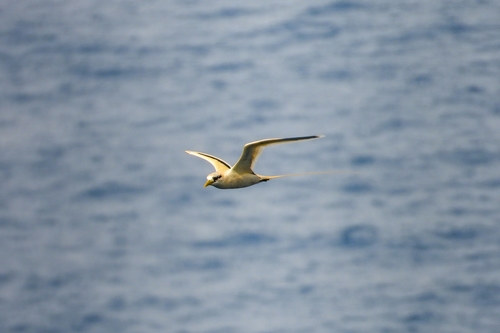 rabo-de-palha-de-bico-laranja
 ainley's storm-petrel
Em resumo
A marca de campo mais confiável para separar o rabo-de-palha-de-bico-laranja do ainley's storm-petrel é a cor e a estrutura geral: o rabo-de-palha é uma ave marinha impressionante, principalmente branca, de cauda longa, com barras pretas nas asas internas e um bico brilhante, enquanto o ainley's storm-petrel é uma ave muito menor, de cor marrom-escuro (parecendo negra à distância), com uma região branca na cauda e cauda curta e bifurcada. Os rabo-de-palha juvenis não têm as longas fitas da cauda e possuem um dorso finamente listrado, mas permanecem principalmente brancos com uma máscara ocular preta contrastante e barra nas asas, ao contrário do storm-petrel uniformemente escuro. Em voo, as longas e elegantes asas e cauda do rabo-de-palha são inconfundíveis em comparação com as asas mais curtas e de ponta arredondada do storm-petrel e seu voo irregular e saltitante. A cor do bico (amarelo/laranja no rabo-de-palha, preto no storm-petrel) e o comprimento da cauda são fundamentais em todas as idades. Essas espécies raramente são confundidas em campo, exceto a grandes distâncias ou em luz fraca, mas a confusão pode surgir com rabo-de-palha imaturos ou storm-petrels distantes e de costas claras.
Dicas de identificação
- Cor geral: O rabo-de-palha-de-bico-laranja é principalmente branco com marcas pretas; o ainley's storm-petrel é marrom-escuro a negro com uma região branca na cauda. Nenhuma idade de storm-petrel é predominantemente branca.
- Forma e comprimento da cauda: Os adultos do rabo-de-palha têm fitas centrais da cauda extremamente longas e brancas, facilmente dobrando o comprimento do corpo. Os juvenis não têm fitas, mas ainda possuem uma cauda relativamente longa. O storm-petrel tem uma cauda curta e moderadamente bifurcada, nunca com fitas.
- Cor do bico: O rabo-de-palha tem um bico brilhante amarelo-laranja a laranja-vermelho (adultos), ou verde-amarelo (juvenis); o bico do storm-petrel é sempre preto. A cor do bico é visível a uma distância moderada em boa luz.
- Padrão das asas: O rabo-de-palha apresenta uma barra preta na asa interna (todas as idades), contrastando com as asas brancas. As asas do storm-petrel são uniformemente escuras, sem barras ou painéis contrastantes.
- Máscara ocular: O rabo-de-palha tem uma máscara ocular preta ousada; o storm-petrel não tem.
- Mancha na cauda: O storm-petrel tem uma região branca na cauda (em forma de U, com uma área escura central); a cauda do rabo-de-palha é branca, mas não contrasta com o resto do corpo.
- Padrão do dorso (juvenis): Os juvenis do rabo-de-palha têm um dorso finamente listrado, mas isso é sutil e não deve causar confusão com o storm-petrel uniformemente escuro.
- Estilo de voo: O rabo-de-palha planam e deslizam com batidas lentas e profundas das asas e longas fitas da cauda para trás; o storm-petrel flutua, salta e se move rapidamente sobre a água, com movimentos rápidos e erráticos.
- Tamanho: O rabo-de-palha é muito maior (envergadura de até 96 cm) do que o storm-petrel (cerca de 18 cm de comprimento). Mesmo à distância, o tamanho e as proporções do rabo-de-palha são distintos.
- Pernas e pés: As pernas e pés do storm-petrel são pretos e não se estendem além da cauda em voo; as pernas do rabo-de-palha são curtas e geralmente não são visíveis em voo.
- Habitat: O rabo-de-palha é geralmente visto perto de ilhas ou penhascos, às vezes longe no mar; o storm-petrel é quase exclusivamente pelágico, longe da terra, exceto em ilhotas de reprodução.
- Vocalizações: O rabo-de-palha emite gritos altos e agudos; o storm-petrel é silencioso no mar. A voz raramente é diagnóstica em campo.
- Postura empoleirada: O rabo-de-palha empoleira-se em penhascos ou solo aberto, muitas vezes com fitas da cauda visíveis; o storm-petrel raramente é visto empoleirado, exceto à noite em tocas.
- Estação e distribuição: A sobreposição é rara; verifique a abundância local e a distribuição se não tiver certeza. O rabo-de-palha é muito mais amplamente distribuído nos trópicos, enquanto o storm-petrel é altamente localizado.
- Armadilhas comuns: Rabo-de-palha juvenis distantes e sem fitas podem parecer menores e menos distintos, mas ainda mostram plumagem branca e barra preta nas asas. Storm-petrels nunca mostram cabeças ou corpos brancos. Em luz fraca, concentre-se na estrutura e no estilo de voo.
Tamanho
O rabo-de-palha-de-bico-laranja é dramaticamente maior: os adultos medem 71–80 cm de comprimento total (incluindo as penas centrais da cauda extremamente longas), com uma envergadura de 89–96 cm [wikipedia]. O ainley's storm-petrel é muito menor, cerca de 18 cm de comprimento, com uma cauda moderadamente longa e bifurcada e asas longas [wikipedia]. O tamanho e as proporções do rabo-de-palha são mais semelhantes aos de uma andorinha ou pequeno gannet, enquanto o storm-petrel está mais próximo em tamanho de uma andorinha ou pequeno swift. Em qualquer comparação direta ou bando misto, o rabo-de-palha se destacará como muito maior e de cauda mais longa.
Plumagem
- Aves juvenis/imaturas: Os juvenis do rabo-de-palha-de-bico-laranja não têm as longas fitas da cauda e possuem um bico verde-amarelo e dorso finamente listrado, mas ainda são principalmente brancos com uma máscara ocular preta e barra interna nas asas. O ainley's storm-petrel de todas as idades é marrom-escuro a negro no geral, com uma região branca na cauda (em forma de U, com uma área escura central), e nunca mostra branco extenso na cabeça, corpo ou asas. Nenhuma idade de storm-petrel se assemelha ao rabo-de-palha branco.
- Adultos: Os adultos do rabo-de-palha são completamente brancos por cima e por baixo, com uma barra preta ousada na asa interna, máscara ocular preta e fitas da cauda brancas muito longas. Seu bico é amarelo-laranja a laranja-vermelho. Os adultos do storm-petrel são de cor marrom-escuro a negro, com uma mancha branca na cauda e bico, pernas e pés pretos. As asas do storm-petrel são uniformemente escuras, sem qualquer branco ou barras contrastantes.
- Em voo: O rabo-de-palha mostra asas brancas com uma barra interna preta, longas fitas brancas da cauda e um bico brilhante; o storm-petrel é escuro com uma cauda branca, cauda curta e bifurcada, e nunca mostra branco nas asas ou na cabeça.
Comportamento
O rabo-de-palha-de-bico-laranja é um nadador ruim, mas um voador ágil, frequentemente visto planando ou deslizando com batidas lentas e graciosas das asas e longas fitas da cauda para trás. Ele se alimenta mergulhando de altura em busca de peixes e lulas, às vezes pairando brevemente. O ainley's storm-petrel tem um voo irregular e saltitante, frequentemente batendo na superfície da água ou zigzagueando baixo sobre as ondas, típico dos storm-petrels. Ele raramente é visto empoleirado, exceto em colônias de reprodução, onde é noturno. O voo do rabo-de-palha é elegante e semelhante ao das andorinhas; o do storm-petrel é rápido, errático e baixo sobre a água.
Habitat
O rabo-de-palha-de-bico-laranja é encontrado sobre os oceanos tropicais em todo o mundo, especialmente perto de ilhas e penhascos de reprodução, e pode vagar amplamente no mar. Ele se reproduz em ilhas tropicais, incluindo o Caribe, Bermuda e partes dos oceanos Índico e Pacífico. O ainley's storm-petrel é muito mais localizado, reproduzindo-se apenas em algumas ilhotas ao largo da Ilha Guadalupe (México) e se estendendo para o sul até as Galápagos, principalmente sobre o oceano aberto. No mar, o storm-petrel geralmente está longe da terra, exceto durante a reprodução. As duas espécies se sobrepõem raramente em distribuição e é improvável que sejam vistas juntas, exceto em condições pelágicas excepcionais ao largo do oeste do México ou da América Central.
Voz
O rabo-de-palha-de-bico-laranja emite um grito alto e estridente 'keee-keee-krrrt-krrt-krrt' [wikipedia]. O ainley's storm-petrel é geralmente silencioso no mar; em colônias de reprodução, é noturno e emite chamados suaves, mas estes são improváveis de serem ouvidos por observadores de aves. No campo, a voz raramente é útil para separar essas espécies.
rabo-de-palha-de-bico-laranja · ainley's storm-petrel · Minhas aves difíceis