

White-tailed Tropicbird vs Ainley's Storm-Petrel
Phaethon lepturus contro Hydrobates cheimomnestes
Fai un quiz con White-tailed Tropicbird e Ainley's Storm-Petrel
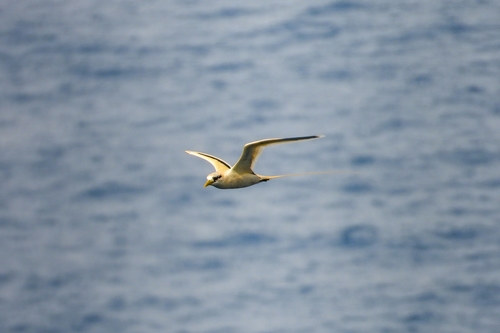 White-tailed Tropicbird
 Ainley's Storm-Petrel
In breve
Il segno distintivo più affidabile per separare il White-tailed Tropicbird dall'Ainley's Storm-Petrel è il colore e la struttura complessivi: il tropicbird è un uccello marino lungo e bianco, con barre nere sulle ali interne e un becco luminoso, mentre l'Ainley's Storm-Petrel è un uccello molto più piccolo, di colore bruno-nerastro (che appare nero da lontano) con un sottocoda bianco e una coda corta e biforcuta. I tropicbird juvenili mancano delle lunghe streamers della coda e hanno un dorso finemente barrato, ma rimangono per lo più bianchi con una maschera nera attorno agli occhi e una barra sulle ali, a differenza dello storm-petrel uniformemente scuro. In volo, le lunghe e eleganti ali e coda del tropicbird sono inconfondibili rispetto alle ali più corte e smussate e al volo irregolare dello storm-petrel. Il colore del becco (giallo/arancione nel tropicbird, nero nello storm-petrel) e la lunghezza della coda sono fondamentali a tutte le età. Queste specie sono raramente confuse sul campo, tranne a grande distanza o in scarsa luce, ma può sorgere confusione con i tropicbird immaturi o gli storm-petrel pallidi e distanti.
Consigli di identificazione
- Overall color: Il White-tailed Tropicbird è per lo più bianco con segni neri; l'Ainley's Storm-Petrel è bruno-nerastro a nero con un sottocoda bianco. Nessuna età dello storm-petrel è mai per lo più bianca.
- Tail shape and length: Gli adulti del tropicbird hanno streamers centrali della coda estremamente lunghi e bianchi, che raddoppiano facilmente la lunghezza del corpo. I juvenili mancano di streamers ma hanno comunque una coda relativamente lunga. Lo storm-petrel ha una coda corta e moderatamente biforcuta, mai con streamers.
- Bill color: Il tropicbird ha un becco di un brillante giallo-arancione a rosso-arancione (adulti), o verde-giallo (juvenili); il becco dello storm-petrel è sempre nero. Il colore del becco è visibile a distanza moderata in buona luce.
- Wing pattern: Il tropicbird mostra una barra nera sull'ala interna (tutte le età), in contrasto con le ali bianche. Le ali dello storm-petrel sono uniformemente scure, senza barre o pannelli in contrasto.
- Eye-mask: Il tropicbird ha una maschera nera audace; lo storm-petrel no.
- Rump patch: Lo storm-petrel ha un sottocoda bianco (a forma di U, con un'area centrale scura); il sottocoda del tropicbird è bianco ma non in contrasto con il resto del corpo.
- Back pattern (juveniles): I tropicbird juvenili hanno un dorso finemente barrato, ma questo è sottile e non è probabile che causi confusione con lo storm-petrel uniformemente scuro.
- Flight style: Il tropicbird vola e plana con battiti d'ali lenti e profondi e lunghe streamers della coda che seguono; lo storm-petrel svolazza, salta e si muove rapidamente sull'acqua, con movimenti rapidi e irregolari.
- Size: Il tropicbird è molto più grande (apertura alare fino a 96 cm) rispetto allo storm-petrel (circa 18 cm di lunghezza). Anche a distanza, le dimensioni e le proporzioni del tropicbird sono distintive.
- Legs and feet: Le gambe e i piedi dello storm-petrel sono neri e non si estendono oltre la coda in volo; le gambe del tropicbird sono corte e di solito non sono visibili in volo.
- Habitat: Il tropicbird è solitamente visto vicino a isole o scogliere, a volte lontano in mare; lo storm-petrel è quasi esclusivamente pelagico, lontano dalla terra tranne che in isole di nidificazione.
- Vocalizations: Il tropicbird emette forti scream acuti; lo storm-petrel è silenzioso in mare. La voce è raramente diagnostica sul campo.
- Perched posture: Il tropicbird si posa su scogliere o terreno aperto, spesso con le streamers della coda visibili; lo storm-petrel è raramente visto posato tranne che di notte nei nidi.
- Season and range: L'overlap è raro; controlla l'abbondanza locale e l'areale se non sei sicuro. Il tropicbird è molto più diffuso nei tropici, lo storm-petrel è altamente localizzato.
- Common pitfalls: I tropicbird juvenili lontani e senza streamers possono apparire più piccoli e meno distintivi, ma mostrano comunque piumaggio bianco e una barra nera sulle ali. Gli storm-petrel non mostrano mai teste o corpi bianchi. In scarsa luce, concentrati sulla struttura e sullo stile di volo.
Taglia
Il White-tailed Tropicbird è drammaticamente più grande: gli adulti misurano 71–80 cm di lunghezza totale (inclusi i lunghi piumaggi centrali della coda), con un'apertura alare di 89–96 cm [wikipedia]. L'Ainley's Storm-Petrel è molto più piccolo, circa 18 cm di lunghezza con una coda moderatamente lunga e biforcuta e ali lunghe [wikipedia]. Le dimensioni e le proporzioni del tropicbird ricordano di più quelle di un gabbiano o di un piccolo gannetto, mentre lo storm-petrel è più vicino in dimensioni a una rondine o a un piccolo swift. In qualsiasi confronto diretto o stormo misto, il tropicbird si distinguerà come molto più grande e con una coda più lunga.
Piumaggio
- Juvenile/immature birds: I tropicbird juvenili mancano delle lunghe streamers della coda e hanno un becco verde-giallo e un dorso finemente barrato, ma sono ancora per lo più bianchi con una maschera nera attorno agli occhi e una barra interna sulle ali. L'Ainley's Storm-Petrel di tutte le età è bruno-nerastro a nero nel complesso, con un sottocoda bianco (a forma di U, con un'area centrale scura), e non mostra mai bianco esteso sulla testa, sul corpo o sulle ali. Nessuna età dello storm-petrel somiglia al tropicbird bianco.
- Adults: Gli adulti del tropicbird sono completamente bianchi sopra e sotto, con una barra nera audace sull'ala interna, una maschera nera attorno agli occhi e streamers della coda bianchissimi e molto lunghi. Il loro becco è giallo-arancione a rosso-arancione. Gli adulti dello storm-petrel sono di un bruno-nerastro scuro a nero, con una macchia bianca sul sottocoda e becco, gambe e piedi neri. Le ali dello storm-petrel sono uniformemente scure, prive di qualsiasi bianco o barre in contrasto.
- In flight: Il tropicbird mostra ali bianche con una barra nera interna, lunghe streamers bianche della coda e un becco luminoso; lo storm-petrel è scuro con un sottocoda bianco, coda corta biforcuta e non mostra mai bianco nelle ali o nella testa.
Comportamento
Il White-tailed Tropicbird è un nuotatore scarso ma un volatore agile, spesso visto planare o volare con battiti d'ali lenti e graziosi e lunghe streamers della coda che seguono. Si nutre tuffandosi da un'altezza per pesci e calamari, a volte rimanendo in sospensione brevemente. L'Ainley's Storm-Petrel ha un volo svolazzante e saltellante, spesso toccando la superficie dell'acqua o zigzagando a bassa quota sulle onde, tipico degli storm-petrel. È raramente visto posato tranne che nelle colonie di nidificazione, dove è notturno. Il volo del tropicbird è elegante e simile a quello di un gabbiano; quello dello storm-petrel è veloce, irregolare e vicino all'acqua.
Habitat
Il White-tailed Tropicbird si trova sopra gli oceani tropicali in tutto il mondo, specialmente vicino a isole e scogliere di nidificazione, e può vagare ampiamente in mare. Nidifica su isole tropicali, inclusi i Caraibi, Bermuda e parti degli oceani Indiano e Pacifico. L'Ainley's Storm-Petrel è molto più localizzato, nidificando solo su alcune isolette al largo dell'isola di Guadalupe (Messico) e diffondendosi a sud fino alle Galápagos, principalmente sopra l'oceano aperto. In mare, lo storm-petrel è solitamente lontano dalla terra tranne che durante la nidificazione. Le due specie si sovrappongono raramente in areale e sono improbabili da vedere insieme tranne che in condizioni pelagiche eccezionali al largo del Messico occidentale o dell'America Centrale.
Voce
Il White-tailed Tropicbird emette un alto scream 'keee-keee-krrrt-krrt-krrt' [wikipedia]. L'Ainley's Storm-Petrel è generalmente silenzioso in mare; nelle colonie di nidificazione, è notturno e emette richiami soft, ma questi sono improbabili da sentire dai birders. Sul campo, la voce è raramente utile per separare queste specie.
White-tailed Tropicbird · Ainley's Storm-Petrel · I miei uccelli difficili