

marreca-toicinho vs arrabio
Anas bahamensis versus Anas acuta
Jogue um quiz com marreca-toicinho e arrabio
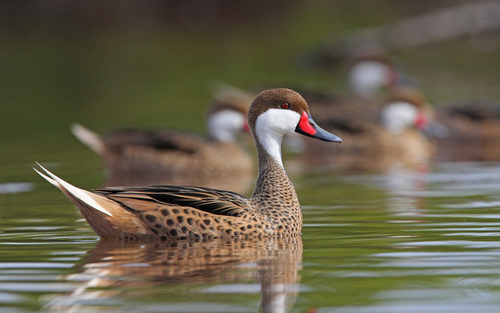 marreca-toicinho
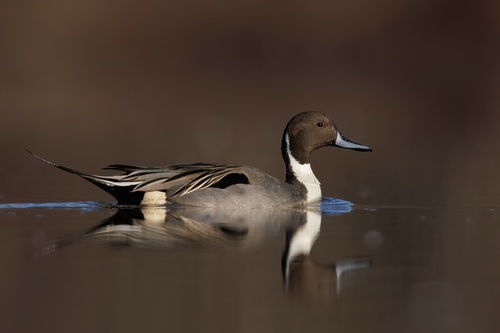 arrabio
Em resumo
A marca de campo mais confiável para separar a marreca-toicinho do arrabio é o rosto: a marreca-toicinho sempre apresenta bochechas brancas nítidas e um bico de base vermelha, enquanto o arrabio não possui nenhum dos dois, apresentando uma cabeça marrom ou chocolate simples e um bico azul-acinzentado. Em voo ou em repouso, o arrabio é muito maior, com um pescoço mais longo e (nos machos) uma cauda pontuda dramaticamente mais longa. Os arrabios juvenis e fêmeas são mais apagados e não possuem a bochecha branca, mas mesmo assim, seu tamanho, cor do bico e forma geral são distintos. Ambas as espécies têm caudas pontudas, mas a do arrabio é muito mais pronunciada, especialmente nos machos adultos.
Dicas de identificação
- O padrão do rosto é a chave: A marreca-toicinho sempre tem bochechas brancas claras, mesmo em juvenis e fêmeas; o arrabio nunca mostra branco no rosto em qualquer idade ou sexo.
- Cor do bico: A marreca-toicinho tem um bico cinza de base vermelha (mais apagado em juvenis), enquanto o arrabio tem um bico azul-acinzentado sem vermelho na base.
- Tamanho e estrutura: O arrabio é muito maior e mais alongado, com um pescoço mais longo e, nos machos, uma pena central da cauda dramaticamente mais longa. A marreca-toicinho é menor e mais compacta.
- Forma da cauda: Ambas têm caudas pontudas, mas a cauda do macho arrabio é extremamente longa e afiada, especialmente na plumagem de reprodução. A cauda da marreca-toicinho é pontuda, mas menos exagerada.
- Cor do especulum: Em voo, a marreca-toicinho mostra um especulum verde iridescente; o arrabio tem um especulum marrom escuro ou preto com uma borda branca (fêmea/juvenil) ou borda branca (macho).
- Cabeça e pescoço: O macho arrabio tem uma cabeça marrom-chocolate com uma fina faixa branca no pescoço e partes inferiores brancas; a marreca-toicinho é marrom no geral com bochechas brancas e sem faixa no pescoço.
- Padrão do corpo: A fêmea e o juvenil do arrabio são marrons manchados e escamosos com uma cabeça marrom-acinzentada simples; a marreca-toicinho é mais uniformemente marrom com uma distinta mancha branca na bochecha.
- Postura de natação: O arrabio fica mais baixo na água com um pescoço inclinado para frente; a marreca-toicinho tem uma postura de pato mergulhador mais típica.
- Perfil de voo: O arrabio voa com as asas ligeiramente para trás e parece ter um pescoço mais longo e mais aerodinâmico; a marreca-toicinho tem um perfil de voo de pato mais compacto e típico.
- Contexto de habitat: No Caribe e na América do Sul, espere ver a marreca-toicinho; em zonas temperadas ou árticas do norte, espere ver o arrabio. A vagância é rara, mas possível.
- Diferenças sexuais: Ambas as espécies mostram menos contraste entre os sexos do que muitos patos, mas os machos arrabio são muito mais impressionantes na plumagem de reprodução, enquanto os sexos da marreca-toicinho são semelhantes, com fêmeas um pouco mais apagadas.
- Confusão juvenil: Mesmo os juvenis da marreca-toicinho mantêm a bochecha branca e (embora mais apagada) o bico de base vermelha, enquanto os juvenis do arrabio não têm essas características e possuem um rosto simples e bico azul-acinzentado.
- Plumagem de eclipse: O macho arrabio em eclipse se assemelha à fêmea, mas mantém a cauda longa e o padrão da asa superior; a marreca-toicinho não apresenta uma mudança sazonal tão dramática.
- Voz: Apenas os chamados do arrabio são descritos (quack da fêmea, assobio do macho); a voz da marreca-toicinho não é distinta nas notas.
- Nota sobre avicultura: A marreca-toicinho é às vezes vista como um fugitivo na Europa; verifique a bochecha branca e o bico de base vermelha se suspeitar de uma origem cativa.
Tamanho
O arrabio é substancialmente maior que a marreca-toicinho. A massa corporal média do arrabio é de cerca de 945,5 g [wikidata], enquanto as subespécies da marreca-toicinho variam de aproximadamente 474–710 g para machos e 505–670 g para fêmeas [wikipedia]. O arrabio também tem um pescoço mais longo e, nos machos, uma pena central da cauda muito mais longa, dando-lhe uma aparência mais alongada e graciosa em comparação com a marreca-toicinho mais compacta.
Plumagem
-
Juvenis e fêmeas: A marreca-toicinho de todas as idades apresenta um corpo marrom com bochechas brancas claras e um bico cinza de base vermelha (mais apagado em juvenis). Os juvenis e fêmeas do arrabio são marrons manchados e escamosos, com uma cabeça marrom-acinzentada simples e bico azul-acinzentado, sem branco no rosto ou vermelho na base do bico. Seu especulum é marrom escuro (fêmea/juvenil) ou preto (macho) com uma borda branca, enquanto a marreca-toicinho apresenta um especulum verde iridescente.
-
Machos adultos (reprodução): O macho arrabio é inconfundível com uma cabeça marrom-chocolate, fina faixa branca no pescoço, partes inferiores brancas e penas centrais da cauda muito longas. O macho da marreca-toicinho é marrom no geral, com bochechas brancas e um bico de base vermelha, e não possui o contraste marcante ou a cauda longa do arrabio.
-
Padrão de voo/asas: Ambas têm caudas pontudas, mas a do arrabio é muito mais longa e pronunciada nos machos adultos. A cor do especulum difere: verde iridescente (marreca-toicinho) vs. marrom escuro/preto com bordas brancas (arrabio).
Comportamento
Ambas as espécies são patos mergulhadores, mas o arrabio é notado por uma postura de natação mais alongada e inclinada para frente, com a base do pescoço quase nivelada com a água. Seu voo é muito rápido, com as asas ligeiramente para trás, ao contrário do perfil de pato mais típico da marreca-toicinho. Ambas andam e nadam bem, mas o pescoço e a cauda mais longos do arrabio fazem com que seus movimentos pareçam mais elegantes e aerodinâmicos.
Habitat
A marreca-toicinho é distribuída de forma irregular na América do Sul e no Caribe, frequentemente em lagoas salinas ou salobras e pântanos costeiros. O arrabio se reproduz no norte da Europa, Ásia e América do Norte, e inverna muito mais ao sul, frequentemente em pântanos de água doce, lagos e campos alagados. Se visto no Caribe ou na América do Sul, um pintail é quase certamente a marreca-toicinho; em regiões temperadas ou árticas, será o arrabio.
Voz
As fêmeas do arrabio fazem um quack áspero, enquanto os machos emitem um assobio semelhante a uma flauta. Não há descrição vocal específica para a marreca-toicinho nas notas, portanto, a voz não é uma marca de campo confiável para separação.