

Ánade Gargantillo vs Ánade Rabudo
Anas bahamensis frente a Anas acuta
Juega un quiz con Ánade Gargantillo y Ánade Rabudo
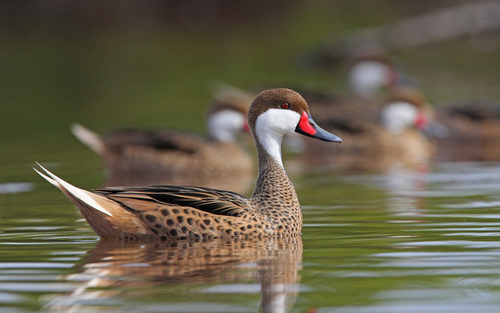 Ánade Gargantillo
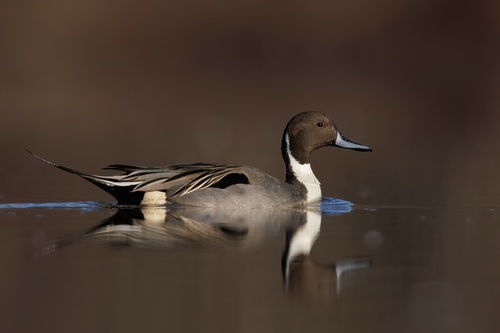 Ánade Rabudo
En breve
La marca de campo más confiable para separar el Ánade Gargantillo del Ánade Rabudo es la cara: el Ánade Gargantillo siempre muestra mejillas blancas nítidas y un pico de base roja, mientras que el Ánade Rabudo carece de ambas, mostrando una cabeza marrón o chocolate simple y un pico azul-grisáceo. En vuelo o en reposo, el Ánade Rabudo es mucho más grande, con un cuello más largo y (en machos) una cola dramáticamente más larga y puntiaguda. Los ándalos juveniles y hembras de Ánade Rabudo son más apagados y carecen de la mejilla blanca, pero incluso entonces, su tamaño, color de pico y forma general son distintivos. Ambas especies tienen colas puntiagudas, pero la del Ánade Rabudo es mucho más pronunciada, especialmente en machos adultos.
Consejos de identificación
- El patrón de la cara es clave: El Ánade Gargantillo siempre tiene mejillas blancas claras, incluso en juveniles y hembras; el Ánade Rabudo nunca muestra blanco en la cara a ninguna edad o sexo.
- Color del pico: El Ánade Gargantillo tiene un pico gris de base roja (más apagado en juveniles), mientras que el Ánade Rabudo tiene un pico azul-grisáceo sin rojo en la base.
- Tamaño y estructura: El Ánade Rabudo es mucho más grande y más alargado, con un cuello más largo y, en machos, una pluma central de cola dramáticamente más larga. El Ánade Gargantillo es más pequeño y compacto.
- Forma de la cola: Ambos tienen colas puntiagudas, pero la cola del macho del Ánade Rabudo es extremadamente larga y afilada, especialmente en plumaje de cría. La cola del Ánade Gargantillo es puntiaguda pero menos exagerada.
- Color del especulum: En vuelo, el Ánade Gargantillo muestra un especulum verde iridiscente; el Ánade Rabudo tiene un especulum marrón oscuro o negro con un borde blanco (hembra/juvenil) o borde blanco (macho).
- Cabeza y cuello: El macho del Ánade Rabudo tiene una cabeza marrón chocolate con una delgada franja blanca en el cuello y partes inferiores blancas; el Ánade Gargantillo es marrón en general con mejillas blancas y sin franja en el cuello.
- Patrón del cuerpo: La hembra y el juvenil del Ánade Rabudo son marrones moteados y con escamas con una cabeza marrón grisácea simple; el Ánade Gargantillo es más uniformemente marrón con una distintiva mancha blanca en la mejilla.
- Postura al nadar: El Ánade Rabudo se sienta más bajo en el agua con un cuello inclinado hacia adelante; el Ánade Gargantillo tiene una postura de pato de buceo más típica.
- Perfil de vuelo: El Ánade Rabudo vuela con las alas ligeramente hacia atrás y parece tener un cuello más largo y más aerodinámico; el Ánade Gargantillo tiene una silueta de vuelo de pato más compacta y típica.
- Contexto de hábitat: En el Caribe y América del Sur, se espera el Ánade Gargantillo; en zonas templadas del norte o árticas, se espera el Ánade Rabudo. La vagancia es rara pero posible.
- Diferencias sexuales: Ambas especies muestran menos contraste entre sexos que muchos patos, pero los machos del Ánade Rabudo son mucho más llamativos en plumaje de cría, mientras que los sexos del Ánade Gargantillo son similares, con hembras ligeramente más apagadas.
- Confusión juvenil: Incluso los juveniles de Ánade Gargantillo retienen la mejilla blanca y (aunque más apagada) el pico de base roja, mientras que los juveniles de Ánade Rabudo carecen de estos y tienen una cara simple y un pico azul-grisáceo.
- Plumaje de eclipse: El macho del Ánade Rabudo en eclipse se asemeja a la hembra pero mantiene la cola larga y el patrón de las alas superiores; el Ánade Gargantillo no muestra un cambio estacional tan dramático.
- Voz: Solo se describen los llamados del Ánade Rabudo (cuac de hembra, silbido de macho); la voz del Ánade Gargantillo no es distintiva en las notas.
- Nota de avicultura: El Ánade Gargantillo a veces se ve como un escapado en Europa; verifica la mejilla blanca y el pico de base roja si sospechas un origen cautivo.
Tamaño
El Ánade Rabudo es sustancialmente más grande que el Ánade Gargantillo. La masa corporal promedio para el Ánade Rabudo es de aproximadamente 945.5 g [wikidata], mientras que las subespecies del Ánade Gargantillo varían de aproximadamente 474–710 g para machos y 505–670 g para hembras [wikipedia]. El Ánade Rabudo también tiene un cuello más largo y, en machos, una pluma central de cola mucho más larga, dándole una apariencia más alargada y elegante en comparación con el más compacto Ánade Gargantillo.
Plumaje
-
Juveniles y hembras: El Ánade Gargantillo de todas las edades muestra un cuerpo marrón con mejillas blancas claras y un pico gris de base roja (más apagado en juveniles). Los juveniles y hembras del Ánade Rabudo son marrones moteados y con escamas, con una cabeza marrón grisácea simple y un pico azul-grisáceo, careciendo de cualquier blanco en la cara o rojo en la base del pico. Su especulum es marrón oscuro (hembra/juvenil) o negro (macho) con un borde blanco, mientras que el Ánade Gargantillo muestra un especulum verde iridiscente.
-
Machos adultos (cría): El drake del Ánade Rabudo es inconfundible con una cabeza marrón chocolate, una delgada franja blanca en el cuello, partes inferiores blancas y plumas centrales de cola muy largas. El macho del Ánade Gargantillo es marrón en general, con mejillas blancas y un pico de base roja, y no tiene el contraste llamativo o la cola larga del Ánade Rabudo.
-
Patrón de vuelo/alas: Ambos tienen colas puntiagudas, pero la del Ánade Rabudo es mucho más larga y más pronunciada en machos adultos. El color del especulum difiere: verde iridiscente (Ánade Gargantillo) frente a marrón oscuro/negro con bordes blancos (Ánade Rabudo).
Comportamiento
Ambas especies son patos de buceo, pero el Ánade Rabudo se destaca por una postura de natación más alargada e inclinada hacia adelante, con la base del cuello casi al ras del agua. Su vuelo es muy rápido, con las alas ligeramente hacia atrás, a diferencia del perfil de pato más típico del Ánade Gargantillo. Ambos caminan y nadan bien, pero el cuello y la cola más largos del Ánade Rabudo hacen que sus movimientos parezcan más elegantes y aerodinámicos.
Hábitat
El Ánade Gargantillo está distribuido de manera irregular en América del Sur y el Caribe, a menudo en lagunas salobres o salinas y humedales costeros. El Ánade Rabudo cría en el norte de Europa, Asia y América del Norte, y pasa el invierno mucho más al sur, a menudo en humedales de agua dulce, lagos y campos inundados. Si se ve en el Caribe o América del Sur, un ánade es casi seguramente un Ánade Gargantillo; en regiones templadas o árticas, será un Ánade Rabudo.
Voz
Las hembras del Ánade Rabudo hacen un cuac áspero, mientras que los drakes emiten un silbido similar a una flauta. No hay una descripción vocal específica para el Ánade Gargantillo en las notas, por lo que la voz no es una marca de campo confiable para la separación.