

corujão-leitoso vs african barred owlet
Ketupa lactea versus Glaucidium capense
Jogue um quiz com corujão-leitoso e african barred owlet
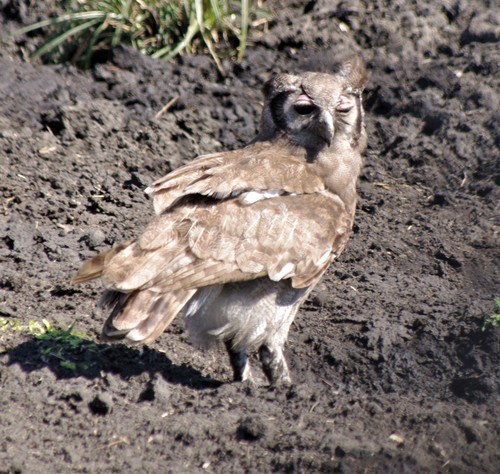 corujão-leitoso
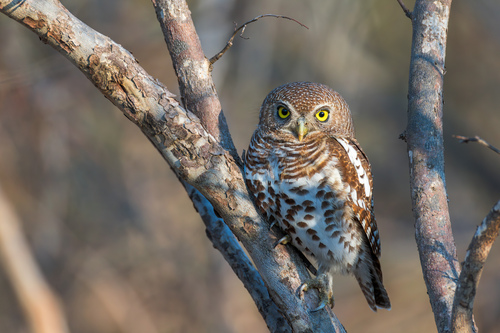 african barred owlet
Em resumo
A maneira mais confiável de separar o corujão-leitoso do african barred owlet é pelo tamanho e estrutura: o corujão-leitoso é uma coruja enorme e robusta, enquanto o african barred owlet é pequeno e compacto. Mesmo à distância ou em luz fraca, a massa imensa e as asas longas e largas do corujão se destacam, contrastando com o pequeno e de asas curtas jizz do owlet. Em vistas empoleiradas, o corujão-leitoso parece pálido e imponente, enquanto o african barred owlet exibe finas barras e uma distinta faixa escapular branca. Não há padrões de asas superiores específicos de idade que causem confusão entre esses dois; todas as idades são facilmente separadas pelo tamanho e estrutura. A sobreposição de habitat é possível, mas o corujão prefere savanas mais abertas e arborizadas, enquanto o owlet é frequentemente encontrado em florestas mais densas ou bordas de florestas.
Dicas de identificação
- O tamanho é a marca de campo mais confiável: O corujão-leitoso é enorme, mesmo em comparação com outras grandes corujas, enquanto o african barred owlet é pequeno e compacto. Se você puder avaliar o tamanho em relação a um galho, outras aves ou até mesmo pela massa aparente em voo, a confusão é quase impossível.
- Estrutura e jizz: O corujão tem uma cabeça massiva, pescoço grosso e asas longas e largas; empoleirado, parece imponente e pesado. O owlet é pequeno, com uma cabeça arredondada e asas e cauda curtas e robustas, dando-lhe uma aparência compacta, quase de brinquedo.
- Padrão de plumagem: O african barred owlet exibe finas barras acima e abaixo, uma sobrancelha branca estreita e uma faixa escapular e de coberturas de asas brancas e ousadas sobre o ombro quando empoleirado. O corujão-leitoso não possui essas características, parecendo mais simples e pálido no geral.
- Características faciais: O corujão tem um rosto grande e pálido com olhos escuros e não possui a sobrancelha branca do owlet. O rosto do owlet é menor, com uma aparência mais expressiva devido à sobrancelha e às barras.
- Partes inferiores: O peito e os flancos do owlet são brancos com manchas marrons, e as coberturas de asas inferiores, pernas e vent são brancas. O corujão é muito mais simples embaixo, com um tom leitoso ou cinza pálido e pouco padrão.
- Asas e cauda em voo: O owlet exibe penas de voo marrons barradas com ruivo, mas suas asas curtas e arredondadas e o voo rápido e saltitante são distintos. As asas do corujão são longas, largas e com batidas lentas, sem barras ruivas.
- Postura empoleirada: O corujão senta-se ereto e parece massivo, muitas vezes em grandes galhos expostos. O owlet empoleira-se mais baixo, frequentemente em cobertura ou em galhos menores, e pode ser visto em cavidades de árvores.
- Período de atividade: O african barred owlet é parcialmente diurno e pode ser visto caçando ou empoleirado à luz do dia, às vezes sendo atacado. O corujão-leitoso é quase sempre noturno e raramente visível durante o dia.
- Contexto de habitat: Se visto em floresta densa ou borda de floresta, especialmente durante o dia, é mais provável que seja um african barred owlet. Em savanas abertas e secas com árvores dispersas, especialmente à noite, o corujão-leitoso é mais provável.
- Cor do bico e pés: O owlet tem um bico amarelo-esverdeado opaco e olhos, pernas e pés amarelos. O bico e os pés do corujão não são descritos em detalhes aqui, mas sua coloração geral é mais pálida e menos colorida.
- Comportamento de ataque: Se você vê uma coruja sendo atacada por pequenas aves durante o dia, é mais provável que seja um african barred owlet. O tamanho do corujão geralmente desencoraja ataques.
- Sem confusão específica de idade: Não há padrões de plumagem juvenil ou imatura em nenhuma das espécies que causariam confusão; todas as idades são separadas pelo tamanho e estrutura.
- Vocalização: Não é diagnóstico com as informações fornecidas, mas ambas as espécies chamam principalmente ao crepúsculo e ao amanhecer.
- Sexo e estação: Não há dimorfismo sexual significativo ou mudança sazonal de plumagem em nenhuma das espécies que afetaria a identificação.
- Se em dúvida, use múltiplas marcas: Se você não consegue avaliar o tamanho, procure pela faixa escapular branca, finas barras e comportamento diurno para o owlet; para o corujão, procure por tamanho massivo, coloração pálida e hábitos noturnos.
Tamanho
O corujão-leitoso é a maior coruja africana, atingindo até 66 cm (26 in) de comprimento e possuindo uma construção massiva e poderosa. Em contraste, o african barred owlet está entre as menores corujas africanas, com cerca de 17 cm (6.7 in) de comprimento e uma envergadura de apenas 40 cm (16 in). O corujão é quase quatro vezes o comprimento e muito mais pesado; mesmo um corujão juvenil é maior que o maior owlet. O tamanho sozinho é diagnóstico em qualquer distância onde ambas as espécies poderiam ser confundidas.
Plumagem
Não há marcas superiores de asas ou de voo específicas de idade que causariam confusão entre esses dois: tanto adultos quanto imaturos são facilmente separados pela aparência geral. O corujão-leitoso é geralmente cinza pálido com um tom leitoso, sem finas barras, e apresenta um rosto simples e pálido com olhos escuros. O african barred owlet é finamente barrado acima e abaixo, com uma sobrancelha branca e uma impressionante faixa escapular e de coberturas de asas brancas sobre o ombro quando empoleirado. As partes inferiores do owlet são brancas com manchas marrons, e as coberturas de asas inferiores, pernas e vent são brancas. Em voo, o owlet exibe penas de voo marrons barradas com ruivo, mas seu tamanho diminuto e asas curtas e arredondadas são inconfundíveis. O corujão, por outro lado, é muito mais simples e volumoso, sem faixa escapular branca ou finas barras.
Comportamento
O african barred owlet é parcialmente diurno e frequentemente se empoleira em áreas abertas durante o dia, às vezes sendo atacado por aves menores. Ele caça de poleiros expostos e é frequentemente visto escaneando em busca de presas à luz do dia. O corujão-leitoso é principalmente noturno e mais secreto durante o dia, frequentemente repousando em coberturas densas e raramente visto caçando à luz do dia. O estilo de caça do corujão é adaptado para presas muito maiores, e ele raramente é atacado devido ao seu tamanho. Ambas as espécies podem chamar ao crepúsculo e ao amanhecer, mas o owlet é mais provável de estar ativo ou visível durante o dia.
Habitat
Ambas as espécies ocorrem na África subsaariana, mas o corujão-leitoso é mais frequentemente encontrado em savanas secas e arborizadas, favorecendo áreas abertas com árvores dispersas. O african barred owlet prefere florestas mais densas, bordas de florestas e habitats bem arborizados, às vezes aventurando-se em jardins ou plantações. Embora seus territórios possam se sobrepor, o corujão é menos provável em florestas densas, e o owlet é menos provável em savanas abertas e sem árvores.
corujão-leitoso · african barred owlet · Minhas aves difíceis