

Motmot

クロワシミミズク 対 ヨコジマスズメフクロウ

Ketupa lactea 対 Glaucidium capense

クロワシミミズクとヨコジマスズメフクロウのクイズ
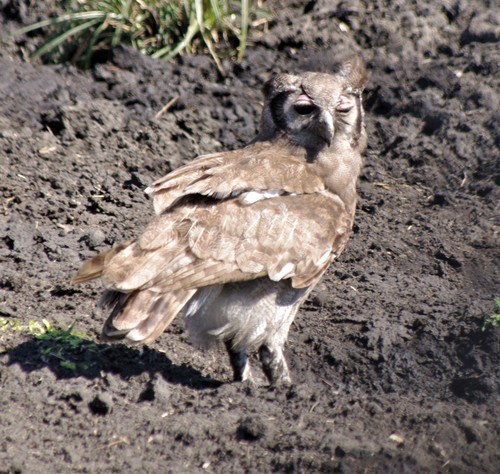
クロワシミミズク (Ketupa lactea) クロワシミミズク
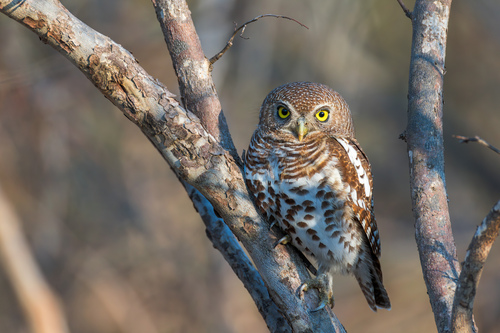
ヨコジマスズメフクロウ (Glaucidium capense) ヨコジマスズメフクロウ

メディア

読み込み中…

要点

アフリカヨコジマスズメフクロウとクロワシミミズクを区別する最も信頼できる方法は、サイズと構造です:クロワシは巨大でがっしりとしたフクロウですが、アフリカヨコジマスズメフクロウは小さくコンパクトです。距離があっても、または光が悪くても、ミミズクの巨大な体と長く広い翼が際立ち、スズメフクロウの小さく短い翼の印象と対照的です。止まっている姿では、クロワシミミズクは淡い色合いで威圧的に見え、アフリカヨコジマスズメフクロウは細かい縞模様と特徴的な白い肩羽のストライプを示します。これら二種の間には混乱を招く年齢特有の上翼パターンはなく、すべての年齢はサイズと構造によって容易に区別できます。生息地の重複は可能ですが、ミミズクはより開けた森林のサバンナを好む一方で、スズメフクロウはしばしばより密な森林や森林の端にいます。

識別のコツ

  1. サイズは最も信頼できるフィールドマーク:クロワシミミズクは巨大で、他の大きなフクロウと比べても非常に大きいですが、アフリカヨコジマスズメフクロウは小さくコンパクトです。もしサイズを枝や他の鳥と比較できれば、混乱はほぼ不可能です。
  2. 構造と印象:ミミズクは巨大な頭、太い首、長く広い翼を持ち、止まっていると威圧的で重そうに見えます。スズメフクロウは小さく、丸い頭と短くて太い翼と尾を持ち、コンパクトでおもちゃのような外観を与えます。
  3. 羽毛パターン:アフリカヨコジマスズメフクロウは上部と下部に細かい縞模様を示し、狭い白い眉毛、そして止まっているときに肩に横切る太い白い肩羽と翼の覆い羽のストライプを持っています。クロワシミミズクはこれらの特徴が欠けており、全体的に地味で淡い印象を与えます。
  4. 顔の特徴:ミミズクは大きく淡い顔を持ち、暗い目があり、スズメフクロウの白い眉毛がありません。スズメフクロウの顔は小さく、眉毛と縞模様のためにより表情豊かに見えます。
  5. 下部:スズメフクロウの胸と側面は白に茶色の斑点があり、下翼の覆い羽、脚、肛門は白です。ミミズクは下部がずっと地味で、乳白色または淡い灰色の色合いで、模様はほとんどありません。
  6. 飛行中の翼と尾:スズメフクロウは赤褐色の縞模様のある茶色の飛行羽を示しますが、その短く丸い翼と迅速で跳ねるような飛行は特徴的です。ミミズクの翼は長く広く、ゆっくりとした羽ばたきで、赤褐色の縞模様はありません。
  7. 止まっている姿勢:ミミズクは直立して座り、巨大に見え、大きく露出した枝にいることが多いです。スズメフクロウは低い位置に止まり、しばしば覆いの中や小さな枝にいて、木の空洞に見られることもあります。
  8. 活動時間:アフリカヨコジマスズメフクロウは部分的に日中活動し、昼間に狩りをしたり止まったりしているのが見られることがあり、時には襲われることもあります。クロワシミミズクはほぼ常に夜行性で、昼間はあまり見られません。
  9. 生息地の文脈:密な森林や森林の端で見られた場合、特に昼間はアフリカヨコジマスズメフクロウの可能性が高いです。開けた乾燥したサバンナで散在する木がある場合、特に夜間はクロワシミミズクの可能性が高いです。
  10. くちばしと足の色:スズメフクロウは鈍い緑がかった黄色のくちばしと黄色の目、脚、足を持っています。ミミズクのくちばしと足はここでは詳細に説明されていませんが、全体的な色合いはより淡く、色彩が少ないです。
  11. 襲撃行動:昼間に小さな鳥に襲われているフクロウを見た場合、それはアフリカヨコジマスズメフクロウである可能性が高いです。ミミズクのサイズは通常、襲撃を抑制します。
  12. 年齢特有の混乱なし:どちらの種にも混乱を引き起こす幼鳥や未成熟の羽毛パターンはなく、すべての年齢はサイズと構造によって区別されます。
  13. 鳴き声:提供された情報では診断には使えませんが、両種は主に夕暮れ時と夜明けに鳴きます。
  14. 性別と季節:どちらの種にも識別に影響を与えるような顕著な性差や季節的な羽毛の変化はありません。
  15. 疑問がある場合は複数のマークを使用:サイズを判断できない場合は、スズメフクロウの白い肩羽のストライプ、細かい縞模様、日中の行動を探してください。ミミズクの場合は、巨大なサイズ、淡い色合い、夜行性の習性を探してください。

大きさ

クロワシミミズクはアフリカで最も大きなフクロウで、全長66 cm(26インチ)に達し、巨大で力強い体格を持っています。それに対して、アフリカヨコジマスズメフクロウは約17 cm(6.7インチ)で、翼幅はわずか40 cm(16インチ)と、アフリカのフクロウの中で最も小さい部類に入ります。ミミズクは長さでほぼ4倍、重さも大幅に異なり、幼鳥のミミズクでさえ最大のスズメフクロウを圧倒します。サイズだけで、両種が混同される可能性のある範囲では診断が可能です。

羽色

これら二種の間で混乱を引き起こすような年齢特有の上翼や飛行のマークはありません:成鳥と幼鳥は全体的な外観によって容易に区別されます。クロワシミミズクは一般的に淡い灰色で乳白色の色合いを持ち、細かい縞模様がなく、暗い目を持つ地味で淡い顔を示します。アフリカヨコジマスズメフクロウは上部と下部に細かい縞模様があり、白い眉毛と止まっているときに肩に横切る際立った白い肩羽と翼の覆い羽のストライプを持っています。スズメフクロウの下部は白に茶色の斑点があり、下翼の覆い羽、脚、肛門は白です。飛行中、スズメフクロウは赤褐色の縞模様のある茶色の飛行羽を示しますが、その小さなサイズと短く丸い翼は間違いなく特徴的です。対照的に、ミミズクはずっと地味でがっしりとしており、白い肩羽のストライプや細かい縞模様はありません。

行動

アフリカヨコジマスズメフクロウは部分的に日中活動し、昼間に開けた場所で止まっていることが多く、時には小さな鳥に襲われることもあります。露出した止まり木から狩りを行い、昼間に獲物を探しているのが頻繁に見られます。クロワシミミズクは主に夜行性で、昼間はより秘密主義的で、密な覆いの中で休んでいることが多く、昼間に狩りをしているのはめったに見られません。ミミズクの狩りのスタイルは、はるかに大きな獲物に適応しており、そのサイズのために襲撃されることはほとんどありません。両種は夕暮れ時と夜明けに鳴くことがありますが、スズメフクロウは昼間に活動的または見える可能性が高いです。

生息環境

両種はサハラ以南のアフリカに生息していますが、クロワシミミズクは乾燥した森林のサバンナで最もよく見られ、散在する木がある開けた場所を好みます。アフリカヨコジマスズメフクロウはより密な森林、森林の端、よく木が生えた生息地を好み、時には庭やプランテーションに出没します。彼らの生息域は重複することがありますが、ミミズクは密な森林ではあまり見られず、スズメフクロウは開けた無木のサバンナではあまり見られません。

より良い説明を送る

比較と同じ項目を使ってください。文章はすぐに公開されます。

The most reliable way to separate Verreaux's Eagle Owl from African Barred Owlet is by size and structure: Verreaux's is a huge, thick-set owl, while African Barred Owlet is tiny and compact. Even at a distance or in poor light, the eagle-owl's massive bulk and long, broad wings stand out, contrasting with the owlet's small, short-winged jizz. In perched views, Verreaux's Eagle Owl appears pale and imposing, while African Barred Owlet shows fine barring and a distinctive white scapular stripe. There are no confusing age-specific upperwing patterns between these two; all ages are easily separated by size and structure. Habitat overlap is possible, but the eagle-owl favors more open, wooded savanna, while the owlet is often in denser woodland or forest edge.

  1. Size is the single most reliable field mark: Verreaux's Eagle Owl is enormous, even compared to other large owls, while African Barred Owlet is tiny and compact. If you can judge size against a branch, other birds, or even by the apparent bulk in flight, confusion is almost impossible.
  2. Structure and jizz: The eagle-owl has a massive head, thick neck, and long, broad wings; perched, it looks imposing and heavy. The owlet is small, with a rounded head and short, stubby wings and tail, giving it a compact, almost toy-like appearance.
  3. Plumage pattern: African Barred Owlet shows fine barring above and below, a narrow white eyebrow, and a bold white scapular and wing covert stripe across the shoulder when perched. Verreaux's Eagle Owl lacks these features, appearing plainer and paler overall.
  4. Facial features: The eagle-owl has a large, pale face with dark eyes and lacks the white eyebrow of the owlet. The owlet's face is smaller, with a more expressive look due to the eyebrow and barring.
  5. Underparts: The owlet's breast and flanks are white with brown spots, and the underwing coverts, legs, and vent are white. The eagle-owl is much plainer below, with a milky or pale gray tone and little pattern.
  6. Wing and tail in flight: The owlet shows brown flight feathers barred with rufous, but its short, rounded wings and rapid, bounding flight are distinctive. The eagle-owl's wings are long, broad, and slow-beating, with no rufous barring.
  7. Perched posture: The eagle-owl sits upright and appears massive, often on large, exposed branches. The owlet perches lower, often in cover or on smaller branches, and may be seen in tree cavities.
  8. Activity period: African Barred Owlet is partly diurnal and can be seen hunting or perching in daylight, sometimes being mobbed. Verreaux's Eagle Owl is almost always nocturnal and rarely visible by day.
  9. Habitat context: If seen in dense woodland or forest edge, especially during the day, African Barred Owlet is more likely. In open, dry savanna with scattered trees, especially at night, Verreaux's Eagle Owl is more probable.
  10. Bill and feet color: The owlet has a dull greenish-yellow bill and yellow eyes, legs, and feet. The eagle-owl's bill and feet are not described in detail here, but its overall coloration is paler and less colorful.
  11. Mobbing behavior: If you see an owl being mobbed by small birds in daylight, it's more likely to be an African Barred Owlet. The eagle-owl's size usually deters mobbing.
  12. No age-specific confusion: There are no juvenile or immature plumage patterns in either species that would cause confusion; all ages are separated by size and structure.
  13. Vocalization: Not diagnostic with the information provided, but both species call mainly at dusk and dawn.
  14. Sex and season: No significant sexual dimorphism or seasonal plumage change in either species that would affect identification.
  15. If in doubt, use multiple marks: If you can't judge size, look for the white scapular stripe, fine barring, and diurnal behavior for the owlet; for the eagle-owl, look for massive size, pale coloration, and nocturnal habits.

Verreaux's Eagle Owl is the largest African owl, reaching up to 66 cm (26 in) in length and possessing a massive, powerful build. In contrast, African Barred Owlet is among the smallest African owls at about 17 cm (6.7 in) long with a wingspan of just 40 cm (16 in). The eagle-owl is nearly four times the length and vastly heavier; even a juvenile eagle-owl dwarfs the largest owlet. Size alone is diagnostic at any range where both species could be confused.

There are no age-specific upperwing or flight marks that would cause confusion between these two: both adults and immatures are easily separated by overall appearance. Verreaux's Eagle Owl is generally pale grayish with a milky cast, lacking fine barring, and shows a plain, pale face with dark eyes. African Barred Owlet is finely barred above and below, with a white eyebrow and a striking white scapular and wing covert stripe across the shoulder when perched. The underparts of the owlet are white with brown spots, and the underwing coverts, legs, and vent are white. In flight, the owlet shows brown flight feathers barred with rufous, but its tiny size and short, rounded wings are unmistakable. The eagle-owl, by contrast, is much plainer and bulkier, with no white scapular stripe or fine barring.

African Barred Owlet is partly diurnal and often perches in the open during the day, sometimes being mobbed by smaller birds. It hunts from exposed perches and is frequently seen scanning for prey in daylight. Verreaux's Eagle Owl is primarily nocturnal and more secretive by day, often roosting in dense cover and rarely seen hunting in daylight. The eagle-owl's hunting style is adapted for much larger prey, and it is seldom mobbed due to its size. Both species may call at dusk and dawn, but the owlet is more likely to be active or visible during the day.

Both species occur in sub-Saharan Africa, but Verreaux's Eagle Owl is most often found in dry, wooded savanna, favoring open areas with scattered trees. African Barred Owlet prefers denser woodland, forest edge, and well-wooded habitats, sometimes venturing into gardens or plantations. While their ranges can overlap, the eagle-owl is less likely in dense forest, and the owlet is less likely in open, treeless savanna.

変更を破棄しますか?

保存していない編集があります。今離れると失われます。

クロワシミミズク · ヨコジマスズメフクロウ · 苦手な鳥