

Verreaux's Eagle-Owl vs African Barred Owlet
Ketupa lactea contro Glaucidium capense
Fai un quiz con Verreaux's Eagle-Owl e African Barred Owlet
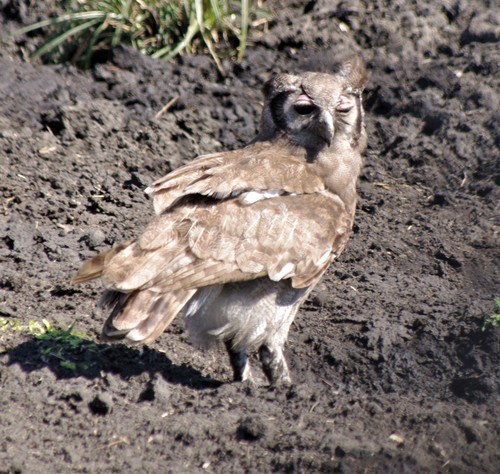 Verreaux's Eagle-Owl
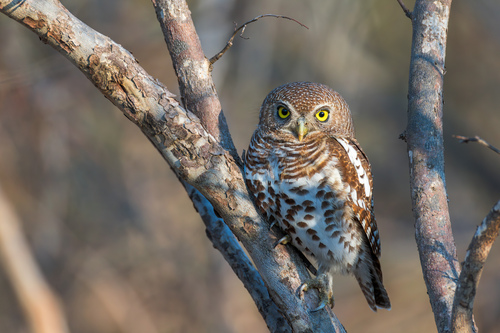 African Barred Owlet
In breve
Il modo più affidabile per separare Verreaux's Eagle-Owl da African Barred Owlet è la dimensione e la struttura: Verreaux's è un grande gufo robusto, mentre African Barred Owlet è piccolo e compatto. Anche a distanza o in scarsa illuminazione, la massa imponente e le lunghe ali larghe del gufo reale si distinguono, in contrasto con la piccola e corta struttura dell'owlet. In posizioni perpendicolari, Verreaux's Eagle-Owl appare pallido e imponente, mentre African Barred Owlet mostra una fine barratura e una distintiva striscia scapolare bianca. Non ci sono schemi di ali superiori specifici per età che possano confondere tra questi due; tutte le età sono facilmente separate per dimensione e struttura. È possibile un sovrapposizione degli habitat, ma il gufo reale preferisce savane più aperte e boschive, mentre l'owlet si trova spesso in boschi più densi o ai margini delle foreste.
Consigli di identificazione
- La dimensione è il segno di campo più affidabile: Verreaux's Eagle-Owl è enorme, anche rispetto ad altri grandi gufi, mentre African Barred Owlet è piccolo e compatto. Se riesci a giudicare la dimensione rispetto a un ramo, ad altri uccelli o anche per la massa apparente in volo, la confusione è quasi impossibile.
- Struttura e jizz: Il gufo reale ha una testa massiccia, un collo spesso e ali lunghe e larghe; in posizione perpendicolare, appare imponente e pesante. L'owlet è piccolo, con una testa arrotondata e ali e coda corte e tozze, conferendogli un aspetto compatto, quasi giocattoloso.
- Schema del piumaggio: African Barred Owlet mostra una fine barratura sopra e sotto, un sopracciglio bianco stretto e una striscia scapolare e copertura delle ali bianca e audace sulla spalla quando è posato. Verreaux's Eagle-Owl manca di queste caratteristiche, apparendo più semplice e pallido nel complesso.
- Caratteristiche facciali: Il gufo reale ha un grande volto pallido con occhi scuri e manca del sopracciglio bianco dell'owlet. Il volto dell'owlet è più piccolo, con un aspetto più espressivo a causa del sopracciglio e della barratura.
- Parti inferiori: Il petto e i fianchi dell'owlet sono bianchi con macchie marroni, e le coperture delle ali inferiori, le gambe e il vent sono bianchi. Il gufo reale è molto più semplice sotto, con una tonalità lattiginosa o grigia chiara e poco schema.
- Ali e coda in volo: L'owlet mostra piume di volo marroni barrate di ruggine, ma le sue ali corte e arrotondate e il volo rapido e saltellante sono distintivi. Le ali del gufo reale sono lunghe, larghe e battono lentamente, senza barrature di ruggine.
- Postura posata: Il gufo reale si siede dritto e appare massiccio, spesso su grandi rami esposti. L'owlet si posiziona più in basso, spesso in copertura o su rami più piccoli, e può essere visto in cavità degli alberi.
- Periodo di attività: African Barred Owlet è parzialmente diurno e può essere visto cacciare o posarsi alla luce del giorno, a volte essendo assalito. Verreaux's Eagle-Owl è quasi sempre notturno e raramente visibile durante il giorno.
- Contesto dell'habitat: Se visto in boschi densi o ai margini delle foreste, specialmente durante il giorno, è più probabile che sia un African Barred Owlet. In savane aperte e secche con alberi sparsi, specialmente di notte, è più probabile che sia un Verreaux's Eagle-Owl.
- Colore del becco e delle zampe: L'owlet ha un becco di un verde giallastro opaco e occhi, gambe e piedi gialli. Il becco e le zampe del gufo reale non sono descritti in dettaglio qui, ma la sua colorazione complessiva è più chiara e meno colorata.
- Comportamento di assalto: Se vedi un gufo assalito da piccoli uccelli alla luce del giorno, è più probabile che sia un African Barred Owlet. La dimensione del gufo reale di solito scoraggia l'assalto.
- Nessuna confusione specifica per età: Non ci sono schemi di piumaggio giovanile o immaturo in nessuna delle due specie che possano causare confusione; tutte le età sono separate per dimensione e struttura.
- Vocalizzazione: Non diagnostica con le informazioni fornite, ma entrambe le specie chiamano principalmente al crepuscolo e all'alba.
- Sesso e stagione: Nessun significativo dimorfismo sessuale o cambiamento di piumaggio stagionale in nessuna delle due specie che possa influenzare l'identificazione.
- In caso di dubbio, usa più segni: Se non riesci a giudicare la dimensione, cerca la striscia scapolare bianca, la fine barratura e il comportamento diurno per l'owlet; per il gufo reale, cerca una dimensione massiccia, una colorazione pallida e abitudini notturne.
Taglia
Verreaux's Eagle-Owl è il gufo africano più grande, raggiungendo fino a 66 cm (26 in) di lunghezza e possedendo una costruzione massiccia e potente. Al contrario, African Barred Owlet è tra i più piccoli gufi africani, con circa 17 cm (6.7 in) di lunghezza e un'apertura alare di soli 40 cm (16 in). Il gufo reale è quasi quattro volte la lunghezza e molto più pesante; anche un gufo reale giovanile sovrasta il più grande owlet. La dimensione da sola è diagnostica a qualsiasi distanza in cui entrambe le specie potrebbero confondersi.
Piumaggio
Non ci sono segni di ali superiori o di volo specifici per età che possano causare confusione tra questi due: sia gli adulti che gli immaturi sono facilmente separati dall'aspetto generale. Verreaux's Eagle-Owl è generalmente grigio chiaro con una tonalità lattiginosa, privo di fine barratura, e mostra un volto semplice e pallido con occhi scuri. African Barred Owlet è finemente barrato sopra e sotto, con un sopracciglio bianco e una striscia scapolare e copertura delle ali bianca e sorprendente sulla spalla quando è posato. Le parti inferiori dell'owlet sono bianche con macchie marroni, e le coperture delle ali inferiori, le gambe e il vent sono bianchi. In volo, l'owlet mostra piume di volo marroni barrate di ruggine, ma la sua piccola dimensione e le ali corte e arrotondate sono inconfondibili. Il gufo reale, al contrario, è molto più semplice e massiccio, senza striscia scapolare bianca o fine barratura.
Comportamento
African Barred Owlet è parzialmente diurno e spesso si posiziona in modo aperto durante il giorno, a volte essendo assalito da uccelli più piccoli. Caccia da posatoi esposti ed è frequentemente visto mentre scruta il terreno in cerca di prede alla luce del giorno. Verreaux's Eagle-Owl è principalmente notturno e più riservato durante il giorno, spesso riposando in copertura densa e raramente visto cacciare alla luce del giorno. Lo stile di caccia del gufo reale è adattato per prede molto più grandi, ed è raramente assalito a causa della sua dimensione. Entrambe le specie possono chiamare al crepuscolo e all'alba, ma l'owlet è più probabile che sia attivo o visibile durante il giorno.
Habitat
Entrambe le specie si trovano nell'Africa subsahariana, ma Verreaux's Eagle-Owl è più spesso trovato in savane secche e boschive, preferendo aree aperte con alberi sparsi. African Barred Owlet preferisce boschi più densi, margini forestali e habitat ben boschivi, a volte avventurandosi in giardini o piantagioni. Anche se i loro territori possono sovrapporsi, il gufo reale è meno probabile che si trovi in foreste dense, e l'owlet è meno probabile che si trovi in savane aperte e senza alberi.
Verreaux's Eagle-Owl · African Barred Owlet · I miei uccelli difficili