

sabiazinho-norte-americano vs caraxué
Catharus fuscescens versus Turdus nudigenis
Jogue um quiz com sabiazinho-norte-americano e caraxué
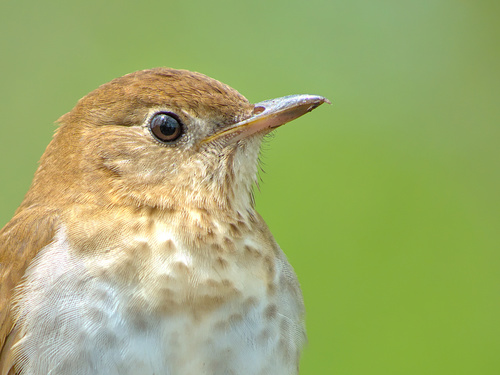 sabiazinho-norte-americano
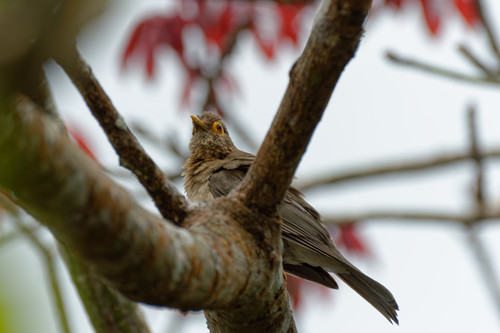 caraxué
Em resumo
A marca de campo mais confiável para separar o sabiazinho-norte-americano do caraxué é a presença de um anel ocular amarelo forte no caraxué, que está ausente ou presente apenas de forma fraca no sabiazinho-norte-americano. O sabiazinho-norte-americano é visivelmente menor e mais esbelto, com uma cor superior mais quente e canela (especialmente em aves do leste), enquanto o caraxué é maior, mais pesado e de cor oliva-marrom mais simples. O sabiazinho-norte-americano apresenta manchas no peito fracas e borradas em um fundo esbranquiçado, enquanto o caraxué tem uma garganta riscada de marrom e partes inferiores de marrom mais claro. Os caraxués juvenis são salpicados acima e manchados abaixo, mas mesmo assim, o anel ocular amarelo está presente (embora mais fino), ajudando na identificação. O habitat e a distribuição também diferem muito, já que o sabiazinho-norte-americano é um migrante da América do Norte e o caraxué é um residente da América do Sul e do Caribe.
Dicas de identificação
- Verifique o anel ocular: O caraxué sempre apresenta um anel ocular amarelo forte e brilhante (adultos e juvenis), que é diagnóstico. O anel ocular do sabiazinho-norte-americano é fraco, pálido e nunca amarelo.
- Avalie o tamanho e a estrutura geral: O caraxué é muito maior e mais robusto que o sabiazinho-norte-americano. Se a ave parecer grande e pesada para um sabiá, é improvável que seja o sabiazinho-norte-americano.
- Cor da parte superior: O sabiazinho-norte-americano (especialmente aves do leste) é de um marrom canela quente acima, enquanto o caraxué é de um oliva-marrom simples. Os sabiazinho-norte-americanos ocidentais podem ser mais oliva, mas ainda assim geralmente são mais quentes que o caraxué.
- Padrão do peito e da garganta: O sabiazinho-norte-americano tem manchas marrons fracas e borradas em um peito esbranquiçado, com uma barriga branca limpa. O caraxué tem uma garganta riscada de marrom, partes inferiores de marrom mais claro e não possui o padrão de manchas distinto do sabiazinho-norte-americano.
- Padrões juvenis: Os caraxués juvenis são salpicados acima e manchados abaixo, mas ainda mostram um anel ocular amarelo (embora mais fino). Os juvenis do sabiazinho-norte-americano são semelhantes aos adultos, mas nunca têm um anel ocular forte ou listras pesadas na garganta.
- Cor das pernas: O sabiazinho-norte-americano tem pernas rosas, que podem ser uma pista sutil se vistas bem. A cor das pernas do caraxué não é descrita aqui, mas o anel ocular é uma marca mais forte.
- Estrutura do bico: O bico do sabiazinho-norte-americano é relativamente curto (1,2–1,9 cm), adequado ao seu tamanho menor. O caraxué tem um bico proporcionalmente maior, mas isso é menos confiável do que o anel ocular ou o tamanho.
- Habitat e distribuição: Se você estiver na América do Norte no verão, o sabiazinho-norte-americano é possível; no Caribe ou no norte da América do Sul, o caraxué é o padrão. O sabiazinho-norte-americano é um vagrante raro fora de sua faixa normal.
- Comportamento: O sabiazinho-norte-americano é tímido, permanecendo baixo em coberturas densas. O caraxué é frequentemente ousado e visível, forrageando em jardins e parques.
- Voz: O canto do caraxué é um trinado musical lento, com um chamado semelhante ao de um gato. O canto do sabiazinho-norte-americano é uma flauta etérea em espiral descendente (não descrita aqui), mas o anel ocular é uma marca de campo mais prática.
- Sazonalidade: O sabiazinho-norte-americano está presente na América do Norte apenas durante a época de reprodução e na migração; o caraxué é residente durante todo o ano em sua faixa.
- Contexto: Se você ver um sabiá com um anel ocular amarelo forte no Caribe ou no norte da América do Sul, é quase certamente um caraxué. Se a ave for pequena, marrom quente e tiver apenas um anel ocular fraco, é provável que seja um sabiazinho-norte-americano—se você estiver dentro de sua faixa.
- Armadilhas: Os sabiazinho-norte-americanos ocidentais podem parecer mais oliva-marrom, aproximando-se da cor do caraxué, mas nunca mostram o anel ocular amarelo ou o mesmo tamanho. Os caraxués juvenis podem ter anéis oculares menos óbvios, mas ainda mais brilhantes que os do sabiazinho-norte-americano.
- Visões de voo: Nenhum padrão distinto de asa superior é descrito para nenhuma das espécies, então confie no tamanho, estrutura e padrão facial em voo.
- Múltiplas marcas: Sempre use uma combinação de tamanho, anel ocular, cor da parte superior e padrão do peito/garganta para a identificação mais confiável, especialmente se as condições de visualização forem ruins.
Tamanho
O sabiazinho-norte-americano é significativamente menor, medindo 16–19,5 cm de comprimento e pesando 26–39 g ([wikipedia]). Em contraste, o caraxué é muito maior, medindo 23–24 cm e cerca de 60 g. A diferença é óbvia no campo: o caraxué parece mais robusto e com corpo mais longo, com uma construção mais pesada. A envergadura do sabiazinho-norte-americano é em média 28,5 cm, enquanto a do caraxué não é especificada, mas suas proporções gerais são muito mais robustas. Se ambos forem vistos juntos (improvável devido à distribuição), o tamanho por si só é uma pista forte.
Plumagem
- Aves juvenis/imaturas: Os caraxués juvenis são salpicados acima e manchados abaixo, com um anel ocular amarelo mais fino, mas ainda presente. Os juvenis do sabiazinho-norte-americano não são descritos em detalhes aqui, mas os adultos e jovens compartilham o padrão geral de manchas marrons fracas em um peito esbranquiçado, nunca com as marcas faciais ousadas do caraxué.
- Adultos: O sabiazinho-norte-americano é marrom claro acima (canela no leste, oliva-marrom no oeste), com um anel ocular mal definido ou fraco, partes inferiores brancas e um peito claro com manchas marrons fracas e borradas. O caraxué é de um oliva-marrom simples acima, marrom mais claro abaixo, com uma garganta riscada de marrom e um anel ocular amarelo proeminente. As partes inferiores do caraxué nunca são tão brancas e limpas quanto as do sabiazinho-norte-americano, e as manchas do peito são substituídas por listras na garganta.
- Contraste chave: O anel ocular amarelo do caraxué (todas as idades) nunca é igualado pelo sabiazinho-norte-americano, cujo anel ocular é fraco e não é brilhante. As manchas do peito do sabiazinho-norte-americano são sempre borradas e fracas, enquanto o caraxué apresenta listras apenas na garganta.
Comportamento
Ambas as espécies são sabiás típicos em seus hábitos, forrageando no chão ou em vegetação baixa. O sabiazinho-norte-americano é mais secreto, frequentemente permanecendo em sub-bosques densos e próximo à água, e pode ser mais difícil de ver bem. O caraxué é mais ousado e conspícuo, frequentemente visto em jardins e florestas abertas, às vezes até em áreas urbanas. O sabiazinho-norte-americano é um migrante de longa distância, enquanto o caraxué é residente e não migra.
Habitat
O sabiazinho-norte-americano se reproduz em florestas decíduas úmidas com sub-bosque denso próximo à água no sul do Canadá e no norte dos Estados Unidos ([wikipedia]). É um migrante, hibernando na bacia amazônica e no norte da América do Sul. O caraxué é um reprodutor residente nas Pequenas Antilhas e no norte da América do Sul (Colômbia, Venezuela, norte do Brasil), e é comum em florestas abertas, jardins e até parques urbanos. Seus habitats não se sobrepõem, e o sabiazinho-norte-americano não é esperado no Caribe ou na América do Sul tropical fora da migração. Se você estiver nas Antilhas ou no norte da América do Sul, o sabiazinho-norte-americano é extremamente improvável.
Voz
O caraxué canta um trinado musical, mais lento e de tom mais baixo que o sabiá-da-mata, e emite um chamado semelhante ao de um gato 'queeoow' e um 'kereel' áspero quando alarmado ([wikipedia]). O sabiazinho-norte-americano é famoso por seu canto etéreo em espiral descendente, mas o canto não é descrito nas notas fornecidas. Chamadas e cantos são bastante diferentes, mas a menos que você conheça o canto distinto do sabiazinho-norte-americano, o anel ocular amarelo continua sendo uma marca de campo mais confiável.