

Zorzalito Rojizo vs Zorzal Caripelado
Catharus fuscescens frente a Turdus nudigenis
Juega un quiz con Zorzalito Rojizo y Zorzal Caripelado
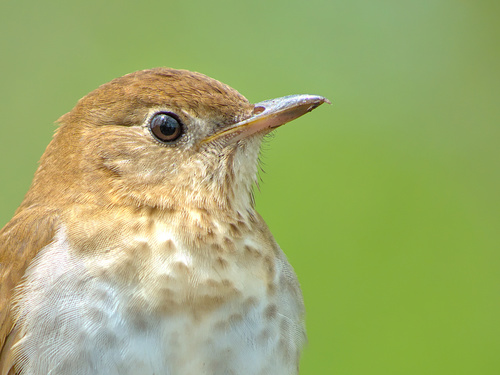 Zorzalito Rojizo
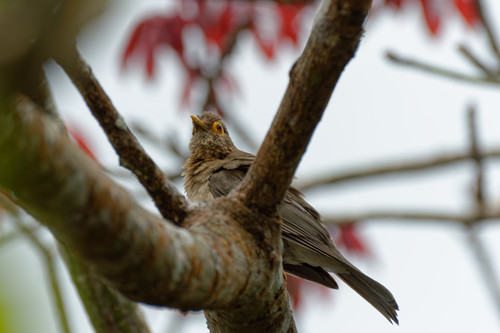 Zorzal Caripelado
En breve
La marca de campo más confiable para separar el Zorzalito Rojizo del Zorzal Caripelado es la presencia de un anillo ocular amarillo audaz en el Zorzal Caripelado, que está ausente o solo presente débilmente en el Zorzalito Rojizo. El Zorzalito Rojizo es notablemente más pequeño y delgado, con un color superior más cálido y marrón canela (especialmente en aves del este), mientras que el Zorzal Caripelado es más grande, más pesado y de un marrón oliva más simple en la parte superior. El Zorzalito Rojizo muestra manchas pálidas y borrosas en el pecho sobre un fondo blanquecino, mientras que el Zorzal Caripelado tiene una garganta con rayas marrones y partes inferiores de un marrón más pálido. Los Zorzales Caripelados juveniles están moteados en la parte superior y manchados en la parte inferior, pero incluso entonces, el anillo ocular amarillo está presente (aunque más delgado), ayudando con la identificación. El hábitat y el rango también difieren mucho, ya que el Zorzalito Rojizo es un migrante norteamericano y el Zorzal Caripelado es un residente sudamericano y caribeño.
Consejos de identificación
- Verifica el anillo ocular: El Zorzal Caripelado siempre muestra un anillo ocular amarillo brillante y audaz (adultos y juveniles), que es diagnóstico. El anillo ocular del Zorzalito Rojizo es débil, pálido y nunca amarillo.
- Evalúa el tamaño y la estructura general: El Zorzal Caripelado es mucho más grande y robusto que el Zorzalito Rojizo. Si el ave parece grande y pesada para un zorzal, es poco probable que sea un Zorzalito Rojizo.
- Color de la parte superior: El Zorzalito Rojizo (especialmente las aves del este) es de un marrón canela cálido en la parte superior, mientras que el Zorzal Caripelado es de un marrón oliva simple. Los Zorzalitos Rojizos del oeste pueden ser más oliva, pero aún así suelen ser más cálidos que el Zorzal Caripelado.
- Patrón del pecho y la garganta: El Zorzalito Rojizo tiene manchas marrones pálidas y borrosas en un pecho blanquecino, con un vientre blanco limpio. El Zorzal Caripelado tiene una garganta de color blanco sucio con rayas marrones, partes inferiores de un marrón más pálido y carece del patrón de manchas distintivo del Zorzalito Rojizo.
- Patrones juveniles: Los Zorzales Caripelados juveniles están moteados en la parte superior y manchados en la parte inferior, pero aún muestran un anillo ocular amarillo (aunque más delgado). Los juveniles de Zorzalito Rojizo son similares a los adultos, pero nunca tienen un anillo ocular audaz o un marcado pesado en la garganta.
- Color de las patas: El Zorzalito Rojizo tiene patas rosadas, lo que puede ser una pista sutil si se ve bien. El color de las patas del Zorzal Caripelado no se describe aquí, pero el anillo ocular es una marca más fuerte.
- Estructura del pico: El pico del Zorzalito Rojizo es relativamente corto (1.2–1.9 cm), ajustándose a su tamaño más pequeño. El Zorzal Caripelado tiene un pico proporcionalmente más grande, pero esto es menos confiable que el anillo ocular o el tamaño.
- Hábitat y rango: Si estás en América del Norte en verano, es posible ver un Zorzalito Rojizo; en el Caribe o el norte de Sudamérica, el Zorzal Caripelado es el predeterminado. El Zorzalito Rojizo es un vagabundo raro fuera de su rango normal.
- Comportamiento: El Zorzalito Rojizo es tímido, permaneciendo bajo en la cubierta densa. El Zorzal Caripelado es a menudo audaz y visible, buscando alimento en jardines y parques abiertos.
- Voz: La canción del Zorzal Caripelado es un trino musical lento, con un llamado similar al de un gato. La canción del Zorzalito Rojizo es una flauta etérea en espiral hacia abajo (no descrita aquí), pero el anillo ocular es una marca de campo más práctica.
- Estacionalidad: El Zorzalito Rojizo está presente en América del Norte solo durante la temporada de cría y en migración; el Zorzal Caripelado es residente durante todo el año en su rango.
- Contexto: Si ves un zorzal con un anillo ocular amarillo audaz en el Caribe o el norte de Sudamérica, es casi seguro que es un Zorzal Caripelado. Si el ave es pequeña, marrón cálido y solo tiene un anillo ocular débil, es probable que sea un Zorzalito Rojizo, si estás dentro de su rango.
- Trampas: Los Zorzalitos Rojizos del oeste pueden parecer más marrón oliva, acercándose al color del Zorzal Caripelado, pero nunca muestran el anillo ocular amarillo o el mismo tamaño. Los Zorzales Caripelados juveniles pueden tener anillos oculares menos obvios, pero aún así son más brillantes que los del Zorzalito Rojizo.
- Vistas de vuelo: No se describe un patrón distintivo en la parte superior del ala para ninguna de las especies, así que confía en el tamaño, la estructura y el patrón facial en vuelo.
- Múltiples marcas: Siempre utiliza una combinación de tamaño, anillo ocular, color de la parte superior y patrón de pecho/garganta para la identificación más confiable, especialmente si las condiciones de visualización son malas.
Tamaño
El Zorzalito Rojizo es significativamente más pequeño, midiendo 16–19.5 cm de longitud y pesando 26–39 g ([wikipedia]). En contraste, el Zorzal Caripelado es mucho más grande, midiendo 23–24 cm y alrededor de 60 g. La diferencia es obvia en el campo: el Zorzal Caripelado se ve más robusto y de cuerpo más largo, con una construcción más pesada. La envergadura del Zorzalito Rojizo promedia 28.5 cm, mientras que la del Zorzal Caripelado no se especifica, pero sus proporciones generales son mucho más robustas. Si ambos se ven juntos (poco probable debido al rango), el tamaño por sí solo es una pista fuerte.
Plumaje
- Aves juveniles/inmaduras: Los Zorzales Caripelados juveniles están moteados en la parte superior y manchados en la parte inferior, con un anillo ocular amarillo más delgado pero aún presente. Los juveniles de Zorzalito Rojizo no se describen en detalle aquí, pero los adultos y jóvenes comparten el patrón general de manchas marrones pálidas en un pecho blanquecino, nunca con las marcas faciales audaces del Zorzal Caripelado.
- Adultos: El Zorzalito Rojizo es de color marrón claro en la parte superior (canela en el este, marrón oliva en el oeste), con un anillo ocular mal definido o débil, partes inferiores blancas y un pecho de color marrón claro con manchas marrones pálidas y borrosas. El Zorzal Caripelado es de un marrón oliva simple en la parte superior, marrón más pálido en la parte inferior, con una garganta de color blanco sucio con rayas marrones y un prominente anillo ocular amarillo. Las partes inferiores del Zorzal Caripelado nunca son tan blancas como las del Zorzalito Rojizo, y las manchas del pecho son reemplazadas por rayas en la garganta.
- Contraste clave: El anillo ocular amarillo del Zorzal Caripelado (todas las edades) nunca es igualado por el Zorzalito Rojizo, cuyo anillo ocular es débil y no de colores brillantes. Las manchas del pecho del Zorzalito Rojizo son siempre borrosas y débiles, mientras que el Zorzal Caripelado muestra rayas solo en la garganta.
Comportamiento
Ambas especies son típicos zorzales en sus hábitos, buscando alimento en el suelo o en vegetación baja. El Zorzalito Rojizo es más reservado, a menudo permaneciendo en el sotobosque denso y cerca del agua, y puede ser más difícil de ver bien. El Zorzal Caripelado es más audaz y conspicuo, a menudo visto en jardines y bosques abiertos, a veces incluso en áreas urbanas. El Zorzalito Rojizo es un migrante de larga distancia, mientras que el Zorzal Caripelado es residente y no migra.
Hábitat
El Zorzalito Rojizo cría en bosques deciduos húmedos con un sotobosque denso cerca del agua en el sur de Canadá y el norte de los Estados Unidos ([wikipedia]). Es un migrante, invernando en la cuenca del Amazonas y el norte de Sudamérica. El Zorzal Caripelado es un criador residente en las Antillas Menores y el norte de Sudamérica (Colombia, Venezuela, norte de Brasil), y es común en bosques abiertos, jardines e incluso parques urbanos. Sus rangos no se superponen, y no se espera que el Zorzalito Rojizo esté en el Caribe o en el sur tropical de Sudamérica fuera de la migración. Si estás en las Antillas o el norte de Sudamérica, es extremadamente poco probable ver un Zorzalito Rojizo.
Voz
El Zorzal Caripelado canta un trino musical, más lento y de tono más bajo que el Zorzal Cacao, y emite un llamado similar al de un gato 'queeoow' y un 'kereel' áspero cuando se alarma ([wikipedia]). El Zorzalito Rojizo es famoso por su canción etérea en espiral hacia abajo, pero la canción no se describe en las notas proporcionadas. Los llamados y las canciones son bastante diferentes, pero a menos que conozcas la canción distintiva del Zorzalito Rojizo, el anillo ocular sigue siendo una marca de campo más confiable.