

Veery vs Spectacled Thrush
Catharus fuscescens contro Turdus nudigenis
Fai un quiz con Veery e Spectacled Thrush
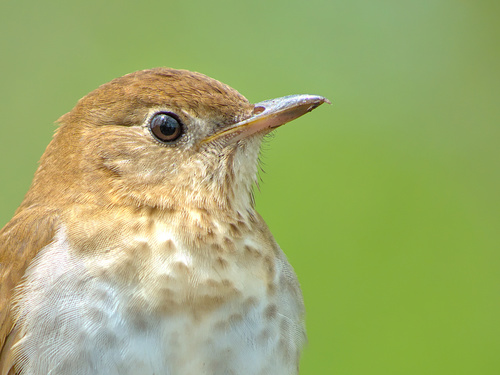 Veery
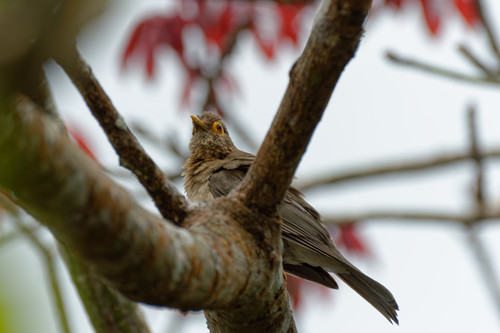 Spectacled Thrush
In breve
Il segno di campo più affidabile per separare il Veery dallo Spectacled Thrush è la presenza di un audace anello oculare giallo sullo Spectacled Thrush, che è assente o presente solo debolmente sul Veery. Il Veery è notevolmente più piccolo e snello, con un colore della parte superiore più caldo e marrone cannella (soprattutto negli uccelli orientali), mentre lo Spectacled Thrush è più grande, più pesante e di un marrone oliva più semplice sopra. Il Veery mostra macchie toraciche deboli e sfocate su uno sfondo bianco, mentre lo Spectacled Thrush ha una gola striata di marrone e parti inferiori di un marrone più chiaro. I giovani Spectacled Thrush sono macchiati sopra e punteggiati sotto, ma anche in quel caso, l'anello oculare giallo è presente (anche se più sottile), aiutando nell'identificazione. L'habitat e l'areale differiscono anche notevolmente, poiché il Veery è un migrante nordamericano e lo Spectacled Thrush è un residente sudamericano e caraibico.
Consigli di identificazione
- Controlla l'anello oculare: Lo Spectacled Thrush mostra sempre un audace e brillante anello oculare giallo (adulti e giovani), che è diagnostico. L'anello oculare del Veery è debole, pallido e mai giallo.
- Valuta la dimensione e la struttura complessiva: Lo Spectacled Thrush è molto più grande e massiccio del Veery. Se l'uccello appare grande e pesante per un tordo, è improbabile che sia un Veery.
- Colore della parte superiore: Il Veery (soprattutto gli uccelli orientali) è di un caldo marrone cannella sopra, mentre lo Spectacled Thrush è di un semplice marrone oliva. I Veery occidentali possono essere più oliva, ma di solito sono ancora più caldi dello Spectacled Thrush.
- Schema toracico e della gola: Il Veery ha macchie marroni deboli e sfocate su un petto bianco, con un ventre bianco pulito. Lo Spectacled Thrush ha una gola striata di marrone su fondo bianco sporco, parti inferiori di un marrone più chiaro e manca del distintivo schema a macchie del Veery.
- Schemi giovanili: I giovani Spectacled Thrush sono macchiati sopra e punteggiati sotto, ma mostrano ancora un anello oculare giallo (anche se più sottile). I giovani Veery sono simili agli adulti ma non hanno mai un audace anello oculare o striature pesanti sulla gola.
- Colore delle zampe: Il Veery ha zampe rosa, che possono essere un indizio sottile se viste bene. Il colore delle zampe dello Spectacled Thrush non è descritto qui, ma l'anello oculare è un segno più forte.
- Struttura del becco: Il becco del Veery è relativamente corto (1.2–1.9 cm), adatto alla sua dimensione più piccola. Lo Spectacled Thrush ha un becco proporzionalmente più grande, ma questo è meno affidabile dell'anello oculare o della dimensione.
- Habitat e areale: Se sei in Nord America in estate, il Veery è possibile; nei Caraibi o nel nord del Sud America, lo Spectacled Thrush è il default. Il Veery è un raro vagabondo al di fuori del suo areale normale.
- Comportamento: Il Veery è timido, rimanendo basso in copertura densa. Lo Spectacled Thrush è spesso audace e visibile, cercando cibo in giardini e parchi aperti.
- Voce: Il canto dello Spectacled Thrush è un lento e musicale gorgheggio, con un richiamo simile a quello di un gatto. Il canto del Veery è un flauto etereo che scende a spirale (non descritto qui), ma l'anello oculare è un segno di campo più pratico.
- Stagionalità: Il Veery è presente in Nord America solo durante la stagione di riproduzione e in migrazione; lo Spectacled Thrush è residente tutto l'anno nel suo areale.
- Contesto: Se vedi un tordo con un audace anello oculare giallo nei Caraibi o nel nord del Sud America, è quasi certamente uno Spectacled Thrush. Se l'uccello è piccolo, marrone caldo e ha solo un anello oculare debole, è probabile che sia un Veery—se sei nel suo areale.
- Trappole: I Veery occidentali possono apparire più marrone oliva, avvicinandosi al colore dello Spectacled Thrush, ma non mostrano mai l'anello oculare giallo o la stessa dimensione. I giovani Spectacled Thrush possono avere anelli oculari meno evidenti, ma comunque più luminosi del Veery.
- Viste in volo: Non è descritto alcun schema distintivo della parte superiore dell'ala per nessuna delle due specie, quindi fai affidamento su dimensione, struttura e schema facciale in volo.
- Segni multipli: Usa sempre una combinazione di dimensione, anello oculare, colore della parte superiore e schema toracico/gola per l'identificazione più affidabile, specialmente se le condizioni di visione sono scarse.
Taglia
Il Veery è significativamente più piccolo, misurando 16–19.5 cm di lunghezza e pesando 26–39 g ([wikipedia]). Al contrario, lo Spectacled Thrush è molto più grande, misurando 23–24 cm e circa 60 g. La differenza è ovvia sul campo: lo Spectacled Thrush appare più massiccio e lungo, con una struttura più pesante. L'apertura alare del Veery è in media di 28.5 cm, mentre quella dello Spectacled Thrush non è specificata, ma le sue proporzioni complessive sono molto più robuste. Se entrambi vengono visti insieme (improbabile a causa dell'areale), la dimensione da sola è un forte indizio.
Piumaggio
- Uccelli giovani/immaturi: I giovani Spectacled Thrush sono macchiati sopra e punteggiati sotto, con un anello oculare giallo più sottile ma comunque presente. I giovani Veery non sono descritti in dettaglio qui, ma gli adulti e i giovani condividono il modello generale di macchie marroni deboli su un petto bianco, mai con le marcature facciali audaci dello Spectacled Thrush.
- Adulti: Il Veery è marrone chiaro sopra (cannella a est, marrone oliva a ovest), con un anello oculare poco definito o debole, parti inferiori bianche e un petto di un marrone chiaro con macchie marroni deboli e sfocate. Lo Spectacled Thrush è di un marrone oliva semplice sopra, marrone più chiaro sotto, con una gola striata di marrone su fondo bianco sporco e un prominente anello oculare giallo. Le parti inferiori dello Spectacled Thrush non sono mai bianche pulite come quelle del Veery, e le macchie sul petto sono sostituite da striature sulla gola.
- Contrasto chiave: L'anello oculare giallo dello Spectacled Thrush (di tutte le età) non è mai eguagliato dal Veery, il cui anello oculare è debole e non di un colore brillante. Le macchie sul petto del Veery sono sempre sfocate e deboli, mentre lo Spectacled Thrush mostra striature solo sulla gola.
Comportamento
Entrambe le specie sono tordi tipici nelle loro abitudini, cercando cibo a terra o in vegetazione bassa. Il Veery è più segreto, spesso rimanendo in sottobosco denso e vicino all'acqua, e potrebbe essere più difficile da vedere bene. Lo Spectacled Thrush è più audace e più evidente, spesso visto in giardini e boschi aperti, a volte anche in aree urbane. Il Veery è un migrante a lungo raggio, mentre lo Spectacled Thrush è residente e non migra.
Habitat
Il Veery nidifica in foreste decidue umide con sottobosco denso vicino all'acqua nel sud del Canada e nel nord degli Stati Uniti ([wikipedia]). È un migrante, svernando nel bacino amazzonico e nel nord del Sud America. Lo Spectacled Thrush è un allevatore residente nelle Piccole Antille e nel nord del Sud America (Colombia, Venezuela, nord del Brasile), ed è comune in boschi aperti, giardini e persino parchi urbani. I loro areali non si sovrappongono, e non ci si aspetta di vedere il Veery nei Caraibi o nel Sud America tropicale al di fuori della migrazione. Se sei nelle Antille o nel nord del Sud America, il Veery è estremamente improbabile.
Voce
Lo Spectacled Thrush canta un gorgheggio musicale, più lento e a tono più basso rispetto al Cocoa Thrush, e emette un richiamo simile a quello di un gatto 'queeoow' e un 'kereel' aspro quando è allarmato ([wikipedia]). Il Veery è famoso per il suo canto etereo che scende a spirale, ma il canto non è descritto nelle note fornite. I richiami e i canti sono abbastanza diversi, ma a meno che tu non conosca il canto distintivo del Veery, l'anello oculare giallo rimane un segno di campo più affidabile.