

negrinha vs negrelho
Aythya fuligula versus Aythya marila
Jogue um quiz com negrinha e negrelho
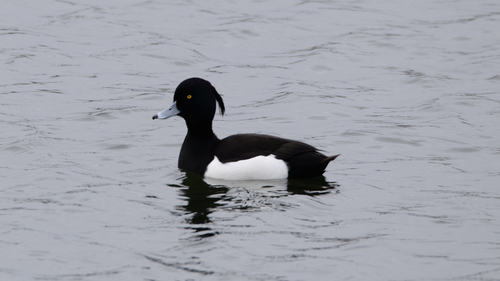 negrinha
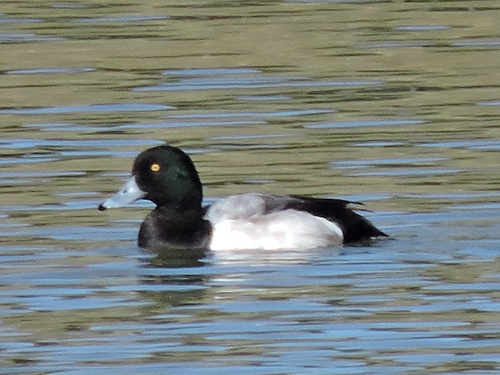 negrelho
Em resumo
A marca de campo mais confiável entre a negrinha e o negrelho é a presença de um tufo de cabeça distinto na negrinha de todas as idades e sexos, que o negrelho nunca apresenta. Em voo, o negrelho de todas as idades mostra uma larga faixa branca nas asas que se estende das secundárias até as primárias, enquanto a faixa branca da negrinha é limitada às secundárias e não alcança as primárias. Machos adultos são mais fáceis de separar, mas fêmeas e imaturos podem ser confusos, especialmente na água. O formato do bico e o padrão facial oferecem pistas adicionais: o negrelho tem um bico mais largo e azul, com uma unha preta maior e (em fêmeas/imaturos) uma mancha branca mais extensa na base do bico. O tamanho e a estrutura ajudam em distâncias curtas, mas a sobreposição pode tornar essas características menos confiáveis em campo.
Dicas de identificação
- Tufo de cabeça (todas as idades, sexos): Apenas a negrinha apresenta um tufo ou crista de cabeça distinto; o negrelho nunca tem um tufo. Mesmo um tufo curto ou irregular em uma fêmea ou imaturo indica a negrinha.
- Faixa nas asas em voo (todas as idades): O negrelho mostra uma larga faixa branca que se estende das secundárias até as primárias; a branca da negrinha é limitada às secundárias, com primárias escuras. Esta é a marca mais confiável em voo, especialmente para fêmeas e imaturos.
- Formato e cor do bico: O negrelho tem um bico mais largo e azul-claro com uma unha preta maior na ponta. O bico da negrinha é mais esguio e azul-acinzentado. Isso é mais útil em distâncias curtas ou em boa luz.
- Mancha branca facial (fêmeas/imaturos): A fêmea do negrelho apresenta uma faixa branca ousada e manchas ovais na base do bico; as fêmeas da negrinha podem ter uma pequena área branca, mas nunca tão extensa ou bem definida.
- Formato da cabeça: O negrelho tem um perfil de cabeça suavemente arredondado; a cabeça da negrinha é mais angular, especialmente com o tufo visível na parte traseira.
- Cor da flanco e costas do macho: Os machos da negrinha têm flancos brancos puros e costas pretas; os machos do negrelho têm flancos brancos brilhantes, mas costas cinzas pálidas e vermiculadas.
- Cor dos olhos: Ambas as espécies têm olhos amarelos em adultos, então isso não é um separador confiável.
- Tamanho e volume do corpo: O negrelho é maior e mais robusto, mas cuidado com a sobreposição e aves solitárias.
- Tamanho do grupo e contexto: Grandes bandos densos em águas costeiras favorecem o negrelho; grupos menores em lagos interiores são mais propensos a serem negrinhas, mas ambos podem se misturar.
- Cor das pernas e pés: Ambas têm pernas e pés cinzas; não é útil para separação.
- Confusão juvenil/imaturo: Juvenis de negrelho se parecem com fêmeas adultas e mantêm a larga faixa branca nas asas; jovens negrinhas sempre mostram algum desenvolvimento do tufo e branco limitado na asa.
- Plumagem de eclipse: Machos de negrelho em eclipse são mais apagados, mas ainda mostram a branca faixa nas asas; machos de negrinha em eclipse mantêm o tufo e partes superiores escuras.
- Vocalizações: Fêmeas da negrinha emitem um áspero "karr"; os chamados do negrelho não são distintos nesse contexto.
- Unha do bico: A unha preta do negrelho é maior e mais óbvia, especialmente em distâncias curtas.
- Quando em dúvida: Procure o tufo (presente = negrinha), depois verifique a faixa nas asas em voo (larga e alcançando as primárias = negrelho).
Tamanho
O negrelho é visivelmente maior e mais pesado que a negrinha, sendo cerca de 10% mais longo e 20% mais pesado ([wikipedia]). O negrelho mede 39–56 cm de comprimento com uma envergadura de 71–84 cm e pesa 726–1.360 g. A negrinha é um pato mergulhador pequeno, menor e mais leve que o negrelho. Embora haja sobreposição, lado a lado o negrelho parecerá mais robusto, com um corpo mais largo e bico proporcionalmente maior. No entanto, aves solitárias ou vistas distantes podem tornar essa diferença sutil.
Plumagem
-
Em voo (todas as idades): O negrelho mostra uma forte faixa branca nas asas que vai das secundárias até as primárias; a branca da negrinha é confinada às secundárias, com as primárias aparecendo escuras ([wikipedia]). Esta é a separação mais consistente em voo, especialmente para fêmeas e imaturos.
-
Machos adultos: Os machos da negrinha são strikingly black com flancos brancos e um tufo de cabeça proeminente; os machos do negrelho têm uma cabeça escura arredondada com um brilho esverdeado ou purpurado, costas cinzas mais claras e flancos e barriga brancos brilhantes, mas não têm tufo de cabeça. Ambos têm olhos amarelos, mas o bico da negrinha é azul-acinzentado e mais esguio, enquanto o do negrelho é mais largo e azul mais claro com uma unha preta maior.
-
Fêmeas e imaturos adultos: Ambos são marrons com flancos claros, mas as fêmeas da negrinha podem mostrar uma pequena mancha branca na base do bico, nunca tão extensa quanto a faixa branca ousada e as manchas ovais nas fêmeas do negrelho. Juvenis de negrelho se assemelham a fêmeas adultas. Fêmeas da negrinha sempre mostram uma dica de um tufo de cabeça, mesmo que curto. Fêmeas do negrelho têm um perfil de cabeça mais arredondado e não têm crista.
-
Machos em eclipse: Machos do negrelho em eclipse são mais apagados, mas ainda mostram a larga faixa branca nas asas; machos da negrinha em eclipse mantêm o tufo e partes superiores escuras.
Comportamento
Ambos são patos mergulhadores, frequentemente vistos em bandos mistos em grandes corpos d'água. O negrelho tende a formar rafts muito maiores, às vezes com milhares de indivíduos, e é mais provável de ser visto em águas costeiras no inverno. A negrinha é mais comum em lagos interiores e pequenos corpos d'água. Em voo, o negrelho parece mais robusto e poderoso, enquanto a negrinha é ligeiramente mais compacta.
Habitat
A negrinha é amplamente distribuída pela Eurásia setentrional e prefere lagos de água doce, lagoas e reservatórios, frequentemente no interior. O negrelho se reproduz mais ao norte e é mais costeiro no inverno, especialmente em grandes bandos em estuários e baías, mas pode sobrepor-se à negrinha em grandes lagos. Se visto em uma pequena lagoa interior, a negrinha é mais provável; em uma baía costeira, o negrelho é mais provável, mas ambos podem ocorrer juntos durante a migração ou no inverno.
Voz
Fêmeas da negrinha emitem um chamado áspero e rosnante "karr", especialmente em voo; os machos são em sua maioria silenciosos, exceto por um simples assobio "wit-oo" durante o acasalamento. As vocalizações do negrelho não são descritas em detalhes aqui, mas são diferentes das da negrinha. A voz raramente é diagnóstica em campo para essas espécies.