

trinidad euphonia vs lesser goldfinch
Euphonia trinitatis versus Spinus psaltria
Jogue um quiz com trinidad euphonia e lesser goldfinch
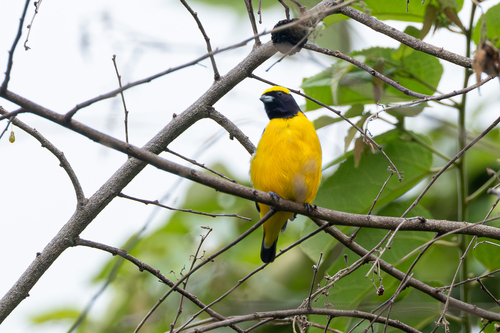 trinidad euphonia
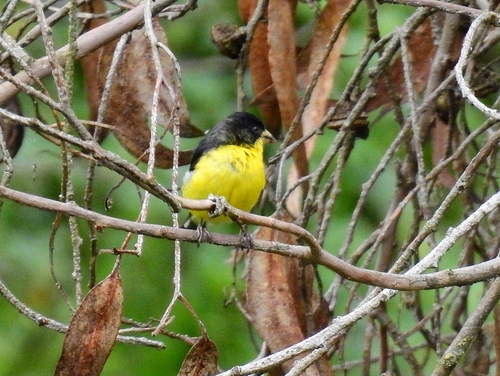 lesser goldfinch
Em resumo
A marca de campo mais confiável para separar a trinidad euphonia do lesser goldfinch é a combinação do padrão das asas e da cauda em voo: os machos adultos da trinidad euphonia mostram uma faixa branca ousada na parte inferior da asa e grandes ovais brancos na parte inferior da cauda, enquanto os lesser goldfinches exibem manchas brancas proeminentes na base das primárias e nas penas da cauda externa, mas não a mesma faixa na parte inferior da asa. Ambas as espécies são pequenas, de cauda curta e amarelas por baixo, mas os machos da trinidad euphonia têm a parte superior azul-preta brilhante com uma coroa amarela, enquanto os machos dos lesser goldfinches têm costas pretas ou verdes variáveis e uma testa preta. Fêmeas e imaturos de ambas as espécies são oliva por cima e amarelados por baixo, mas a fêmea da euphonia tem uma barriga central acinzentada e um bico mais fino. Cuidado: fêmeas e imaturos da trinidad euphonia são quase inseparáveis de fêmeas/imaturos da fim-fim, mas não do lesser goldfinch. A estrutura e a forma do bico também ajudam: as eufonias são mais robustas com um bico mais curto e fino, enquanto os goldfinches têm um bico de tentilhão mais típico e uma cauda ligeiramente mais longa.
Dicas de identificação
- Faixa branca na parte inferior da asa (macho da trinidad euphonia): Em voo, procure uma faixa branca ousada na parte inferior da asa—única para o macho da trinidad euphonia e ausente no lesser goldfinch.
- Ovais na parte inferior da cauda (macho da trinidad euphonia): Dois grandes ovais brancos na parte inferior da cauda são visíveis em voo ou quando a cauda está aberta; o lesser goldfinch tem branco apenas nas penas da cauda externa, não como ovais.
- Manchas brancas nas asas (lesser goldfinch): O macho do lesser goldfinch mostra grandes manchas brancas na base das primárias e nas penas da cauda externa, visíveis em voo e quando empoleirado; a trinidad euphonia não possui essas manchas nas asas.
- Cor da coroa (machos adultos): Os machos da trinidad euphonia têm uma coroa amarela brilhante que se estende atrás dos olhos; os machos do lesser goldfinch têm uma coroa e testa pretas ou verdes, nunca amarelas.
- Cor das costas (machos adultos): A trinidad euphonia é azul-preta brilhante por cima; o lesser goldfinch varia de preto a verde nas costas, dependendo da região, mas nunca azul-preto.
- Forma do bico: A trinidad euphonia tem um bico pequeno, fino e curto; o lesser goldfinch tem um bico de tentilhão mais robusto e cônico. Isso é especialmente útil em vistas próximas.
- Cor da barriga de fêmeas/imaturos: Fêmeas e imaturos da trinidad euphonia têm uma mancha acinzentada no centro do peito e da barriga; fêmeas/imaturos do lesser goldfinch são mais uniformemente amarelados por baixo.
- Padrão das asas e cauda de fêmeas/imaturos: Fêmeas/imaturos do lesser goldfinch mostram apenas uma estreita faixa branca na asa e pouco ou nenhum branco na cauda; fêmeas/imaturos da trinidad euphonia não têm marcas fortes nas asas/cauda, mas podem mostrar coberturas amarelas na parte inferior da cauda.
- Comprimento e forma da cauda: A trinidad euphonia é de cauda curta e compacta; o lesser goldfinch é ligeiramente mais longo e mais esbelto, especialmente em populações do sul.
- Contexto do habitat: Em Trinidad ou na Venezuela/Colômbia adjacente, especialmente em árvores frutíferas ou na borda da floresta, suspeite da euphonia; em habitats abertos, infestados de ervas daninhas ou ripários, especialmente na América do Norte, suspeite do goldfinch.
- Comportamento alimentar: Os goldfinches são frequentemente vistos se alimentando de sementes em áreas abertas e infestadas de ervas daninhas; as eufonias se concentram em frutas, especialmente visco, e podem forragear mais na copa.
- Vocalizações: Se você ouvir um chamado áspero 'chig chig chig' ou um assobio agudo, é provável que seja um lesser goldfinch; as vocalizações da euphonia são menos distintas no campo.
- Dimorfismo sexual: Ambas as espécies são sexualmente dimórficas, mas as diferenças são mais acentuadas na trinidad euphonia (coroa amarela e azul-preta nas partes superiores nos machos vs fêmeas oliva/amareladas com mancha acinzentada na barriga).
- Distribuição geográfica: A trinidad euphonia é rara em Trinidad e local na terra firme adjacente; o lesser goldfinch é amplamente distribuído do oeste dos EUA até o norte da América do Sul.
- Armadilha: Fêmeas e imaturos da trinidad euphonia são virtualmente inseparáveis de fêmeas/imaturos da fim-fim, mas não do lesser goldfinch—então, se você estiver apenas escolhendo entre esses dois, concentre-se na mancha acinzentada da barriga e na forma do bico para fêmeas/imaturos.
Tamanho
Ambas as espécies estão entre os menores passeriformes em suas respectivas áreas. A trinidad euphonia tem uma média de 11,4 g de massa corporal e mede 9,7–11 cm de comprimento, enquanto o lesser goldfinch é semelhante em comprimento (9–12 cm), mas ligeiramente mais leve em média (8–11,5 g). A diferença é sutil e não confiável no campo, embora os goldfinches possam parecer um pouco mais esbeltos e de cauda mais longa, especialmente em populações do sul. Ambos são visivelmente pequenos, mas a euphonia é tipicamente mais compacta e de cauda curta.
Plumagem
- Juvenil/Imaturo/Primeiro ano: Os imaturos de ambas as espécies são verde-oliva por cima e amarelados por baixo, mas as fêmeas e imaturos da trinidad euphonia têm uma mancha acinzentada no centro do peito e da barriga, que está ausente no lesser goldfinch. Os imaturos dos goldfinches são mais amarelados por baixo e têm menos branco nas asas e na cauda do que os adultos, mas ainda mostram uma estreita faixa branca na asa.
- Machos adultos: Os machos da trinidad euphonia são azul-preta brilhante por cima com uma testa e coroa amarelas brilhantes que se estendem bem atrás dos olhos, e partes inferiores amarelas brilhantes. Eles mostram uma faixa branca ousada na parte inferior da asa (das coberturas brancas da parte inferior da asa) e dois grandes ovais brancos na parte inferior da cauda (do branco nas teias internas das penas da cauda externa). Os machos do lesser goldfinch têm uma testa preta e costas pretas ou verdes variáveis, com partes inferiores amarelas brilhantes e grandes manchas brancas na base das primárias e nas penas da cauda externa, mas carecem da faixa na parte inferior da asa e dos ovais na parte inferior da cauda da euphonia. Sua coroa amarela está ausente, substituída por uma coroa preta ou verde.
- Fêmeas adultas: As fêmeas da trinidad euphonia são verde-oliva por cima, amarelo-oliva por baixo, com uma distinta barriga central acinzentada e um bico pequeno e fino. As fêmeas dos lesser goldfinches também são verde-oliva por cima e amareladas por baixo, mas carecem da mancha acinzentada na barriga e têm um bico mais robusto, semelhante ao de um tentilhão. Suas marcas nas asas e na cauda são muito reduzidas: apenas uma estreita faixa branca na asa e pouco ou nenhum branco na cauda.
- Vistas em voo: Os machos da trinidad euphonia mostram uma faixa branca na parte inferior da asa e ovais na parte inferior da cauda; os machos do lesser goldfinch mostram manchas brancas nas asas e bordas externas da cauda, mas não o mesmo padrão na parte inferior da asa ou na parte inferior da cauda.
Comportamento
Ambas as espécies são ativas, frequentemente se movendo pela folhagem em pequenos grupos ou pares. Os pares de trinidad euphonia permanecem juntos durante todo o ano e podem ser vistos batendo as asas e se curvando durante o acasalamento. Os lesser goldfinches frequentemente se alimentam acrobaticamente em cabeças de sementes e mostram um voo ondulante com chamadas frequentes. Ambos podem ser confiantes, mas os goldfinches são mais propensos a serem vistos se alimentando abertamente em cabeças de cardo ou girassol, enquanto as eufonias se concentram mais nas frutas de visco e podem forragear de forma mais discreta.
Habitat
A trinidad euphonia é encontrada no norte da Colômbia, no norte da Venezuela e raramente em Trinidad, preferindo bordas de florestas, crescimento secundário e jardins com árvores frutíferas, especialmente visco. O lesser goldfinch tem uma faixa muito mais ampla, do oeste dos Estados Unidos até o norte da América do Sul, e é comum em florestas abertas, arbustos, jardins e campos infestados de ervas daninhas, frequentemente perto da água. Se você estiver em Trinidad ou em áreas adjacentes da terra firme e ver um pequeno pássaro amarelo e preto em uma árvore frutífera, é mais provável que seja uma euphonia; em habitats abertos e infestados de ervas daninhas ou mais ao norte, o goldfinch domina.
Voz
O lesser goldfinch emite um chamado áspero 'chig chig chig' e um assobio muito agudo e prolongado, frequentemente aumentando de tom, especialmente em voo. As vocalizações da trinidad euphonia não estão detalhadas nas notas, então a voz não é um separador primário aqui; confie nas marcas visuais, a menos que você conheça os chamados locais.