

Motmot

トリニダドスミレフウキンチョウ 対 ヒメキンヒワ

Euphonia trinitatis 対 Spinus psaltria

トリニダドスミレフウキンチョウとヒメキンヒワのクイズ
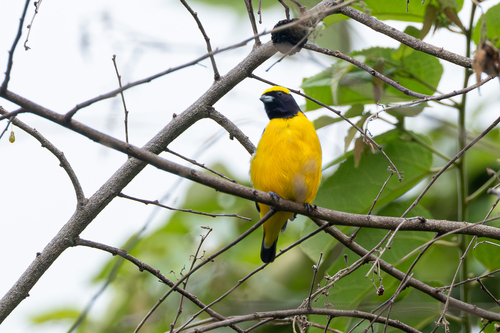
トリニダドスミレフウキンチョウ (Euphonia trinitatis) トリニダドスミレフウキンチョウ
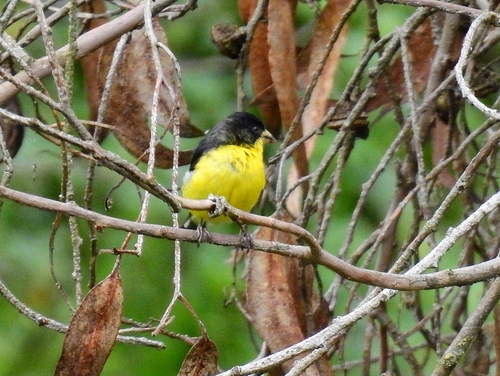
ヒメキンヒワ (Spinus psaltria) ヒメキンヒワ

メディア

読み込み中…

要点

トリニダドスミレフウキンチョウとヒメキンヒワを区別する最も信頼できるフィールドマークは、飛行中の翼と尾のパターンの組み合わせです:成鳥のオスのトリニダドスミレフウキンチョウは、アンダーウィングに太い白いストライプとアンダーテイルに大きな白い楕円を示しますが、ヒメキンヒワは一次羽と外尾羽の基部に目立つ白い斑点を示しますが、同じアンダーウィングストライプはありません。両種は小型で短尾で、下側は黄色ですが、オスのトリニダドスミレフウキンチョウは、黄色い冠を持つ光沢のある青黒い上面を持ち、オスのヒメキンヒワは、地域によって変化する黒または緑の背中と黒い額を持っています。両種の雌と幼鳥は上面がオリーブ色で、下面が黄色がかっていますが、スミレフウキンチョウの雌は診断的な灰色の中央腹部と細いくちばしを持っています。注意:雌と幼鳥のトリニダドスミレフウキンチョウは、雌/幼鳥のオジロスミレフウキンチョウとほぼ区別がつきませんが、ヒメキンヒワとは区別できます。構造とくちばしの形も役立ちます:スミレフウキンチョウはより頑丈で短く、細いくちばしを持ち、ヒメキンヒワはより典型的なフィンチのくちばしとやや長い尾を持っています。

識別のコツ

  1. White underwing stripe (male トリニダドスミレフウキンチョウ): 飛行中、アンダーウィングに太い白いストライプを探してください—オスのトリニダドスミレフウキンチョウに特有で、ヒメキンヒワにはありません。
  2. Undertail ovals (male トリニダドスミレフウキンチョウ): アンダーテイルに2つの大きな白い楕円が飛行中または尾が広げられたときに見えます;ヒメキンヒワは外尾羽にのみ白があり、楕円ではありません。
  3. White wing patches (ヒメキンヒワ): オスのヒメキンヒワは、飛行中や止まっているときに一次羽と外尾羽の基部に大きな白い斑点を示します;トリニダドスミレフウキンチョウはこれらの翼の斑点がありません。
  4. Crown color (adult males): トリニダドスミレフウキンチョウのオスは目の後ろまで伸びる明るい黄色の冠を持っています;ヒメキンヒワのオスは黒または緑の冠と額を持ち、黄色ではありません。
  5. Back color (adult males): トリニダドスミレフウキンチョウは上面が光沢のある青黒です;ヒメキンヒワは地域によって黒から緑の背中に変化しますが、決して青黒ではありません。
  6. Bill shape: トリニダドスミレフウキンチョウは小さく、細く、短いくちばしを持っています;ヒメキンヒワはより頑丈で円錐形のフィンチのくちばしを持っています。これは特に近くで見るときに役立ちます。
  7. Female/immature belly color: 雌と幼鳥のトリニダドスミレフウキンチョウは胸と腹の中央に灰色の斑点を持っています;ヒメキンヒワの雌/幼鳥は下面がより均等に黄色がかっています。
  8. Female/immature wing and tail pattern: 雌/幼鳥のヒメキンヒワは狭い白い翼のストライプと尾にほとんど白がないことを示します;雌/幼鳥のトリニダドスミレフウキンチョウは強い翼/尾のマーキングが欠けていますが、黄色のアンダーテイルカバーを示すことがあります。
  9. Tail length and shape: トリニダドスミレフウキンチョウは短尾でコンパクトです;ヒメキンヒワはやや長尾でスリムで、特に南部の個体群ではそうです。
  10. Habitat context: トリニダドまたは隣接するベネズエラ/コロンビアでは、特に果実をつけた木や森林の端で、スミレフウキンチョウを疑ってください;北アメリカの開けた、雑草の生えた、または河川の生息地では、ヒメキンヒワを疑ってください。
  11. Feeding behavior: ヒメキンヒワは開けた雑草の生えた地域で種を食べているのがよく見られます;スミレフウキンチョウはベリー、特にミスルトーに焦点を当て、より樹冠で採餌することがあります。
  12. Vocalizations: もし「チグチグチグ」や高音の口笛を聞いたら、それはおそらくヒメキンヒワです;スミレフウキンチョウの鳴き声はフィールドではあまり特徴的ではありません。
  13. Sexual dimorphism: 両種は性的二形性がありますが、トリニダドスミレフウキンチョウでは違いがより明確です(オスの黄色い冠と青黒い上面対オリーブ/黄色がかった雌の灰色の腹部斑点)。
  14. Geographic range: トリニダドスミレフウキンチョウはトリニダドではまれで、隣接する本土では局所的です;ヒメキンヒワは西アメリカから南アメリカ北部に広く分布しています。
  15. Pitfall: 雌と幼鳥のトリニダドスミレフウキンチョウは、雌/幼鳥のオジロスミレフウキンチョウとほぼ区別がつきませんが、ヒメキンヒワとは区別できます—したがって、これらの2つの間でのみ選択する場合は、雌/幼鳥の灰色の腹部斑点とくちばしの形に焦点を当ててください。

大きさ

両種はそれぞれの範囲で最も小さなスズメ目の鳥の一つです。トリニダドスミレフウキンチョウは平均11.4gの体重で、長さは9.7〜11cmですが、ヒメキンヒワは長さが似ていて(9〜12cm)、平均してやや軽い(8〜11.5g)です。違いは微妙で、フィールドでは信頼できませんが、ヒメキンヒワは特に南部の個体群ではややスリムで長尾に見えることがあります。両者は明らかに小型ですが、スミレフウキンチョウは通常、よりコンパクトで短尾です。

羽色

行動

両種は活発で、小さな群れやペアで葉の間を移動することがよくあります。トリニダドスミレフウキンチョウのペアは年間を通じて一緒に過ごし、求愛中に羽をひらひらさせたりお辞儀をしたりするのが見られます。ヒメキンヒワは種子の頭をアクロバティックに食べることが多く、頻繁に鳴き声を発しながら波打つような飛行を示します。両者は親しみやすいことがありますが、ヒメキンヒワはしばしばアザミやヒマワリの頭でオープンに食べているのが見られ、スミレフウキンチョウはミスルトーのベリーにもっと焦点を当て、より控えめに採餌することがあります。

生息環境

トリニダドスミレフウキンチョウはコロンビア北部、ベネズエラ北部、そしてまれにトリニダドで見られ、森林の端、二次成長、果実をつけた木のある庭を好み、特にミスルトーを好みます。ヒメキンヒワは西アメリカから南アメリカ北部までのはるかに広い範囲を持ち、開けた森林、低木、庭、雑草の生えた野原で一般的で、しばしば水の近くにいます。もしトリニダドや隣接する本土地域にいて、果実をつけた木に小さな黄色と黒の鳥を見たら、スミレフウキンチョウの可能性が高いです;開けた雑草の生えた生息地や北部では、ヒメキンヒワが優勢です。

声

ヒメキンヒワは厳しい「チグチグチグ」という鳴き声と非常に高音で引き伸ばされた口笛を発し、特に飛行中に音程が上がることがよくあります。トリニダドスミレフウキンチョウの鳴き声はメモに詳細が記載されていないため、声はここでの主要な区別要因ではありません;地元の鳴き声を知らない限り、視覚的なマークに頼ってください。

より良い説明を送る

比較と同じ項目を使ってください。文章はすぐに公開されます。

The most reliable field mark to separate Trinidad Euphonia from Lesser Goldfinch is the combination of wing and tail pattern in flight: adult male Trinidad Euphonias show a bold white stripe on the underwing and large white ovals on the undertail, while Lesser Goldfinches display prominent white patches at the base of the primaries and outer tail feathers, but not the same underwing stripe. Both species are small, short-tailed, and yellow below, but male Trinidad Euphonias have a glossy blue-black upperpart with a yellow crown, while male Lesser Goldfinches have variable black or green backs and a black forehead. Females and immatures of both species are olive above and yellowish below, but the euphonia female has a diagnostic grayish central belly and a finer bill. Beware: female and immature Trinidad Euphonias are nearly inseparable from female/immature Purple-throated Euphonia, but not Lesser Goldfinch. Structure and bill shape also help: euphonias are stockier with a shorter, finer bill, while goldfinches have a more typical finch bill and a slightly longer tail.

  1. White underwing stripe (male Trinidad Euphonia): In flight, look for a bold white stripe on the underwing—unique to male Trinidad Euphonia and absent in Lesser Goldfinch.
  2. Undertail ovals (male Trinidad Euphonia): Two large white ovals on the undertail are visible in flight or when the tail is spread; Lesser Goldfinch has white only on the outer tail feathers, not as ovals.
  3. White wing patches (Lesser Goldfinch): Male Lesser Goldfinch shows big white patches at the base of the primaries and outer tail feathers, visible in flight and when perched; Trinidad Euphonia lacks these wing patches.
  4. Crown color (adult males): Trinidad Euphonia males have a bright yellow crown extending behind the eyes; Lesser Goldfinch males have a black or green crown and forehead, never yellow.
  5. Back color (adult males): Trinidad Euphonia is glossy blue-black above; Lesser Goldfinch varies from black to green-backed, depending on region, but never blue-black.
  6. Bill shape: Trinidad Euphonia has a small, fine, short bill; Lesser Goldfinch has a more robust, conical finch bill. This is especially useful in close views.
  7. Female/immature belly color: Female and immature Trinidad Euphonias have a grayish patch down the center of the breast and belly; Lesser Goldfinch females/immatures are more evenly yellowish below.
  8. Female/immature wing and tail pattern: Female/immature Lesser Goldfinch shows only a narrow white wing stripe and little or no white on the tail; female/immature Trinidad Euphonia lacks strong wing/tail markings but may show yellow undertail coverts.
  9. Tail length and shape: Trinidad Euphonia is short-tailed and compact; Lesser Goldfinch is slightly longer-tailed and slimmer, especially in southern populations.
  10. Habitat context: In Trinidad or adjacent Venezuela/Colombia, especially in fruiting trees or forest edge, suspect euphonia; in open, weedy, or riparian habitats, especially in North America, suspect goldfinch.
  11. Feeding behavior: Goldfinches are often seen feeding on seeds in open, weedy areas; euphonias focus on berries, especially mistletoe, and may forage more in the canopy.
  12. Vocalizations: If you hear a harsh 'chig chig chig' or high-pitched whistle, it's likely Lesser Goldfinch; euphonia vocalizations are less distinctive in the field.
  13. Sexual dimorphism: Both species are sexually dimorphic, but the differences are sharper in Trinidad Euphonia (yellow crown and blue-black upperparts in males vs olive/yellowish females with gray belly patch).
  14. Geographic range: Trinidad Euphonia is rare on Trinidad and local on the adjacent mainland; Lesser Goldfinch is widespread from the western U.S. to northern South America.
  15. Pitfall: Female and immature Trinidad Euphonias are virtually inseparable from female/immature Purple-throated Euphonia, but not Lesser Goldfinch—so if you are only choosing between these two, focus on the gray belly patch and bill shape for females/immatures.

Both species are among the smallest passerines in their respective ranges. Trinidad Euphonia averages 11.4 g in body mass and measures 9.7–11 cm in length, while Lesser Goldfinch is similar in length (9–12 cm) but slightly lighter on average (8–11.5 g). The difference is subtle and not reliable in the field, though goldfinches may appear a bit slimmer and longer-tailed, especially in southern populations. Both are noticeably small, but the euphonia is typically more compact and short-tailed.

  • Juvenile/Immature/First-year birds: Both species' immatures are olive-green above and yellowish below, but Trinidad Euphonia females and immatures have a grayish patch down the center of the breast and belly, which is lacking in Lesser Goldfinch. Immature goldfinches are buffier below and have less white in the wings and tail than adults, but still show a narrow white wing stripe.
  • Adult males: Trinidad Euphonia males are glossy blue-black above with a bright yellow forehead and crown extending well behind the eyes, and bright yellow underparts. They show a bold white underwing stripe (from white underwing coverts) and two large white ovals on the undertail (from white on the inner webs of the outer tail feathers). Lesser Goldfinch males have a black forehead and variable black or green back, with bright yellow underparts and big white patches at the base of the primaries and on the outer tail feathers, but lack the euphonia's underwing stripe and undertail ovals. Their yellow crown is absent, replaced by a black or green crown.
  • Adult females: Female Trinidad Euphonias are olive-green above, yellow-olive below, with a distinctive grayish central belly and a small, fine bill. Female Lesser Goldfinches are also olive-green above and yellowish below, but lack the grayish belly patch and have a more robust, finch-like bill. Their wing and tail markings are much reduced: only a narrow white wing stripe and little or no white on the tail.
  • Flight views: Trinidad Euphonia males show a white underwing stripe and undertail ovals; Lesser Goldfinch males show white wing patches and outer tail edges, but not the same underwing or undertail pattern.

Both species are active, often moving through foliage in small groups or pairs. Trinidad Euphonia pairs remain together year-round and may be seen flicking wings and bowing during courtship. Lesser Goldfinches often feed acrobatically on seed heads and show undulating flight with frequent calls. Both can be confiding, but goldfinches are more likely to be seen feeding openly on thistle or sunflower heads, while euphonias focus more on mistletoe berries and may forage more discreetly.

Trinidad Euphonia is found in northern Colombia, northern Venezuela, and rarely on Trinidad, preferring forest edges, second growth, and gardens with fruiting trees, especially mistletoe. Lesser Goldfinch has a much broader range, from the western United States to northern South America, and is common in open woodlands, scrub, gardens, and weedy fields, often near water. If you are in Trinidad or adjacent mainland areas and see a small yellow-and-black bird in a fruiting tree, euphonia is more likely; in open, weedy habitats or further north, goldfinch dominates.

Lesser Goldfinch gives a harsh 'chig chig chig' call and a very high-pitched, drawn-out whistle, often rising in pitch, especially in flight. Trinidad Euphonia's vocalizations are not detailed in the notes, so voice is not a primary separator here; rely on visual marks unless you know the local calls.

変更を破棄しますか?

保存していない編集があります。今離れると失われます。

トリニダドスミレフウキンチョウ · ヒメキンヒワ · 苦手な鳥