

bem-te-vi-pequeno vs golden-crowned flycatcher
Conopias trivirgatus versus Myiodynastes chrysocephalus
Jogue um quiz com bem-te-vi-pequeno e golden-crowned flycatcher
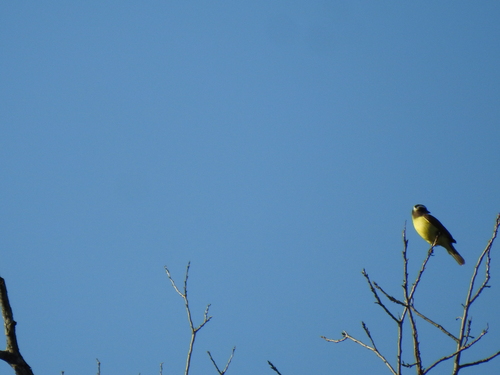 bem-te-vi-pequeno
 golden-crowned flycatcher
Em resumo
A marca de campo mais confiável entre o bem-te-vi-pequeno e o golden-crowned flycatcher é o tamanho: o golden-crowned é muito maior e mais robusto, com um bico mais grosso e corpo mais longo. O bem-te-vi-pequeno é notavelmente menor, mais esbelto e mais delicado no geral. Na plumagem, o bem-te-vi-pequeno apresenta um supercílio branco contínuo que envolve a nuca e um ventre limpo e amarelo brilhante, enquanto o golden-crowned tem uma mancha oculta de coroa amarela (raramente visível), um supercílio branco que não envolve a nuca e partes inferiores amarelo-buff com listras oliva no peito. Ambas as espécies têm asas e caudas escuras com bordas pálidas ou ruivas, mas as asas e a cauda do golden-crowned mostram mais tons ruivos. A estrutura e a aparência geral são frequentemente tão úteis quanto a plumagem para separar essas duas, especialmente em luz fraca ou à distância.
Dicas de identificação
- O tamanho é o separador mais rápido: O golden-crowned flycatcher é muito maior e mais robusto que o bem-te-vi-pequeno. Use isso quando você tiver uma boa noção de escala ou ver ambas as espécies na mesma área; tenha cuidado com aves solitárias em condições ruins.
- Forma do bico: O bem-te-vi-pequeno tem um bico longo, fino e quase delicado; o bico do golden-crowned é visivelmente mais grosso e robusto. Isso é melhor visto de perfil ou quando o pássaro está chamando.
- Padrão do supercílio: O bem-te-vi-pequeno apresenta um supercílio branco marcante que envolve desde as lores até a nuca, criando um efeito de 'halo'. O supercílio do golden-crowned é longo, mas não envolve a nuca—procure por essa diferença em aves empoleiradas.
- Cor da coroa: O bem-te-vi-pequeno tem uma coroa marrom escura sem mancha amarela. A coroa do golden-crowned é cinza-marrom a escura, mas com uma mancha oculta de amarelo-dourado no centro, raramente visível a menos que as penas sejam levantadas.
- Padrão do rosto: O rosto do bem-te-vi-pequeno é marrom escuro, misturando-se com a coroa, com o supercílio branco se destacando. O rosto do golden-crowned é principalmente cinza escuro com um longo supercílio branco, mas carece do efeito de envolvimento.
- Partes superiores: Ambas são oliva por cima, mas o bem-te-vi-pequeno é mais claro no geral. O dorso e as coberturas da cauda do golden-crowned são mais oliva-esverdeados, às vezes com bordas canela ou buffy—sutil, mas visível em boa luz.
- Bordas das asas e cauda: As asas do bem-te-vi-pequeno são escuras com pontas/bordas pálidas, nunca ruivas. As asas e a cauda do golden-crowned têm bordas finas ruivas a buffy-tawny, especialmente nas coberturas e penas de voo; procure por uma impressão mais quente e colorida no golden-crowned.
- Cor das partes inferiores: O bem-te-vi-pequeno é amarelo-limão brilhante por baixo com uma leve tonalidade oliva no peito (ou nenhuma em algumas subespécies). O golden-crowned é amarelo pálido por baixo, mas o queixo é branco, a garganta é buffy pálida e o peito é amarelo-buffy com uma difusão nublada de oliva cinza-pálido e listras oliva nas laterais—dando uma aparência mais padronizada e menos limpa.
- Padrão do peito: Apenas o golden-crowned mostra listras oliva nas laterais do peito e uma difusão nublada de oliva no centro; o peito do bem-te-vi-pequeno é muito mais limpo.
- Cor da cauda: A cauda do bem-te-vi-pequeno é escura com pouco contraste; a cauda do golden-crowned é escura com algumas bordas ruivas, especialmente visíveis em boa luz ou quando aberta.
- Cor das pernas e íris: Ambas têm pernas escuras e íris escuras; não é útil para separação.
- Sexos: Ambas as espécies são sexualmente monomórficas—não use o sexo como separador.
- Marcas juvenis/imaturas: Nenhum painel de asa ou cauda específico para idade é descrito para qualquer uma das espécies; concentre-se na estrutura geral e na plumagem.
- Habitat e distribuição: Ambas podem ocorrer nos mesmos países, mas o bem-te-vi-pequeno é mais amplamente distribuído. Não confie apenas na distribuição para separação em áreas de sobreposição.
- Comportamento/aparência: O golden-crowned parecerá mais pesado, mais lento e mais robusto em voo ou quando empoleirado; o bem-te-vi-pequeno é mais pequeno e ágil. Use isso em combinação com marcas de plumagem para melhores resultados.
Tamanho
O golden-crowned flycatcher é substancialmente maior (18,5–22 cm) e mais pesado (37–40 g) que o bem-te-vi-pequeno (13,5–14,5 cm; peso não fornecido, mas muito mais leve em proporção) [wikipedia]. A diferença é óbvia em campo: o golden-crowned parece robusto e com cabeça grande, com um bico grosso e forte, enquanto o bem-te-vi-pequeno parece pequeno, esbelto e com bico fino. Se vistos juntos, o tamanho sozinho geralmente é diagnóstico.
Plumagem
- Padrão de asa juvenil/imatura: Nenhum painel de asa específico para idade ou marcas contrastantes são descritos para qualquer uma das espécies; ambas têm asas escuras com bordas pálidas ou ruivas, mas as do golden-crowned são mais ruivas/buffy-tawny, enquanto as do bem-te-vi-pequeno são levemente mais claras nas pontas ou bordas, nunca ruivas. Essa diferença é sutil e melhor vista em boa luz.
- Padrão da cabeça: O bem-te-vi-pequeno tem um supercílio branco distintivo que começa nas lores e envolve a nuca, criando um forte efeito de 'três listras' com a coroa e o rosto escuros. O golden-crowned tem um longo supercílio branco, mas ele não envolve a nuca; sua coroa é cinza-marrom a escura com uma mancha oculta de amarelo-dourado (geralmente não visível em campo).
- Partes superiores: Ambas são oliva por cima, mas o bem-te-vi-pequeno é oliva mais claro, enquanto o golden-crowned é oliva opaco com um dorso e coberturas da cauda oliva-esverdeados, às vezes com bordas canela/buffy.
- Asas e cauda: O bem-te-vi-pequeno tem asas escuras com pontas/bordas pálidas e uma cauda escura; as asas e a cauda do golden-crowned são escuras com bordas finas ruivas/buffy-tawny, especialmente nas coberturas e penas de voo, e algumas ruivas nas penas da cauda.
- Partes inferiores: O bem-te-vi-pequeno é amarelo-limão brilhante por baixo com apenas uma leve tonalidade oliva no peito (ou nenhuma em algumas subespécies); o golden-crowned é amarelo pálido por baixo, mas o queixo é branco, a garganta é buffy pálida, o peito é amarelo-buffy com uma difusão nublada de oliva cinza-pálido e listras oliva nas laterais. Isso dá ao golden-crowned uma aparência mais padronizada e menos limpa por baixo.
- Bico e íris: O bem-te-vi-pequeno tem um bico longo, fino e escuro; o bico do golden-crowned é mais grosso e preto. Ambas têm íris escuras.
Comportamento
O comportamento não é descrito em detalhes para qualquer uma das espécies nas notas fornecidas. Ambas são típicas de tiranídeos e podem empoleirar-se de forma conspícua, mas o tamanho maior e a construção mais pesada do golden-crowned podem dar a ele uma aparência mais deliberada e menos ágil em comparação com o mais delicado bem-te-vi-pequeno. Em voo, o golden-crowned parecerá mais volumoso e com cauda mais longa, enquanto o bem-te-vi-pequeno deve parecer mais compacto e leve.
Habitat
Ambas as espécies se sobrepõem na Argentina, Bolívia e Peru, mas o bem-te-vi-pequeno tem uma distribuição muito mais ampla, estendendo-se ao Brasil, Equador, Paraguai e Venezuela. Nenhuma preferência de habitat é descrita nas notas, portanto, o habitat não é um separador confiável com base apenas nessas informações.
bem-te-vi-pequeno · golden-crowned flycatcher · Minhas aves difíceis