

tawny owl vs mocho-funéreo
Strix aluco versus Aegolius funereus
Jogue um quiz com tawny owl e mocho-funéreo
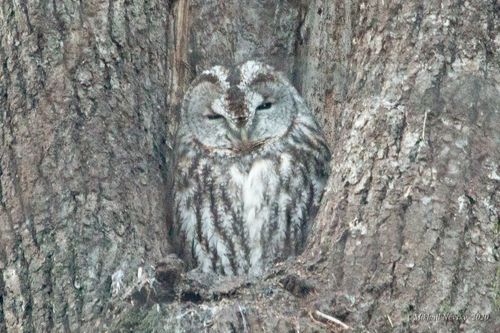 tawny owl
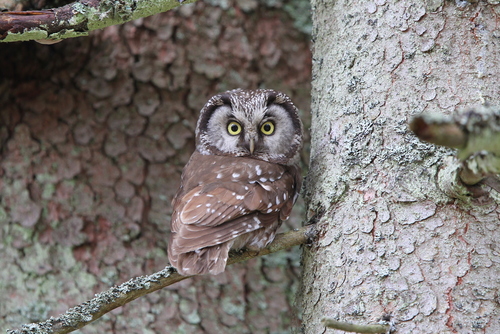 mocho-funéreo
Em resumo
A marca de campo mais confiável para separar tawny owl de mocho-funéreo é o tamanho e a estrutura geral: tawny owl é muito maior, mais robusta e tem uma cabeça larga e arredondada com olhos escuros, enquanto mocho-funéreo é distintamente menor, com uma construção compacta, olhos amarelos e uma aparência manchada marcante nas partes superiores e asas. Os juvenis de mocho-funéreo apresentam uma plumagem marrom-chocolate única com um 'X' branco entre os olhos e listras faciais brancas, diferente de qualquer idade de tawny owl. Em voo, tawny owl parece pesada e lenta com asas largas e arredondadas, enquanto mocho-funéreo é mais compacta e voa de forma reta e silenciosa. Atenção cuidadosa ao padrão facial, cor dos olhos e tamanho resolverá a maioria das confusões, especialmente em ambientes florestais onde ambos podem ocorrer.
Dicas de identificação
- O tamanho é a primeira verificação: tawny owl é muito maior e mais pesada que mocho-funéreo. Se o pássaro parecer pequeno e compacto, descarte tawny owl.
- Disco facial e cor dos olhos: tawny owl tem um disco facial liso e arredondado com olhos castanho-escuros; mocho-funéreo tem um disco pálido com uma borda escura, 'sobrancelhas' brancas proeminentes e olhos amarelos.
- Plumagem juvenil: os juvenis de mocho-funéreo são marrom-chocolate com um 'X' branco entre os olhos e listras faciais brancas—nunca igualados por tawny owl em qualquer idade.
- Partes superiores e padrão das asas: mocho-funéreo (todas as idades após o voo) apresenta manchas brancas conspícuas nas costas e asas, e fileiras de manchas brancas nas primárias e cauda; tawny owl é lisa na parte superior, sem tais manchas.
- Partes inferiores: tawny owl tem partes inferiores pálidas com listras marrons; mocho-funéreo tem partes inferiores creme-brancas com listras marrons-avermelhadas, mas é geralmente mais branca e com marcas mais nítidas.
- Expressão facial: as 'sobrancelhas' de mocho-funéreo dão uma aparência de 'surpresa', especialmente a curta distância; o rosto de tawny owl é mais uniforme e carece dessa expressão.
- Estilo de voo: tawny owl voa com deslizamentos lentos, pesados e de asas largas; mocho-funéreo é mais direto e voa em linha reta, refletindo seu tamanho menor.
- Cor do bico: mocho-funéreo tem um bico amarelo claro; o bico de tawny owl é mais escuro (nem sempre visível em campo).
- Vocalizações: tawny owl emite hoots profundos e clássicos; mocho-funéreo produz trilos agudos, apitos e batidas de bico, nunca hoots.
- Contexto de habitat: tawny owl é comum em florestas de folhas largas e mistas, incluindo parques urbanos; mocho-funéreo prefere florestas coníferas ou taiga densas e remotas.
- Postura empoleirada: tawny owl parece atarracada e robusta, com uma cabeça grande e arredondada; mocho-funéreo é mais compacta e ereta.
- Dimorfismo sexual: as fêmeas de tawny owl são visivelmente maiores que os machos, mas ambos os sexos são muito maiores que os de mocho-funéreo de qualquer sexo.
- Comportamento quando abordada: mocho-funéreo pode permitir aproximação próxima (3–5 m) antes de voar; tawny owl é mais propensa a voar a uma distância maior.
- Muda sazonal: os juvenis de mocho-funéreo mantêm sua plumagem marrom-chocolate distintiva até a muda pós-juvenil (agosto-setembro), após a qual aparecem manchas brancas; os juvenis de tawny owl são semelhantes aos adultos em padrão, sem mudanças dramáticas.
- Armadilhas comuns: em luz fraca, o tamanho e o padrão facial são os mais confiáveis; cuidado ao julgar uma tawny owl distante como um grande mocho-funéreo, mas a falta de manchas brancas e o rosto liso devem esclarecer.
Tamanho
Tawny owl é uma coruja de tamanho médio e robusta, com uma massa corporal típica em torno de 475 g [wikidata], e um comprimento de 37–46 cm com uma envergadura de 81–105 cm [wikipedia]. Em contraste, mocho-funéreo é muito menor e mais compacta, com uma construção visivelmente mais leve (nenhuma massa direta dada, mas universalmente descrita como 'coruja pequena' [wikipedia]). Em campo, a diferença de tamanho é dramática: tawny owl parece atarracada e pesada, enquanto mocho-funéreo é pequena e menos volumosa. Essa diferença de tamanho é especialmente aparente se vista empoleirada ou em voo, e é um dos pontos de separação mais confiáveis.
Plumagem
Os juvenis de mocho-funéreo (cerca de 3 semanas de idade e logo após o voo) são de um marrom-chocolate opaco acima e abaixo, com um disco facial marrom escuro bordado por preto e branco, e um amplo 'X' branco entre os olhos—essa combinação nunca é mostrada por tawny owl de qualquer idade. À medida que amadurecem, os mochos-funéreos desenvolvem manchas brancas peroladas conspícuas nas costas e asas, e um disco facial com uma borda escura e 'sobrancelhas' brancas, dando uma aparência de 'surpresa'. Suas partes inferiores são creme-brancas com listras marrons-avermelhadas, e a cauda e primárias têm fileiras distintas de manchas brancas. Tawny owl, por outro lado, é sempre de rosto liso (sem 'sobrancelhas' ou 'X'), com partes inferiores pálidas e listradas de marrom, e partes superiores de marrom avermelhado ou cinza, sem as ousadas manchas brancas de mocho-funéreo. O disco facial de tawny owl é liso e os olhos são castanho-escuros, enquanto mocho-funéreo tem olhos amarelos. Em todas as idades, tawny owl carece das marcas brancas nítidas e do padrão de asas manchadas de mocho-funéreo. Em voo, tawny owl mostra asas largas e arredondadas com uma ação pesada e lenta, enquanto mocho-funéreo é mais compacta e voa em linha reta.
Comportamento
Tawny owl tende a voar com deslizamentos longos e pesados e menos batidas de asas, muitas vezes a uma altura maior, e parece lenta e atarracada tanto em voo quanto empoleirada. Mocho-funéreo, embora também silenciosa em voo, é mais direta e voa em linha reta, refletindo sua construção menor e mais compacta. Mocho-funéreo é descrita como confiante e pode permitir aproximação próxima, apenas voando a uma distância muito curta, enquanto tawny owl é mais cautelosa. Ambas são noturnas, mas mocho-funéreo é especialmente secreta devido à sua preferência por florestas densas e remotas.
Habitat
Tawny owl é amplamente distribuída em florestas por toda a Europa e Sibéria ocidental, frequentemente em florestas decíduas maduras ou mistas, e pode se adaptar a parques e jardins em cidades. Mocho-funéreo (Boreal Owl) prefere florestas taiga e boreais densas e remotas, e é muito menos provável de ser vista em ambientes urbanos ou florestas abertas. Se encontrada em florestas coníferas profundas, especialmente no norte ou em elevações mais altas, mocho-funéreo é mais provável; tawny owl é mais comum em florestas de folhas largas ou mistas em áreas baixas.
Voz
Tawny owl é famosa por seu clássico hoot 'twit-twoo', um chamado profundo e ressonante. Mocho-funéreo produz uma variedade de trilos, apitos e chamados mais suaves, incluindo um trilo territorial alto e uma melodia de cortejo mais suave, mas nunca o profundo hoot de tawny owl. Os chamados de mocho-funéreo são mais agudos, mais mecânicos ou semelhantes a um maçarico, e incluem batidas de bico e assobios, especialmente no ninho. Se você ouvir um hoot profundo, é tawny owl; se você ouvir trilos, apitos ou batidas de bico, suspeite de mocho-funéreo.