

Allocco vs Civetta capogrosso
Strix aluco contro Aegolius funereus
Fai un quiz con Allocco e Civetta capogrosso
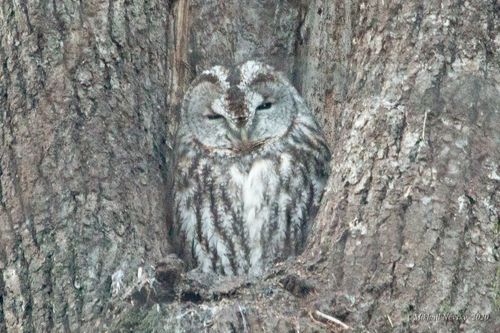 Allocco
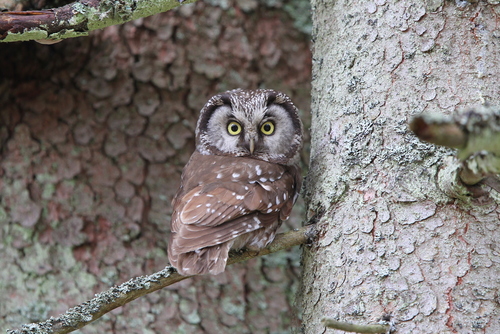 Civetta capogrosso
In breve
Il segno di campo più affidabile per separare l'Allocco dalla Civetta capogrosso è la dimensione e la struttura complessiva: l'Allocco è molto più grande, più robusto e ha una testa larga e arrotondata con occhi scuri, mentre la Civetta capogrosso è nettamente più piccola, con una corporatura compatta, occhi gialli e un aspetto maculato sorprendentemente sulle parti superiori e sulle ali. Gli allocchi giovani mostrano un piumaggio marrone cioccolato unico con una 'X' bianca tra gli occhi e strisce facciali bianche, a differenza di qualsiasi età dell'Allocco. In volo, l'Allocco appare pesante e lento con ali larghe e arrotondate, mentre la Civetta capogrosso è più compatta e vola dritta e silenziosamente. Un'attenta attenzione al motivo facciale, al colore degli occhi e alla dimensione risolverà la maggior parte delle confusioni, specialmente in ambienti boschivi dove entrambi possono verificarsi.
Consigli di identificazione
- La dimensione è il primo controllo: l'Allocco è molto più grande e pesante della Civetta capogrosso. Se l'uccello appare piccolo e compatto, escludi l'Allocco.
- Disco facciale e colore degli occhi: l'Allocco ha un disco facciale semplice e arrotondato con occhi marroni scuri; la Civetta capogrosso ha un disco pallido con un bordo scuro, 'sopracciglia' bianche prominenti e occhi gialli.
- Piumaggio giovanile: gli allocchi giovani sono marrone cioccolato con una 'X' bianca tra gli occhi e strisce facciali bianche—mai eguagliati dall'Allocco a qualsiasi età.
- Parti superiori e motivo delle ali: la Civetta capogrosso (tutte le età dopo il volo) mostra macchie bianche evidenti sulla schiena e sulle ali, e righe di macchie bianche sulle primarie e sulla coda; l'Allocco è semplice sopra, senza tali macchie.
- Parti inferiori: l'Allocco ha parti inferiori chiare con strisce marroni; la Civetta capogrosso ha parti inferiori crema-bianche con strisce marrone ruggine, ma è generalmente più bianca e più nettamente marcata.
- Espressione facciale: le 'sopracciglia' della Civetta capogrosso danno un aspetto 'sorpreso', specialmente a distanza ravvicinata; il volto dell'Allocco è più uniforme e manca di questa espressione.
- Stile di volo: l'Allocco vola con planate lente, pesanti e ampie; la Civetta capogrosso è più diretta e vola dritta, riflettendo la sua dimensione più piccola.
- Colore del becco: la Civetta capogrosso ha un becco giallo chiaro; il becco dell'Allocco è più scuro (non sempre visibile sul campo).
- Vocalizzazioni: l'Allocco emette hoot profondi e classici; la Civetta capogrosso produce trilli acuti, fischi e battiti di becco, mai hooting.
- Contesto dell'habitat: l'Allocco è comune in boschi a foglia larga e misti, inclusi parchi urbani; la Civetta capogrosso preferisce foreste conifere o taiga remote e dense.
- Aspetto posato: l'Allocco appare tozzo e robusto, con una grande testa arrotondata; la Civetta capogrosso è più compatta e eretta.
- Dimorfismo sessuale: le femmine di Allocco sono notevolmente più grandi dei maschi, ma entrambi i sessi sono molto più grandi della Civetta capogrosso di qualsiasi sesso.
- Comportamento quando si avvicina: la Civetta capogrosso può consentire un avvicinamento ravvicinato (3–5 m) prima di volare via; l'Allocco è più propenso a volare via a una distanza maggiore.
- Muta stagionale: gli allocchi giovani mantengono il loro distintivo piumaggio marrone cioccolato fino alla muta post-giovanile (agosto-settembre), dopo di che appaiono macchie bianche; gli allocchi giovani sono simili agli adulti nel motivo, senza cambiamenti drammatici.
- Trappole comuni: in scarsa illuminazione, la dimensione e il motivo facciale sono i più affidabili; fai attenzione a non scambiare un lontano Allocco per una grande Civetta capogrosso, ma la mancanza di macchie bianche e il volto semplice dovrebbero chiarire.
Taglia
L'Allocco è un gufo di dimensioni medie e robusto con una massa corporea tipica di circa 475 g [wikidata], e una lunghezza di 37–46 cm con un'apertura alare di 81–105 cm [wikipedia]. Al contrario, la Civetta capogrosso è molto più piccola e compatta, con una corporatura visibilmente più leggera (non è stata fornita una massa diretta, ma è universalmente descritta come 'gufo piccolo' [wikipedia]). Sul campo, la differenza di dimensione è drammatica: l'Allocco appare tozzo e pesante, mentre la Civetta capogrosso è minuta e meno ingombrante. Questo divario di dimensione è particolarmente evidente se vista posata o in volo, ed è uno dei punti di separazione più affidabili.
Piumaggio
Gli allocchi giovani (circa 3 settimane e poco dopo il volo) sono di un marrone cioccolato opaco sopra e sotto, con un disco facciale marrone scuro bordato di nero e bianco, e una larga 'X' bianca tra gli occhi—questa combinazione non è mai mostrata dall'Allocco di qualsiasi età. Man mano che maturano, gli allocchi capogrosso sviluppano macchie bianche perlacee evidenti sulla schiena e sulle ali, e un disco facciale con un bordo scuro e 'sopracciglia' bianche, dando un aspetto 'sorpreso'. Le loro parti inferiori sono crema-bianche con strisce marrone ruggine, e la coda e le primarie hanno righe distinte di macchie bianche. L'Allocco, al contrario, ha sempre un volto semplice (senza 'sopracciglia' o 'X'), con parti inferiori chiare e striate di marrone, e parti superiori di colore ruggine o marrone grigiastro, mancando delle audaci macchie bianche della Civetta capogrosso. Il disco facciale dell'Allocco è semplice e gli occhi sono marroni scuri, mentre la Civetta capogrosso ha occhi gialli. In tutte le età, l'Allocco manca delle marcature bianche nette e del motivo maculato delle ali superiori della Civetta capogrosso. In volo, l'Allocco mostra ali larghe e arrotondate con un'azione pesante e lenta, mentre la Civetta capogrosso è più compatta e vola dritta.
Comportamento
L'Allocco tende a volare con lunghe planate pesanti e meno battiti d'ali, spesso a maggiore altezza, e appare lento e tozzo sia in volo che posato. La Civetta capogrosso, pur essendo anch'essa silenziosa in volo, è più diretta e vola dritta, riflettendo la sua corporatura più piccola e compatta. La Civetta capogrosso è descritta come confidente e può consentire un avvicinamento ravvicinato, volando via solo a distanza molto breve, mentre l'Allocco è più diffidente. Entrambi sono notturni, ma la Civetta capogrosso è particolarmente riservata a causa della sua preferenza per foreste dense e remote.
Habitat
L'Allocco è diffuso nei boschi in tutta Europa e nella Siberia occidentale, spesso in foreste decidue mature o miste, e può adattarsi a parchi e giardini nelle città. La Civetta capogrosso (Gufo boreale) preferisce foreste taiga e boreali più remote e dense, ed è molto meno probabile che venga vista in ambienti boschivi urbani o aperti. Se incontrata in una foresta conifera profonda, specialmente a nord o a quote più elevate, è più probabile che si tratti di una Civetta capogrosso; l'Allocco è più comune in boschi a bassa quota, a foglia larga o misti.
Voce
L'Allocco è famoso per il suo classico richiamo 'twit-twoo', un richiamo profondo e risonante. La Civetta capogrosso produce una varietà di trilli, fischi e richiami più morbidi, inclusi un forte trillo territoriale e una melodia di corteggiamento più morbida, ma mai il profondo hoot dell'Allocco. I richiami della Civetta capogrosso sono più acuti, più meccanici o simili a quelli di un beccaccino, e includono battiti di becco e sibili, specialmente nel nido. Se senti un profondo hoot, è l'Allocco; se senti trilli, fischi o battiti di becco, sospetta la Civetta capogrosso.