

Motmot

モリフクロウ 対 キンメフクロウ

Strix aluco 対 Aegolius funereus

モリフクロウとキンメフクロウのクイズ
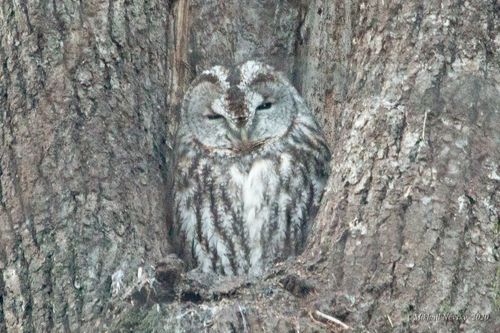
モリフクロウ (Strix aluco) モリフクロウ
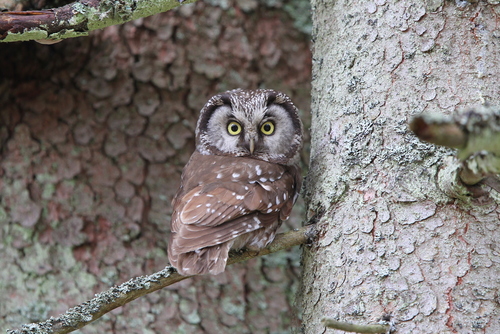
キンメフクロウ (Aegolius funereus) キンメフクロウ

メディア

読み込み中…

要点

モリフクロウとキンメフクロウを区別する最も信頼できるフィールドマークは、全体のサイズと構造です:モリフクロウははるかに大きく、ずんぐりしており、暗い目を持つ広く丸い頭をしていますが、キンメフクロウは明らかに小さく、コンパクトな体型で、黄色い目と上面や翼に目立つ斑点があります。幼鳥のキンメフクロウは、目の間に白い「X」と白い顔の筋がある独特のチョコレートブラウンの羽毛を示し、モリフクロウのどの年齢とも異なります。飛行中、モリフクロウは重くて遅く、広く丸い翼を持っているのに対し、キンメフクロウはよりコンパクトで、まっすぐ静かに飛びます。顔の模様、目の色、サイズに注意を払えば、特に両方が発生する可能性のある森林環境では、ほとんどの混乱を解消できます。

識別のコツ

  1. Size is the first check: モリフクロウはキンメフクロウよりもはるかに大きくて重いです。もし鳥が小さくてコンパクトに見えるなら、モリフクロウを除外してください。
  2. Facial disc and eye color: モリフクロウは暗い茶色の目を持つ平坦で丸い顔の円盤を持っています;キンメフクロウは暗い縁のある淡い円盤、目立つ白い「眉毛」、そして黄色い目を持っています。
  3. Juvenile plumage: 幼鳥のキンメフクロウは目の間に白い「X」と白い顔の筋があるチョコレートブラウンで、モリフクロウのどの年齢とも一致しません。
  4. Upperparts and wing pattern: キンメフクロウ(巣立ち後のすべての年齢)は、背中と翼に目立つ白い斑点を示し、初列風切と尾に白い斑点の列があります;モリフクロウは上面が平坦で、そんな斑点はありません。
  5. Underparts: モリフクロウは茶色の筋がある淡い腹部を持っています;キンメフクロウはルセットブラウンの筋があるクリームホワイトの腹部を持っていますが、一般的により白く、より鮮明にマーキングされています。
  6. Facial expression: キンメフクロウの「眉毛」は、特に近距離で「驚いた」ように見えます;モリフクロウの顔はより均一で、この表情が欠けています。
  7. Flight style: モリフクロウは遅くて重い、広い翼で滑空します;キンメフクロウはより直接的でまっすぐに飛び、小さいサイズを反映しています。
  8. Bill color: キンメフクロウは淡い黄色のくちばしを持っています;モリフクロウのくちばしは暗いです(フィールドでは常に見えるわけではありません)。
  9. Vocalizations: モリフクロウは深く、クラシックなフクロウの声を出します;キンメフクロウは高音のトリル、口笛、そしてくちばしを叩く音を出し、決してフクロウの声を出しません。
  10. Habitat context: モリフクロウは広葉樹や混合林、都市公園を含む場所で一般的です;キンメフクロウは遠隔の密な針葉樹林やタイガの森を好みます。
  11. Perched jizz: モリフクロウはずんぐりして頑丈に見え、大きく丸い頭を持っています;キンメフクロウはよりコンパクトで直立しています。
  12. Sexual dimorphism: モリフクロウの雌は雄よりも明らかに大きいですが、どちらの性別もキンメフクロウのどの性別よりもはるかに大きいです。
  13. Behavior when approached: キンメフクロウは近づくことを許可することがあり(3〜5 m)、その後飛び立つことがあります;モリフクロウはより遠くで飛び立つ可能性が高いです。
  14. Seasonal moult: キンメフクロウの幼鳥は、幼鳥の換羽(8月〜9月)まで独特のチョコレートブラウンの羽毛を保持し、その後白い斑点が現れます;モリフクロウの幼鳥はパターンが大人と似ており、劇的な変化はありません。
  15. Common pitfalls: 光が悪い場合、サイズと顔の模様が最も信頼できます;遠くのモリフクロウを大きなキンメフクロウと誤認しないように注意してくださいが、白い斑点の欠如と平坦な顔が明確にします。

大きさ

モリフクロウは中型で頑丈なフクロウで、典型的な体重は約475 g [wikidata]、長さは37〜46 cm、翼幅は81〜105 cm [wikipedia]です。対照的に、キンメフクロウははるかに小さく、よりコンパクトで、明らかに軽い体型を持っています(直接的な質量は示されていませんが、普遍的に「小さなフクロウ」と説明されています [wikipedia])。フィールドでは、サイズの違いは劇的です:モリフクロウはずんぐりして重く見え、キンメフクロウは小柄であまりずんぐりしていません。このサイズのギャップは、止まっているときや飛んでいるときに特に明らかで、最も信頼できる区別ポイントの一つです。

羽色

幼鳥のキンメフクロウ(約3週間齢で巣立ち直後)は、上面と下面が鈍いチョコレートブラウンで、黒と白の縁取りのある暗い茶色の顔の円盤を持ち、目の間に広い白い「X」があります—この組み合わせはモリフクロウのどの年齢でも示されません。成熟するにつれて、キンメフクロウは背中と翼に目立つ真珠のような白い斑点を発達させ、暗い縁と白い「眉毛」のある顔の円盤を持ち、「驚いた」ように見えます。彼らの腹部はクリームホワイトでルセットブラウンの筋があり、尾と初列風切には明確な白い斑点の列があります。対照的に、モリフクロウは常に平坦な顔(「眉毛」や「X」はなし)を持ち、腹部は淡く茶色の筋があり、上面はルセットまたは灰褐色で、キンメフクロウの大胆な白い斑点が欠けています。モリフクロウの顔の円盤は平坦で目は暗い茶色ですが、キンメフクロウは黄色い目を持っています。すべての年齢において、モリフクロウはキンメフクロウの鮮明な白いマーキングや斑点のある上翼パターンが欠けています。飛行中、モリフクロウは広く丸い翼を持ち、重くて遅い動作を示しますが、キンメフクロウはよりコンパクトでまっすぐに飛びます。

行動

モリフクロウは長くて重い滑空と少ない羽ばたきで飛ぶ傾向があり、しばしば高い位置で、飛行中も止まっているときも遅くてずんぐりしているように見えます。キンメフクロウは、飛行中も静かですが、より直接的でまっすぐに飛び、小さくてコンパクトな体型を反映しています。キンメフクロウは信頼できると説明され、近づくことを許可することがあり、非常に短い距離でのみ飛び立ちますが、モリフクロウはより警戒しています。両者は夜行性ですが、キンメフクロウは密で遠隔の森林を好むため、特に秘密主義です。

生息環境

モリフクロウはヨーロッパと西シベリアの森林に広く分布しており、成熟した広葉樹または混合林にしばしば生息し、町の公園や庭にも適応できます。キンメフクロウ(ボレアルフクロウ)は、より遠隔で密なタイガやボレアルの森林を好み、都市や開けた森林環境で見る可能性ははるかに低いです。特に北部や高地で深い針葉樹林に出会った場合、キンメフクロウが見られる可能性が高く、モリフクロウは低地の広葉樹や混合林でより一般的です。

声

モリフクロウはクラシックな「ツイット・トゥー」フクロウの声で有名で、深く共鳴する呼び声です。キンメフクロウはさまざまなトリル、口笛、そして柔らかい呼び声を出し、大きな領土トリルや柔らかい求愛メロディを含みますが、決してモリフクロウの深いフクロウの声を出しません。キンメフクロウの呼び声は高音で、より機械的またはスナイプのようで、特に巣の近くではくちばしを叩く音やシューという音を含みます。深いフクロウの声が聞こえたら、それはモリフクロウです;トリル、口笛、またはくちばしを叩く音が聞こえたら、キンメフクロウを疑ってください。

より良い説明を送る

比較と同じ項目を使ってください。文章はすぐに公開されます。

The most reliable field mark to separate Tawny Owl from Tengmalm's Owl is overall size and structure: Tawny Owl is much larger, bulkier, and has a broad, rounded head with dark eyes, while Tengmalm's Owl is distinctly smaller, with a compact build, yellow eyes, and a strikingly spotted appearance on the upperparts and wings. Juvenile Tengmalm's Owls show a unique chocolate-brown plumage with a white 'X' between the eyes and white facial streaks, unlike any Tawny Owl age. In flight, Tawny Owl appears heavy and slow with broad, rounded wings, whereas Tengmalm's Owl is more compact and flies straight and quietly. Careful attention to facial pattern, eye color, and size will resolve most confusion, especially in woodland settings where both may occur.

  1. Size is the first check: Tawny Owl is much larger and heavier than Tengmalm's Owl. If the bird appears small and compact, rule out Tawny Owl.
  2. Facial disc and eye color: Tawny Owl has a plain, rounded facial disc with dark brown eyes; Tengmalm's Owl has a pale disc with a dark border, prominent white 'eyebrows', and yellow eyes.
  3. Juvenile plumage: Juvenile Tengmalm's Owls are chocolate-brown with a white 'X' between the eyes and white facial streaks—never matched by Tawny Owl at any age.
  4. Upperparts and wing pattern: Tengmalm's Owl (all ages after fledging) shows conspicuous white spots on the back and wings, and rows of white spots on the primaries and tail; Tawny Owl is plain above, with no such spotting.
  5. Underparts: Tawny Owl has pale underparts with brown streaks; Tengmalm's Owl has cream-white underparts with russet-brown streaks, but is generally whiter and more crisply marked.
  6. Facial expression: Tengmalm's Owl's 'eyebrows' give a 'surprised' look, especially at close range; Tawny Owl's face is more uniform and lacks this expression.
  7. Flight style: Tawny Owl flies with slow, heavy, broad-winged glides; Tengmalm's Owl is more direct and straight-flying, reflecting its smaller size.
  8. Bill color: Tengmalm's Owl has a light yellow bill; Tawny Owl's bill is darker (not always visible in the field).
  9. Vocalizations: Tawny Owl gives deep, classic hoots; Tengmalm's Owl produces high-pitched trills, whistles, and bill-clapping, never hooting.
  10. Habitat context: Tawny Owl is common in broadleaf and mixed woodlands, including urban parks; Tengmalm's prefers remote, dense coniferous or taiga forests.
  11. Perched jizz: Tawny Owl appears squat and robust, with a large, rounded head; Tengmalm's Owl is more compact and upright.
  12. Sexual dimorphism: Tawny Owl females are noticeably larger than males, but both sexes are much larger than Tengmalm's of any sex.
  13. Behavior when approached: Tengmalm's Owl may allow close approach (3–5 m) before flushing; Tawny Owl is more likely to flush at greater distance.
  14. Seasonal moult: Tengmalm's Owl juveniles retain their distinctive chocolate-brown plumage until post-juvenile moult (August–September), after which white spotting appears; Tawny Owl juveniles are similar to adults in pattern, lacking dramatic changes.
  15. Common pitfalls: In poor light, size and facial pattern are most reliable; beware of misjudging a distant Tawny Owl as a large Tengmalm's, but the lack of white spotting and plain face should clarify.

Tawny Owl is a medium-sized, robust owl with a typical body mass around 475 g [wikidata], and a length of 37–46 cm with a wingspan of 81–105 cm [wikipedia]. In contrast, Tengmalm's Owl is much smaller and more compact, with a noticeably lighter build (no direct mass given, but universally described as 'small owl' [wikipedia]). In the field, the size difference is dramatic: Tawny Owl appears squat and heavy, while Tengmalm's Owl is petite and less bulky. This size gap is especially apparent if seen perched or in flight, and is one of the most reliable separation points.

Juvenile Tengmalm's Owls (about 3 weeks old and shortly after fledging) are dull chocolate-brown above and below, with a dark brown facial disc bordered by black and white, and a broad white 'X' between the eyes—this combination is never shown by Tawny Owl of any age. As they mature, Tengmalm's Owls develop conspicuous pearly-white spots on the back and wings, and a facial disc with a dark border and white 'eyebrows', giving a 'surprised' look. Their underparts are cream-white with russet-brown streaks, and the tail and primaries have distinct rows of white spots. Tawny Owl, by contrast, is always plain-faced (no 'eyebrows' or 'X'), with underparts pale and streaked brown, and upperparts either rufous or greyish brown, lacking the bold white spotting of Tengmalm's. Tawny Owl's facial disc is plain and eyes are dark brown, while Tengmalm's Owl has yellow eyes. In all ages, Tawny Owl lacks the crisp white markings and spotted upperwing pattern of Tengmalm's Owl. In flight, Tawny Owl shows broad, rounded wings with a heavy, slow action, while Tengmalm's Owl is more compact and straight-flying.

Tawny Owl tends to fly with long, heavy glides and fewer wingbeats, often at greater height, and appears slow and squat both in flight and perched. Tengmalm's Owl, while also silent in flight, is more direct and straight-flying, reflecting its smaller, more compact build. Tengmalm's Owl is described as confiding and may allow close approach, only flushing at very short range, while Tawny Owl is more wary. Both are nocturnal, but Tengmalm's is especially secretive due to its preference for dense, remote forests.

Tawny Owl is widespread in woodlands across Europe and western Siberia, often in mature deciduous or mixed forests, and can adapt to parks and gardens in towns. Tengmalm's Owl (Boreal Owl) prefers more remote, dense taiga and boreal forests, and is much less likely to be seen in urban or open woodland settings. If encountered in deep coniferous forest, especially in the north or at higher elevations, Tengmalm's is more likely; Tawny Owl is more common in lowland, broadleaf, or mixed woods.

Tawny Owl is famous for its classic 'twit-twoo' hooting, a deep, resonant call. Tengmalm's Owl produces a variety of trills, whistles, and softer calls, including a loud territorial trill and a softer courtship melody, but never the deep hoot of Tawny Owl. Tengmalm's calls are higher-pitched, more mechanical or snipe-like, and include bill-clapping and hissing, especially at the nest. If you hear a deep hoot, it's Tawny Owl; if you hear trills, whistles, or bill-clapping, suspect Tengmalm's.

変更を破棄しますか?

保存していない編集があります。今離れると失われます。

モリフクロウ · キンメフクロウ · 苦手な鳥