

tawny owl vs bufo-pequeno
Strix aluco versus Asio otus
Jogue um quiz com tawny owl e bufo-pequeno
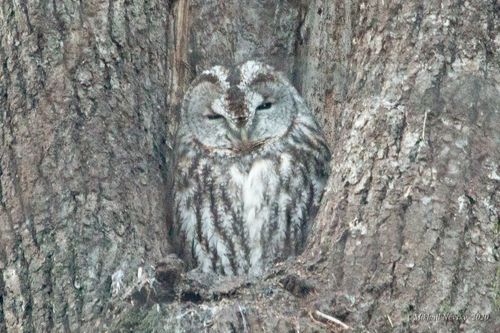 tawny owl
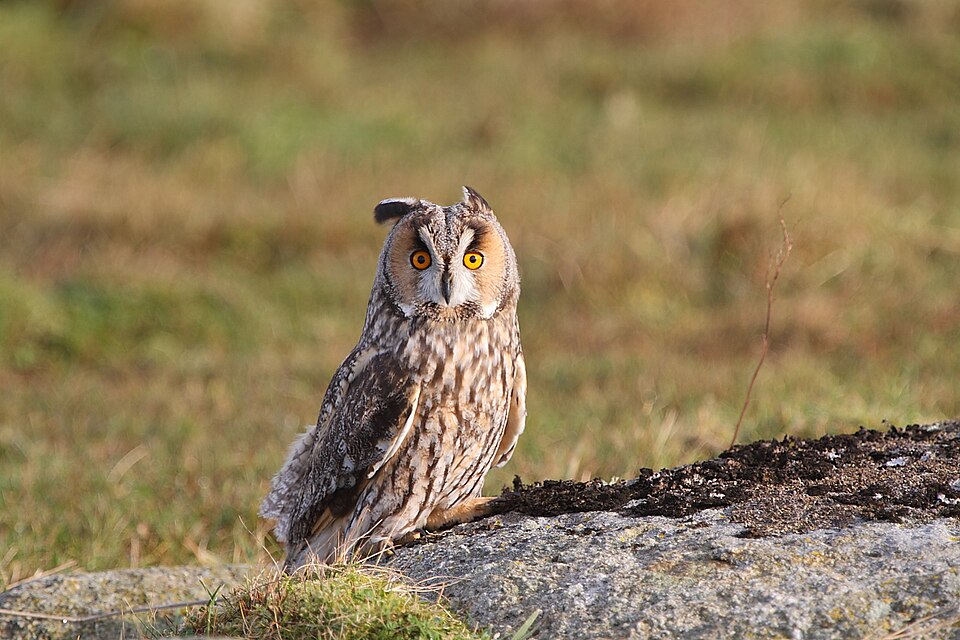 bufo-pequeno
Em resumo
A marca de campo mais confiável para separar o tawny owl do bufo-pequeno é a presença de tufos de orelha proeminentes e eretos no bufo-pequeno, que estão completamente ausentes no tawny owl. Em voo, o bufo-pequeno parece esbelto e de asas longas, enquanto o tawny owl é notavelmente mais robusto e de asas largas. As diferenças na plumagem são sutis, mas consistentes: o tawny owl apresenta um disco facial liso e arredondado e partes inferiores fortemente estriadas, enquanto o bufo-pequeno tem um disco facial mais contrastante com uma borda escura e estrias verticais abaixo. O tamanho também é uma pista, com o tawny owl sendo muito mais pesado e volumoso. Essas diferenças se mantêm para todas as idades, mas são especialmente úteis para aves empoleiradas ou aquelas vistas bem em voo.
Dicas de identificação
- Tufos de orelha: O bufo-pequeno sempre apresenta tufos de orelha proeminentes e eretos (não orelhas), especialmente quando alerta ou perturbado. O tawny owl nunca tem tufos de orelha—se você os vê, não é um tawny.
- Formato da cabeça: O tawny owl tem uma cabeça grande, arredondada e lisa, sem projeções; a cabeça do bufo-pequeno parece mais estreita e angular devido aos tufos.
- Disco facial: O disco facial do tawny owl é liso e arredondado, com olhos castanho-escuros que se misturam. O disco facial do bufo-pequeno é contornado de escuro, frequentemente com uma linha vertical branca ou 'bigode', e os olhos são amarelo-laranja a laranja-vermelho, destacando-se contra o rosto.
- Cor da plumagem: O tawny owl é geralmente marrom ou cinza uniforme por cima, com partes inferiores pálidas e fortemente estriadas. O bufo-pequeno é tawny-ocre com estrias e manchas escuras variáveis, e frequentemente apresenta escápulas brancas contrastantes e uma aparência mais padronizada.
- Marcas nas partes inferiores: O tawny owl tem estrias marrons ousadas nas partes inferiores esbranquiçadas; o bufo-pequeno apresenta estrias verticais na parte superior do peito e padrão de espinha de peixe (estrias do eixo e barras transversais) abaixo, frequentemente dando uma aparência mais padronizada.
- Formato das asas em voo: As asas do tawny owl são largas e arredondadas, proporcionando um voo pesado e lento. As asas do bufo-pequeno são longas e esbeltas, com um voo mais ágil e leve.
- Painéis de asas pálidos: Em voo, o bufo-pequeno pode mostrar painéis pálidos ou amarelados na base das primárias, especialmente em boa luz—o tawny owl não tem esses.
- Tamanho e estrutura: O tawny owl é muito mais pesado e volumoso, com uma aparência compacta e robusta. O bufo-pequeno é esbelto, de asas longas e corpo mais leve.
- Cor dos olhos: O tawny owl tem olhos castanho-escuros; os do bufo-pequeno são laranja a laranja-vermelho, uma marca útil em distâncias curtas.
- Postura empoleirada: O tawny owl frequentemente parece curvado e arredondado; o bufo-pequeno senta-se ereto, às vezes alongando seu corpo e tufos.
- Contexto do habitat: Florestas densas e maduras favorecem o tawny owl; florestas abertas, bordas e plantações de coníferas são mais prováveis de serem território do bufo-pequeno.
- Hábitos de pouso: O bufo-pequeno pode pousar em grupo no inverno, às vezes em locais abertos ou visíveis. O tawny owl é mais solitário e discreto durante o dia.
- Dimorfismo sexual: Ambas as espécies têm fêmeas maiores, mas isso geralmente não é visível em campo.
- Confusão juvenil: Nenhuma marca única de asa superior juvenil é descrita para nenhuma das espécies, então confie na estrutura e características faciais para aves jovens.
- Armadilhas comuns: Em luz fraca, a morfologia cinza do tawny owl pode parecer semelhante a um bufo-pequeno pálido, mas os tufos de orelha e o contraste do disco facial permanecem confiáveis. Cuidado com a postura—o bufo-pequeno pode às vezes achatar seus tufos, mas o disco facial e a construção esbelta ainda o separam.
Tamanho
O tawny owl é substancialmente mais pesado e volumoso, com uma massa corporal média de 475 g em comparação com os típicos 200–330 g do bufo-pequeno (existe variação regional, mas o bufo-pequeno é sempre muito mais leve) [wikidata, wikipedia]. O tawny owl também é ligeiramente mais longo (37–46 cm vs. 31–40 cm) e tem uma envergadura semelhante ou ligeiramente mais ampla (81–105 cm vs. 86–102 cm), mas parece muito mais robusto e com cabeça arredondada. O bufo-pequeno é esbelto, de asas longas e visivelmente mais leve na mão ou quando visto lado a lado.
Plumagem
- Voo juvenil/imaturo: Nenhuma marca distintiva de asa superior é descrita para nenhuma das espécies que seja única para a idade, mas as longas e esbeltas asas do bufo-pequeno e os painéis pálidos contrastantes na base das primárias podem ser visíveis em voo em todas as idades. O tawny owl não tem esses painéis pálidos e apresenta asas mais largas e arredondadas.
- Aves empoleiradas/adultas: O tawny owl tem um disco facial liso e arredondado com olhos castanho-escuros e sem tufos de orelha. Suas partes inferiores são pálidas com estrias marrons, e as partes superiores podem ser marrons ou cinzas, às vezes ruivas, mas sempre relativamente uniformes. O bufo-pequeno tem um disco facial bem desenvolvido com uma borda escura, frequentemente uma linha vertical branca no centro (às vezes formando um 'bigode'), e tufos de orelha proeminentes. Sua plumagem é tawny-ocre com estrias verticais escuras e marcas escuras variáveis, especialmente nas asas e nas costas. As escápulas são marcadas de branco, e as partes inferiores mostram um padrão de espinha de peixe abaixo do peito superior. A cor dos olhos é amarelo-laranja a laranja-vermelho, contrastando com os olhos castanho-escuros do tawny owl.
Comportamento
O tawny owl voa com batidas de asas pesadas, lentas e silenciosas, usando longos deslizamentos em asas largas e arredondadas. Seu voo é menos ondulante e tipicamente em maior altura do que outras corujas eurasiáticas. Empoleirado, parece compacto e robusto. O bufo-pequeno é mais ágil e leve em voo, com um perfil esbelto e de asas longas. Quando empoleirado, o bufo-pequeno frequentemente se senta ereto e alonga seu corpo, acentuando seus tufos de orelha. Ambas as espécies são noturnas e discretas, mas o bufo-pequeno é mais propenso a pousar em grupo no inverno, às vezes em locais expostos.
Habitat
O tawny owl é uma espécie clássica de floresta, favorecendo florestas maduras, parques e áreas urbanas arborizadas em toda a Europa e na Sibéria ocidental. O bufo-pequeno também se reproduz amplamente na Europa e no Paleártico, mas é mais frequentemente encontrado em florestas abertas, bordas de florestas, arbustos e até mesmo em terras agrícolas com árvores dispersas. Embora seus habitats se sobreponham, o tawny owl está mais estritamente ligado a florestas densas, enquanto o bufo-pequeno tolera habitats mais abertos e é mais provável de ser encontrado em plantações de coníferas ou cercas-vivas.