

Motmot

vite-vite-uirapuru vs juruviara-de-garganta-amarela

Tunchiornis ochraceiceps versus Vireo flavifrons

Jogue um quiz com vite-vite-uirapuru e juruviara-de-garganta-amarela
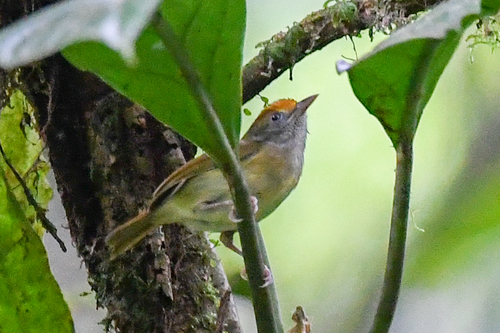
vite-vite-uirapuru (Tunchiornis ochraceiceps) vite-vite-uirapuru
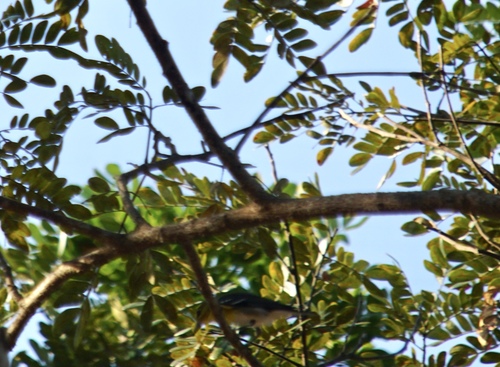
juruviara-de-garganta-amarela (Vireo flavifrons) juruviara-de-garganta-amarela

Mídia

Carregando…

Em resumo

The most reliable field mark to separate Tawny-crowned Greenlet from Yellow-throated Vireo is the presence of bold yellow 'spectacles' and white wingbars on the vireo, versus the greenlet's plain face and lack of wingbars. In all plumages, Yellow-throated Vireo shows a bright yellow throat and breast sharply contrasting with a white belly, while Tawny-crowned Greenlet has a more muted ochraceous or yellow-brown crown and a less contrasting, duller underpart pattern. Structurally, the vireo is larger and chunkier with a stouter bill, while the greenlet is smaller and slimmer. Both can occur in Central America, but the vireo is a migrant and the greenlet is resident; context and habitat can help, but field marks are decisive.

Dicas de identificação

  1. Yellow 'spectacles' (vireo only): The bold yellow eye-ring and lores forming 'spectacles' is unique to Yellow-throated Vireo of these two; Tawny-crowned Greenlet has a plain, dull grayish face. Works for all ages and seasons.
  2. Wingbars (vireo only): Yellow-throated Vireo always shows two strong white wingbars on dark wings; greenlet has plain wings with only subtle buff-brown edging, never wingbars. Check this in perched and flying birds.
  3. Throat and breast color: Vireo has a bright yellow throat and upper breast, sharply contrasting with a white belly. Greenlet's throat is grayish with faint yellow-green, breast ochraceous, and belly yellowish but never as vivid or sharply defined.
  4. Crown color: Greenlet shows a yellowish or tawny crown (especially in nominate and nelsoni subspecies), contrasting with olive-brown upperparts; vireo's crown is olive and blends with the back.
  5. Facial contrast: Vireo's face is striking due to the spectacles and yellow wash; greenlet's face is dull grayish and unmarked.
  6. Bill structure: Vireo has a thick, blue-grey, stout bill; greenlet's bill is finer and grayish, less robust. This is subtle at distance but clear in good views.
  7. Size and build: Vireo is larger, bulkier, and chunkier; greenlet is smaller, slimmer, and more delicate. Use this when both are seen or with familiar reference birds.
  8. Tail and wing pattern in flight: Vireo's tail is dark with white edges and shows white wingbars in flight; greenlet's tail is dull brown with cinnamon edges and no wingbars. No strong age-specific flight marks for either, but the vireo's pattern is always bolder.
  9. Leg color: Vireo has thick blue-grey legs; greenlet's are pinkish to grayish. This is subtle and rarely diagnostic in the field.
  10. Habitat context: In Central America, vireo is a migrant (mainly winter) and favors more open or edge habitats; greenlet is a resident of humid forest interior. If deep in mature forest, greenlet is more likely.
  11. Behavior: Vireo is slower, more deliberate, often higher in the canopy; greenlet is nimbler, more active, and often lower in the mid-story.
  12. Subspecies variation (greenlet): Some greenlet subspecies (e.g., bulunensis) are brighter below, but none show the vireo's sharp contrast or spectacles. Always check for wingbars and facial pattern.
  13. Underwing color: Greenlet subspecies vary in underwing covert color (yellow to pale yellow), but this is rarely visible in the field and not diagnostic versus vireo.
  14. Voice: Not detailed in the notes; do not rely on song or call for separation here.
  15. Season: In North America, only vireo occurs; in Central America, both can be present in winter, but greenlet is resident and vireo is a passage or wintering migrant.

Tamanho

Yellow-throated Vireo is distinctly larger (13–15 cm, 15–21 g) than Tawny-crowned Greenlet (9.5–13 cm, 8.4–13.5 g) [wikipedia][avonet]. The vireo is noticeably bulkier and has a stouter, heavier bill, while the greenlet is more delicate overall. In the field, this size difference is usually apparent when both species are seen in quick succession or with familiar reference birds.

Plumagem

No age-specific wing patterns are described for either species, so focus is on adult and general plumage. Yellow-throated Vireo (all ages) is olive above with a bright yellow throat and breast, sharply demarcated from a white belly, and has bold yellow 'spectacles' around the eye and two prominent white wingbars. Its wings and tail are dark, contrasting with the white wingbars. Tawny-crowned Greenlet lacks wingbars and spectacles; instead, it has a yellowish or tawny crown, dull grayish face, olive-brown upperparts, and underparts that are ochraceous or yellowish but much less vivid and contrasting than the vireo. Its wings are plain grayish-black with buff-brown edges, and the tail is dull brown with cinnamon-brown edges—never with wingbars. Subspecies of the greenlet vary slightly in underpart and crown color, but none approach the vireo's bold facial pattern or wingbars. The vireo's underparts are always sharply patterned, while the greenlet's are muted and blend together. Juvenile/immature-specific marks are not detailed for either species.

Comportamento

Yellow-throated Vireo typically forages higher in the canopy, often moving methodically and pausing to scan for insects, sometimes sallying out. Tawny-crowned Greenlet is more likely to be seen in the mid-story or lower canopy, moving more nimbly and less conspicuously. The vireo may appear slower and more deliberate, while the greenlet is more active and agile. Both species can join mixed flocks, but the vireo's chunkier build and slower movements stand out.

Habitat

Tawny-crowned Greenlet is a resident of humid forests from Mexico through Central America into Colombia and Ecuador, mainly in mature or tall secondary forest. Yellow-throated Vireo breeds in open deciduous woods in North America and winters in Central America, often in more open or edge habitats than the greenlet. In Central America, the vireo is a migrant and less likely to be found deep in dense forest compared to the greenlet, which is a year-round resident of interior forest.

Enviar uma descrição melhor

Use as mesmas seções da comparação. Seu texto é publicado na hora.

The most reliable field mark to separate Tawny-crowned Greenlet from Yellow-throated Vireo is the presence of bold yellow 'spectacles' and white wingbars on the vireo, versus the greenlet's plain face and lack of wingbars. In all plumages, Yellow-throated Vireo shows a bright yellow throat and breast sharply contrasting with a white belly, while Tawny-crowned Greenlet has a more muted ochraceous or yellow-brown crown and a less contrasting, duller underpart pattern. Structurally, the vireo is larger and chunkier with a stouter bill, while the greenlet is smaller and slimmer. Both can occur in Central America, but the vireo is a migrant and the greenlet is resident; context and habitat can help, but field marks are decisive.

  1. Yellow 'spectacles' (vireo only): The bold yellow eye-ring and lores forming 'spectacles' is unique to Yellow-throated Vireo of these two; Tawny-crowned Greenlet has a plain, dull grayish face. Works for all ages and seasons.
  2. Wingbars (vireo only): Yellow-throated Vireo always shows two strong white wingbars on dark wings; greenlet has plain wings with only subtle buff-brown edging, never wingbars. Check this in perched and flying birds.
  3. Throat and breast color: Vireo has a bright yellow throat and upper breast, sharply contrasting with a white belly. Greenlet's throat is grayish with faint yellow-green, breast ochraceous, and belly yellowish but never as vivid or sharply defined.
  4. Crown color: Greenlet shows a yellowish or tawny crown (especially in nominate and nelsoni subspecies), contrasting with olive-brown upperparts; vireo's crown is olive and blends with the back.
  5. Facial contrast: Vireo's face is striking due to the spectacles and yellow wash; greenlet's face is dull grayish and unmarked.
  6. Bill structure: Vireo has a thick, blue-grey, stout bill; greenlet's bill is finer and grayish, less robust. This is subtle at distance but clear in good views.
  7. Size and build: Vireo is larger, bulkier, and chunkier; greenlet is smaller, slimmer, and more delicate. Use this when both are seen or with familiar reference birds.
  8. Tail and wing pattern in flight: Vireo's tail is dark with white edges and shows white wingbars in flight; greenlet's tail is dull brown with cinnamon edges and no wingbars. No strong age-specific flight marks for either, but the vireo's pattern is always bolder.
  9. Leg color: Vireo has thick blue-grey legs; greenlet's are pinkish to grayish. This is subtle and rarely diagnostic in the field.
  10. Habitat context: In Central America, vireo is a migrant (mainly winter) and favors more open or edge habitats; greenlet is a resident of humid forest interior. If deep in mature forest, greenlet is more likely.
  11. Behavior: Vireo is slower, more deliberate, often higher in the canopy; greenlet is nimbler, more active, and often lower in the mid-story.
  12. Subspecies variation (greenlet): Some greenlet subspecies (e.g., bulunensis) are brighter below, but none show the vireo's sharp contrast or spectacles. Always check for wingbars and facial pattern.
  13. Underwing color: Greenlet subspecies vary in underwing covert color (yellow to pale yellow), but this is rarely visible in the field and not diagnostic versus vireo.
  14. Voice: Not detailed in the notes; do not rely on song or call for separation here.
  15. Season: In North America, only vireo occurs; in Central America, both can be present in winter, but greenlet is resident and vireo is a passage or wintering migrant.

Yellow-throated Vireo is distinctly larger (13–15 cm, 15–21 g) than Tawny-crowned Greenlet (9.5–13 cm, 8.4–13.5 g) [wikipedia][avonet]. The vireo is noticeably bulkier and has a stouter, heavier bill, while the greenlet is more delicate overall. In the field, this size difference is usually apparent when both species are seen in quick succession or with familiar reference birds.

No age-specific wing patterns are described for either species, so focus is on adult and general plumage. Yellow-throated Vireo (all ages) is olive above with a bright yellow throat and breast, sharply demarcated from a white belly, and has bold yellow 'spectacles' around the eye and two prominent white wingbars. Its wings and tail are dark, contrasting with the white wingbars. Tawny-crowned Greenlet lacks wingbars and spectacles; instead, it has a yellowish or tawny crown, dull grayish face, olive-brown upperparts, and underparts that are ochraceous or yellowish but much less vivid and contrasting than the vireo. Its wings are plain grayish-black with buff-brown edges, and the tail is dull brown with cinnamon-brown edges—never with wingbars. Subspecies of the greenlet vary slightly in underpart and crown color, but none approach the vireo's bold facial pattern or wingbars. The vireo's underparts are always sharply patterned, while the greenlet's are muted and blend together. Juvenile/immature-specific marks are not detailed for either species.

Yellow-throated Vireo typically forages higher in the canopy, often moving methodically and pausing to scan for insects, sometimes sallying out. Tawny-crowned Greenlet is more likely to be seen in the mid-story or lower canopy, moving more nimbly and less conspicuously. The vireo may appear slower and more deliberate, while the greenlet is more active and agile. Both species can join mixed flocks, but the vireo's chunkier build and slower movements stand out.

Tawny-crowned Greenlet is a resident of humid forests from Mexico through Central America into Colombia and Ecuador, mainly in mature or tall secondary forest. Yellow-throated Vireo breeds in open deciduous woods in North America and winters in Central America, often in more open or edge habitats than the greenlet. In Central America, the vireo is a migrant and less likely to be found deep in dense forest compared to the greenlet, which is a year-round resident of interior forest.

Descartar as alterações?

Você tem edições não salvas. Se sair agora, elas serão perdidas.

vite-vite-uirapuru · juruviara-de-garganta-amarela · Minhas aves difíceis