

rola-de-papo-branco vs southern anteater-chat
Turtur tympanistria versus Myrmecocichla formicivora
Jogue um quiz com rola-de-papo-branco e southern anteater-chat
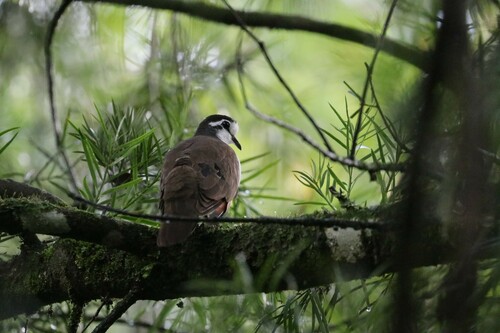 rola-de-papo-branco
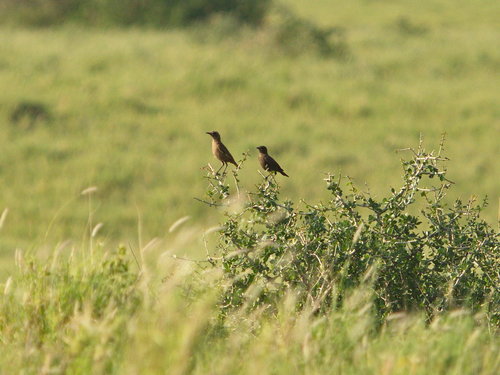 southern anteater-chat
Em resumo
A maneira mais confiável de separar a rola-de-papo-branco do southern anteater-chat é pela estrutura geral e pelo voo: a rola-de-papo-branco é uma pomba pequena e gorda, com um bico curto e asas arredondadas, exibindo primárias e penas de baixo castanhas em voo (todas as idades), enquanto o southern anteater-chat é um pássaro cantor mais esguio e ereto, com um bico fino e sem castanho na asa. As rolas-de-papo-branco juvenis têm franjas castanhas nas costas e flancos, e até mesmo as fêmeas sem brilho são mais claras embaixo do que qualquer southern anteater-chat. Os machos de cada espécie são muito diferentes (pomba de face branca vs. chat totalmente preto), mas a confusão é possível com fêmeas/juvenis de southern anteater-chat e fêmeas/juvenis de rola-de-papo-branco no chão. Estrutura, cor da asa em voo e habitat são as melhores pistas.
Dicas de identificação
- Castanho na asa (voo): A rola-de-papo-branco de todas as idades exibe penas de voo primárias castanhas e penas de baixo quando assustada—o southern anteater-chat nunca mostra castanho na asa. Esta é a melhor marca de campo, especialmente para aves vistas em voo.
- Plumagem juvenil: A rola-de-papo-branco juvenil tem franjas castanhas nas costas, peito e flancos, e ainda é mais clara embaixo do que qualquer southern anteater-chat. O southern anteater-chat juvenil é marrom no geral e nunca mostra castanho ou um forte claro embaixo.
- Estrutura geral: A rola-de-papo-branco é gorda, com bico curto e compacta, com uma aparência semelhante à de uma pomba. O southern anteater-chat é mais esguio, com pernas mais longas e mais ereto, com um bico fino típico de chats.
- Plumagem do macho adulto: O macho da rola-de-papo-branco tem um rosto branco marcante com uma mancha preta atrás do olho e partes inferiores brancas; o macho do southern anteater-chat é quase totalmente preto. A confusão é improvável aqui.
- Confusão fêmea/juvenil: As fêmeas e juvenis de rola-de-papo-branco são mais apagadas, mas ainda têm partes inferiores brancas ou claras e carecem do marrom uniforme da fêmea do southern anteater-chat. A fêmea do southern anteater-chat é marrom com bico e pernas cinzas, e nunca mostra rosto branco ou castanho na asa.
- Padrão do rosto: A rola-de-papo-branco (macho) tem um rosto branco e uma mancha preta atrás do olho; a fêmea tem um rosto cinza-claro a marrom. O southern anteater-chat (qualquer sexo) não tem rosto branco ou mancha ocular.
- Manchas na asa (empoleirada): A rola-de-papo-branco mostra grandes manchas roxas escuras na asa dobrada (macho adulto); o southern anteater-chat não mostra nenhuma dessas manchas.
- Cor das partes inferiores: A rola-de-papo-branco é sempre mais clara embaixo, mesmo em plumagens juvenis ou femininas, do que o southern anteater-chat, que é marrom ou preto embaixo.
- Cor das pernas e bico: A rola-de-papo-branco tem um anel ocular e pés roxo-avermelhados, e um bico roxo; a fêmea do southern anteater-chat tem bico e pernas cinzas.
- Estilo de voo: A rola-de-papo-branco voa rápido, baixo e ágil, típico das pombas. O voo do southern anteater-chat não é descrito, mas os chats são geralmente menos diretos e menos poderosos em voo.
- Habitat: Florestas densas, jardins ou plantações favorecem fortemente a rola-de-papo-branco; campos abertos secos ou arbustos são território do southern anteater-chat. O habitat sozinho pode frequentemente separá-los.
- Comportamento de forrageio: A rola-de-papo-branco é terrestre, alimentando-se no chão de sementes e pequenas frutas, frequentemente assustada de seu abrigo. O southern anteater-chat é mais propenso a ser visto empoleirado ereto em rochas ou arbustos em campo aberto.
- Sociabilidade: A rola-de-papo-branco é geralmente solitária ou em pequenos grupos familiares; o southern anteater-chat pode ser mais conspícuo e menos tímido.
- Voz: Um 'du-du-du-du-du' repetido confirma a rola-de-papo-branco. A falta de um chamado semelhante do southern anteater-chat pode ajudar, mas o silêncio não é diagnóstico.
- Armadilhas: As fêmeas e juvenis de rola-de-papo-branco são mais apagadas e podem ser confundidas com chats marrons, mas sempre verifique as partes inferiores claras, o castanho na asa (em voo) e a forma compacta da pomba. O southern anteater-chat nunca mostra castanho, rosto branco ou estrutura semelhante à de uma pomba.
Tamanho
A rola-de-papo-branco é visivelmente mais pesada e compacta, com uma massa corporal de cerca de 67g em comparação com os 42g do southern anteater-chat. A pomba também é descrita como 'gorda' e tipicamente 22 cm de comprimento, enquanto o southern anteater-chat é mais esguio e mais ereto. No campo, o volume da pomba e seu bico curto contrastam com a construção mais leve e esguia do chat e a postura de pernas mais longas.
Plumagem
A rola-de-papo-branco juvenil mostra franjas castanhas nas costas, peito e flancos, e todas as idades exibem penas de voo primárias castanhas e penas de baixo em voo—uma marca única não mostrada pelo southern anteater-chat. O macho adulto da rola-de-papo-branco é de face branca com uma mancha preta atrás do olho, partes inferiores brancas e grandes manchas roxas escuras nas asas dobradas; as fêmeas são mais apagadas, com rosto e peito cinza-claro a marrom, mas ainda mais claras embaixo do que qualquer southern anteater-chat. Os machos do southern anteater-chat são quase todos pretos, enquanto as fêmeas são marrons no geral com bico e pernas cinzas, sem qualquer rosto branco ou castanho na asa. A pomba sempre parece mais clara embaixo, mesmo em plumagens juvenis ou femininas, em comparação com o chat.
Comportamento
A rola-de-papo-branco é tímida, geralmente solitária ou em pequenos grupos familiares, e é mais frequentemente vista quando assustada do chão da floresta, voando baixo e rápido com um voo ágil e direto. Ela forrageia principalmente no chão por sementes e pequenas frutas. O southern anteater-chat é mais ereto, frequentemente empoleirando-se em arbustos baixos ou rochas, e está adaptado a campos abertos, secos e arbustivos. O comportamento do chat é mais conspícuo e menos secreto do que o da pomba.
Habitat
A rola-de-papo-branco é estritamente uma ave de florestas densas, jardins densos e plantações, raramente aventurando-se em campo aberto. Ela está ausente de áreas secas e abertas. O southern anteater-chat, por outro lado, é encontrado em arbustos e campos secos subtropicais ou tropicais, frequentemente em ambientes muito mais abertos e áridos. Se a ave estiver em floresta densa ou jardins luxuriantes, a rola-de-papo-branco é muito mais provável; em campos abertos ou arbustos secos, espere o southern anteater-chat.
Voz
A rola-de-papo-branco emite um chamado repetido 'du-du-du-du-du'. Não há descrição vocal para o southern anteater-chat nas notas fornecidas, então a voz é útil apenas para confirmar a pomba.
rola-de-papo-branco · southern anteater-chat · Minhas aves difíceis