

Motmot

タンバリンバト 対 ハジロアリヒタキ

Turtur tympanistria 対 Myrmecocichla formicivora

タンバリンバトとハジロアリヒタキのクイズ
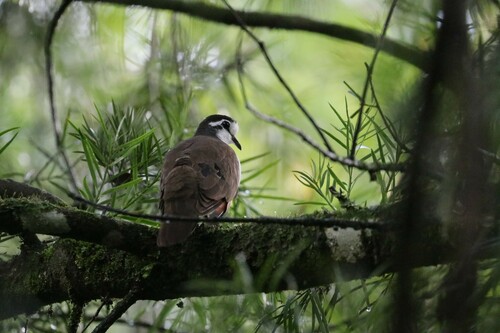
タンバリンバト (Turtur tympanistria) タンバリンバト
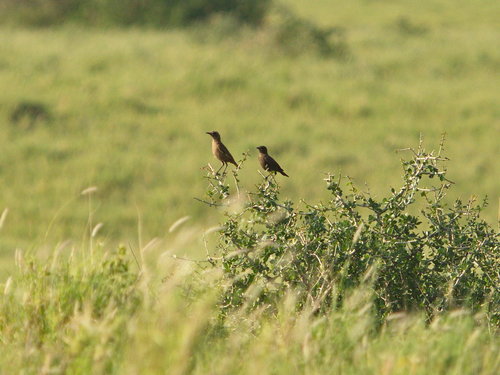
ハジロアリヒタキ (Myrmecocichla formicivora) ハジロアリヒタキ

メディア

読み込み中…

要点

タンバリンバトとハジロアリヒタキを区別する最も信頼できる方法は、全体的な構造と飛行によるものです:タンバリンバトは小さくてふっくらした鳩で、短いくちばしと丸い翼を持ち、飛行中には栗色の初列風切羽と腹羽を見せます(すべての年齢)、一方、ハジロアリヒタキはスリムで直立した歌鳥で、細いくちばしを持ち、翼に栗色はありません。幼鳥のタンバリンバトは背中と側面に栗色の縁取りがあり、地味な雌でもハジロアリヒタキよりも下側が明るいです。各種のオスは非常に異なり(白い顔の鳩対全体が黒いヒタキ)、地面では雌/未熟なハジロアリヒタキと雌/未熟なタンバリンバトが混同される可能性があります。構造、飛行中の翼の色、そして生息地が最良の手がかりです。

識別のコツ

  1. 翼の栗色(飛行):すべての年齢のタンバリンバトは、飛び立つときに栗色の初列風切羽と腹羽を見せます—ハジロアリヒタキは翼に栗色を見せません。これは、特に飛行中に見られる鳥にとって、最も優れたフィールドマークです。
  2. 幼鳥の羽毛:幼鳥のタンバリンバトは背中、胸、側面に栗色の縁取りがあり、ハジロアリヒタキよりも下側が明るいです。幼鳥のハジロアリヒタキは全体が茶色で、栗色や強い淡色を見せることはありません。
  3. 全体的な構造:タンバリンバトはふっくらしていて、短いくちばしを持ち、コンパクトで、鳩のような印象を与えます。ハジロアリヒタキはスリムで、脚が長く、より直立しており、ヒタキに典型的な細いくちばしを持っています。
  4. 成鳥のオスの羽毛:オスのタンバリンバトは目の後ろに黒い斑点がある印象的な白い顔と白い腹部を持ち、オスのハジロアリヒタキはほぼ全体が黒です。ここでの混同は考えにくいです。
  5. 雌/未熟の混同:雌と幼鳥のタンバリンバトは地味ですが、白または淡い腹部を持ち、雌のハジロアリヒタキの均一な茶色はありません。雌のハジロアリヒタキは茶色で、灰色のくちばしと脚を持ち、白い顔や翼の栗色を見せることはありません。
  6. 顔の模様:タンバリンバト(オス)は白い顔と黒い斑点を持ち、雌は淡い灰色の茶色の顔をしています。ハジロアリヒタキ(どの性別でも)は白い顔や目の斑点を欠いています。
  7. 翼の斑点(止まっているとき):タンバリンバトは折りたたまれた翼に大きな暗紫色の斑点を示します(成鳥のオス);ハジロアリヒタキはそのような斑点を示しません。
  8. 腹部の色:タンバリンバトは常に下側が明るく、幼鳥や雌の羽毛でも、ハジロアリヒタキよりも明るいです。ハジロアリヒタキは下側が茶色または黒です。
  9. 脚とくちばしの色:タンバリンバトは紫赤の目のリングと足、紫のくちばしを持ち、雌のハジロアリヒタキは灰色のくちばしと脚を持っています。
  10. 飛行スタイル:タンバリンバトは速く、低く、敏捷に飛び、鳩に典型的です。ハジロアリヒタキの飛行は記述されていませんが、ヒタキは一般的に飛行中にあまり直接的でなく、力強くありません。
  11. 生息地:密な森林、庭、またはプランテーションはタンバリンバトを強く好み、開けた乾燥した草原や低木地はハジロアリヒタキの領域です。生息地だけでもしばしば彼らを区別できます。
  12. 採餌行動:タンバリンバトは地面で種子や小さな果実を食べる地上性で、しばしば隠れ場所から飛び立ちます。ハジロアリヒタキは開けた国の岩や低木に直立して止まっているのが見られる可能性が高いです。
  13. 社会性:タンバリンバトは通常、孤独または小さな家族グループで、ハジロアリヒタキはより目立ち、あまり警戒心がないかもしれません。
  14. 声:繰り返される「ドゥ・ドゥ・ドゥ・ドゥ・ドゥ」がタンバリンバトを確認します。ハジロアリヒタキからの同様の呼び声がないことが助けになりますが、沈黙は診断的ではありません。
  15. 落とし穴:雌と幼鳥のタンバリンバトは地味で、茶色のヒタキと混同される可能性がありますが、常に淡い腹部、翼の栗色(飛行中)、そして鳩のコンパクトな形を確認してください。ハジロアリヒタキは決して栗色、白い顔、または鳩のような構造を示しません。

大きさ

タンバリンバトは明らかに重く、コンパクトで、体重は約67gで、ハジロアリヒタキの42gと比較されます。鳩は「ふっくら」と表現され、通常22 cmの長さですが、ハジロアリヒタキはスリムでより直立しています。フィールドでは、鳩の体格と短いくちばしが、ヒタキの軽く、より細い体型と長い脚の姿勢と対照的です。

羽色

幼鳥のタンバリンバトは背中、胸、側面に栗色の縁取りがあり、すべての年齢が飛行中に栗色の初列風切羽と腹羽を示します—これはハジロアリヒタキには見られない独特のマークです。成鳥のオスのタンバリンバトは白い顔で目の後ろに黒い斑点があり、白い腹部と折りたたまれた翼に大きな暗紫色の斑点があります;雌は地味で、淡い灰色の茶色の顔と胸を持ちますが、ハジロアリヒタキよりも下側が常に明るいです。ハジロアリヒタキのオスはほぼ全体が黒で、雌は全体が茶色で灰色のくちばしと脚を持ち、翼に白い顔や栗色は見られません。鳩は常に下側が明るく見え、幼鳥や雌の羽毛でも、ヒタキと比較して明るいです。

行動

タンバリンバトは内気で、通常は孤独または小さな家族グループで、森林の床から飛び立つときに最もよく見られ、低く速く、敏捷で直接的な飛行をします。主に地面で種子や小さな果実を食べます。ハジロアリヒタキはより直立しており、しばしば低木や岩に止まっており、開けた乾燥した草原や低木地に適応しています。ヒタキの行動は、鳩のそれよりも目立ち、あまり秘密主義ではありません。

生息環境

タンバリンバトは厚い森林、密な庭、プランテーションの鳥であり、開けた国にはめったに出ません。乾燥した開けた地域には存在しません。対照的に、ハジロアリヒタキは亜熱帯または熱帯の乾燥した低木地や草原に生息し、しばしばより開けた乾燥した環境に見られます。鳥が密な森林や豊かな庭にいる場合、タンバリンバトの可能性が高く、開けた草原や乾燥した低木地ではハジロアリヒタキを期待してください。

声

タンバリンバトは繰り返し「ドゥ・ドゥ・ドゥ・ドゥ・ドゥ」と呼びます。提供されたメモにはハジロアリヒタキの声の記述がないため、声は鳩を確認するためだけに役立ちます。

より良い説明を送る

比較と同じ項目を使ってください。文章はすぐに公開されます。

The most reliable way to separate Tambourine Dove from Southern Anteater-Chat is by overall structure and flight: Tambourine Dove is a small, plump pigeon with a short bill and rounded wings, showing chestnut primaries and underwings in flight (all ages), while Southern Anteater-Chat is a slimmer, upright songbird with a slender bill and no chestnut in the wing. Juvenile Tambourine Doves have chestnut fringes on the back and flanks, and even dull females are paler below than any Anteater-Chat. Males of each species are very different (white-faced dove vs. all-black chat), but confusion is possible with female/immature Anteater-Chat and female/immature Tambourine Dove on the ground. Structure, wing color in flight, and habitat are the best clues.

  1. Chestnut in the wing (flight): Tambourine Dove of all ages flashes chestnut primary flight feathers and underwings when flushed—Southern Anteater-Chat never shows chestnut in the wing. This is the single best field mark, especially for birds seen in flight.
  2. Juvenile plumage: Juvenile Tambourine Dove has chestnut fringes on the back, breast, and flanks, and is still paler below than any Anteater-Chat. Juvenile Anteater-Chat is brown overall and never shows chestnut or strong pale below.
  3. Overall structure: Tambourine Dove is plump, short-billed, and compact, with a pigeon-like jizz. Southern Anteater-Chat is slimmer, longer-legged, and more upright, with a slender bill typical of chats.
  4. Adult male plumage: Male Tambourine Dove has a striking white face with a black spot behind the eye and white underparts; male Anteater-Chat is almost entirely black. Confusion is unlikely here.
  5. Female/immature confusion: Female and juvenile Tambourine Doves are duller but still have white or pale underparts and lack the uniform brown of female Anteater-Chat. Female Anteater-Chat is brown with a grey bill and legs, and never shows white face or chestnut in the wing.
  6. Face pattern: Tambourine Dove (male) has a white face and black spot behind the eye; female is pale grey-brown faced. Anteater-Chat (any sex) lacks a white face or eye spot.
  7. Wing patches (perched): Tambourine Dove shows large dark purple patches on the folded wing (adult male); Anteater-Chat does not show any such patches.
  8. Underparts color: Tambourine Dove is always paler below, even in juvenile or female plumages, than Anteater-Chat, which is brown or black below.
  9. Leg and bill color: Tambourine Dove has purple-red eye ring and feet, and a purple bill; Anteater-Chat female has grey bill and legs.
  10. Flight style: Tambourine Dove flies fast, low, and agile, typical of pigeons. Anteater-Chat's flight is not described, but chats are generally less direct and less powerful in flight.
  11. Habitat: Dense woodland, gardens, or plantations strongly favor Tambourine Dove; open dry grassland or shrubland is Southern Anteater-Chat territory. Habitat alone can often separate them.
  12. Foraging behavior: Tambourine Dove is terrestrial, feeding on the ground for seeds and small fruits, often flushed from cover. Anteater-Chat is more likely to be seen perched upright on rocks or shrubs in open country.
  13. Sociality: Tambourine Dove is usually solitary or in small family groups; Anteater-Chat may be more conspicuous and less shy.
  14. Voice: A repeated 'du-du-du-du-du' confirms Tambourine Dove. Lack of a similar call from Anteater-Chat can help, but silence is not diagnostic.
  15. Pitfalls: Female and juvenile Tambourine Doves are duller and can be confused with brown chats, but always check for pale underparts, chestnut in the wing (in flight), and the dove's compact shape. Anteater-Chat never shows chestnut, white face, or pigeon-like structure.

Tambourine Dove is noticeably heavier and more compact, with a body mass of about 67g versus the Anteater-Chat's 42g. The dove is also described as 'plump' and typically 22 cm in length, while Anteater-Chat is slimmer and more upright. In the field, the dove's bulk and short bill contrast with the chat's lighter, more slender build and longer-legged stance.

Juvenile Tambourine Dove shows chestnut fringes on the back, breast, and flanks, and all ages display chestnut primary flight feathers and underwings in flight—a unique mark not shown by Anteater-Chat. Adult male Tambourine Dove is white-faced with a black spot behind the eye, white underparts, and large dark purple patches on the folded wings; females are duller, with pale grey-brown face and breast, but still paler below than any Anteater-Chat. Southern Anteater-Chat males are nearly all black, while females are brown overall with grey bill and legs, lacking any white face or chestnut in the wing. The dove always appears paler below, even in juvenile or female plumages, compared to the chat.

Tambourine Dove is shy, usually solitary or in small family groups, and is most often seen when flushed from the forest floor, flying low and fast with agile, direct flight. It forages mainly on the ground for seeds and small fruits. Southern Anteater-Chat is more upright, often perching on low shrubs or rocks, and is adapted to open, dry grassland and shrubland. The chat's behavior is more conspicuous and less secretive than the dove's.

Tambourine Dove is strictly a bird of thick woodland, dense gardens, and plantations, rarely venturing into open country. It is absent from dry, open areas. Southern Anteater-Chat, by contrast, is found in subtropical or tropical dry shrubland and grassland, often in much more open and arid environments. If the bird is in dense forest or lush gardens, Tambourine Dove is much more likely; in open grassland or dry scrub, expect Southern Anteater-Chat.

Tambourine Dove gives a persistently repeated 'du-du-du-du-du' call. There is no vocal description for Southern Anteater-Chat in the provided notes, so voice is only useful for confirming the dove.

変更を破棄しますか?

保存していない編集があります。今離れると失われます。

タンバリンバト · ハジロアリヒタキ · 苦手な鳥