

sabiazinho-de-óculos vs tordo-pinto
Catharus ustulatus versus Turdus philomelos
Jogue um quiz com sabiazinho-de-óculos e tordo-pinto
 sabiazinho-de-óculos
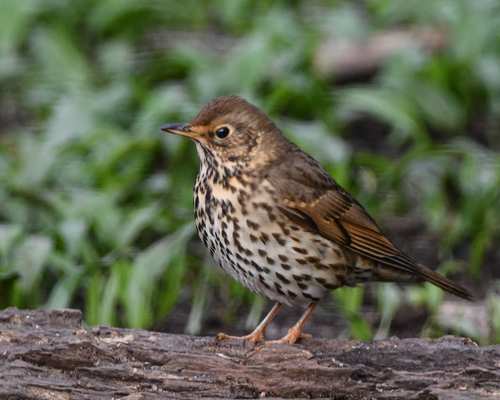 tordo-pinto
Em resumo
A marca de campo mais confiável entre o sabiazinho-de-óculos e o tordo-pinto é a cor da asa inferior em voo: o sabiazinho-de-óculos apresenta um padrão de asa inferior branco-escuro-branco, enquanto o tordo-pinto tem uma asa inferior amarelo quente. O sabiazinho-de-óculos é menor e mais esguio, com uma construção mais delicada e um anel ocular pálido distinto, enquanto o tordo-pinto é mais robusto, com um dorso marrom simples e manchas pretas ousadas e bem definidas em partes inferiores creme ou amarelo. Os tordos-pintos juvenis mostram listras amarelas ou laranja nas costas e coberturas das asas, que o sabiazinho-de-óculos não possui. A voz e o canto também são distintos, mas em campo, a cor da asa inferior e a estrutura geral são os pontos de separação mais rápidos.
Dicas de identificação
- Cor da asa inferior em voo: o sabiazinho-de-óculos apresenta um padrão de asa inferior branco-escuro-branco; o tordo-pinto tem uma asa inferior amarelo quente. Esta é uma das separações mais rápidas em campo se você ver o pássaro em voo (todas as idades).
- Partes superiores juvenis: os tordos-pintos juvenis têm listras amarelas ou laranja nas costas e coberturas das asas, ausentes no sabiazinho-de-óculos. Se você ver essas listras, é um tordo-pinto.
- Anel ocular: o sabiazinho-de-óculos tem um anel ocular pálido marrom proeminente, dando uma aparência de óculos. O tordo-pinto não possui esse recurso e tem um rosto mais simples.
- Manchas no peito: o tordo-pinto tem manchas pretas ousadas e bem definidas em partes inferiores creme ou amarelo, especialmente no peito e flancos. O sabiazinho-de-óculos tem manchas mais finas e menos contrastantes em um fundo mais claro e branco.
- Tom das partes superiores: o sabiazinho-de-óculos é marrom por cima, com aves do leste mais oliva e aves do oeste mais ruivas. O tordo-pinto é marrom simples, mas o tom pode ser mais frio em populações do leste.
- Cor do bico: o sabiazinho-de-óculos tem um bico mais curto e delicado; o bico do tordo-pinto é amarelado e mais robusto.
- Cor das pernas: ambos têm pernas rosas, então isso não é um separador confiável.
- Tamanho e estrutura: o tordo-pinto é maior, mais robusto e mais forte, com um corpo mais arredondado. O sabiazinho-de-óculos é mais esguio e leve.
- Canto: o sabiazinho-de-óculos canta uma canção etérea, em espiral ascendente, semelhante a uma flauta; o tordo-pinto repete frases musicais, muitas vezes com imitação e volume.
- Chamado: o tordo-pinto emite um 'tsip' ou 'chook-chook' agudo; o chamado do sabiazinho-de-óculos é menos distinto nessas notas.
- Habitat: o sabiazinho-de-óculos é encontrado em densas florestas da América do Norte; o tordo-pinto é comum em jardins, parques e bosques europeus.
- Contexto geográfico: na Europa, um tordo com um forte anel ocular é improvável de ser um tordo-pinto; na América do Norte, um tordo robusto com manchas ousadas é improvável de ser um sabiazinho.
- Comportamento empoleirado: o tordo-pinto frequentemente se empoleira em locais abertos; o sabiazinho-de-óculos é mais discreto e permanece mais baixo na cobertura.
- Estilo de voo: o tordo-pinto parece mais robusto e direto em voo; o sabiazinho-de-óculos é mais leve e mais flutuante.
- Armadilhas: Cuidado para não confundir tordos-pintos juvenis com outros tordos manchados; sempre verifique a presença ou ausência do anel ocular e a cor da asa inferior em voo.
Tamanho
O tordo-pinto é visivelmente maior e mais pesado, com uma massa corporal média de 72 g em comparação com 23–45 g do sabiazinho-de-óculos. O tordo-pinto mede 20–23,5 cm de comprimento, enquanto o sabiazinho-de-óculos mede 16–20 cm. Em campo, o tordo-pinto parece mais robusto e forte, enquanto o sabiazinho-de-óculos é mais esguio e delicado em geral.
Plumagem
- Pássaros juvenis/imaturos: os juvenis do tordo-pinto têm listras amarelas ou laranja nas costas e coberturas das asas, um recurso ausente no sabiazinho-de-óculos de qualquer idade. Os juvenis do sabiazinho-de-óculos se assemelham aos adultos em padrão geral, sem essas listras.
- Asa inferior (todas as idades): o sabiazinho-de-óculos apresenta um padrão de asa inferior branco-escuro-branco típico dos tordos do gênero Catharus. O tordo-pinto tem uma asa inferior amarelo quente, que é especialmente visível em voo.
- Partes superiores: o sabiazinho-de-óculos é marrom por cima, com aves do leste mais oliva-marrom e aves do oeste mais marrom avermelhado. O tordo-pinto é marrom simples por cima, mas o tom varia geograficamente (mais frio no leste de sua distribuição).
- Partes inferiores: o sabiazinho-de-óculos tem partes inferiores brancas com flancos marrons e um peito mais claro, finamente manchado. O tordo-pinto tem partes inferiores creme ou amarelo-buff com manchas pretas ousadas e bem definidas, especialmente no peito e flancos, tornando-se mais claras na barriga.
- Rosto: o sabiazinho-de-óculos tem um anel ocular pálido marrom distinto, dando uma aparência 'de óculos'. O tordo-pinto não possui um anel ocular forte.
- Bico e pernas: o sabiazinho-de-óculos tem pernas rosas e um bico mais curto e delicado. O tordo-pinto tem um bico amarelado e pernas/pés rosas.
Comportamento
Ambas as espécies forrageiam no chão e em vegetação baixa, mas o tordo-pinto é mais robusto e frequentemente visto em gramados ou jardins abertos, enquanto o sabiazinho-de-óculos prefere florestas densas e é mais discreto. Os tordos-pintos são mais propensos a serem vistos empoleirados em locais abertos ou cantando de telhados e árvores. O sabiazinho-de-óculos tende a ficar mais baixo e é menos conspícuo ao cantar.
Habitat
O sabiazinho-de-óculos é uma espécie da América do Norte, tipicamente encontrada em florestas densas, especialmente durante a migração e reprodução. O tordo-pinto é nativo do Paleártico Ocidental e é comum em uma variedade mais ampla de habitats, incluindo jardins, parques, bosques e cercas-vivas. Se visto na Europa, um tordo é improvável de ser um sabiazinho-de-óculos; na América do Norte, o tordo-pinto seria uma grande raridade.
Voz
O sabiazinho-de-óculos tem uma série apressada de tons semelhantes a flauta que espiralizam para cima, frequentemente descritos como etéreos e ascendentes. O tordo-pinto entrega uma canção alta e clara de frases musicais repetidas, às vezes imitando outras espécies ou até sons feitos pelo homem. Os tordos-pintos estão entre os mais barulhentos para seu tamanho, enquanto o sabiazinho-de-óculos é mais musical e menos repetitivo. Seus chamados também diferem: o tordo-pinto emite um 'tsip' ou 'chook-chook' agudo, enquanto o chamado do sabiazinho-de-óculos é menos bem descrito aqui.