

striated fieldwren vs orange-bellied flowerpecker
Calamanthus fuliginosus versus Dicaeum trigonostigma
Jogue um quiz com striated fieldwren e orange-bellied flowerpecker
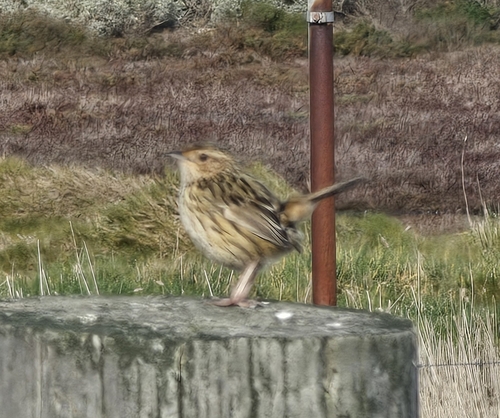 striated fieldwren
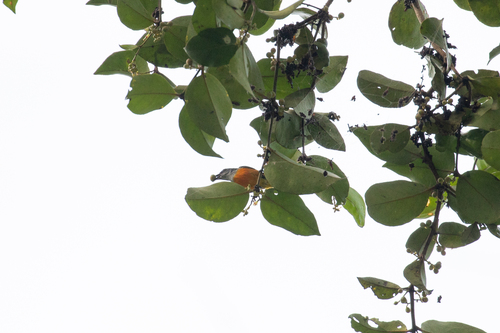 orange-bellied flowerpecker
Em resumo
A marca de campo mais confiável entre o striated fieldwren e o orange-bellied flowerpecker é a plumagem geral: o fieldwren apresenta listras pesadas e uma cauda levantada e listrada, enquanto o macho do flowerpecker é colorido de forma ousada, com partes superiores azul-ardósia e uma barriga laranja ardente, e a fêmea do flowerpecker é de um tom oliva-marrom simples com uma barriga amarela. Padrões de asas juvenis ou imaturos não são descritos para nenhuma das espécies, então concentre-se na coloração do corpo e da cabeça, na forma da cauda e na estrutura do bico. Os fieldwrens são terrestres, muitas vezes se escondendo em vegetação densa, enquanto os flowerpeckers são ativos na copa ou em níveis intermediários. O flowerpecker é muito menor e mais compacto, com um bico curto e ligeiramente curvado para baixo, em comparação com a aparência mais longa e esbelta do fieldwren e seu bico reto.
Dicas de identificação
- Listras: O striated fieldwren de todas as idades apresenta listras pretas e marrons ousadas no corpo, especialmente nas partes inferiores e na cauda; o orange-bellied flowerpecker nunca é listrado, independentemente da idade ou sexo.
- Forma da cauda e comportamento: O fieldwren tem uma cauda longa e levantada, frequentemente balançando de lado a lado, com listras; o flowerpecker tem uma cauda curta e reta, nunca levantada ou listrada.
- Estrutura do bico: O fieldwren tem um bico reto e esbelto; o bico do flowerpecker é curto, robusto e ligeiramente curvado para baixo na ponta—especialmente notável quando visto de perfil.
- Coloração do macho do flowerpecker: O macho do flowerpecker é azul-ardósia acima, com uma grande mancha laranja no manto e uma barriga que vai do laranja ardente ao amarelo—nenhum fieldwren australiano apresenta essa combinação de cores.
- Coloração da fêmea do flowerpecker: A fêmea do flowerpecker é de um tom oliva-marrom simples, com uma barriga amarela e um rabo laranja pálido, sem listras ou marcas faciais fortes; o fieldwren é sempre listrado e nunca tão simples.
- Supercílio: O fieldwren tem uma linha branca distinta sobre o olho (supercílio); o flowerpecker não possui nenhuma marca facial desse tipo.
- Habitat e altura de forrageio: O fieldwren está sempre no chão ou perto dele em cobertura densa; o flowerpecker está em árvores e arbustos, geralmente acima do nível dos olhos.
- Voo e movimento: O fieldwren se levanta baixo e cai rapidamente na cobertura; o flowerpecker se move rapidamente e diretamente entre os poleiros na copa.
- Impressão de tamanho: O fieldwren é maior e mais longo; o flowerpecker é minúsculo e compacto, mesmo em comparação com outros pássaros pequenos.
- Canto: O canto alto e zumbidor do fieldwren, 'whit whit chee...', é distintivo em seu habitat; os chamados do flowerpecker não são descritos, então não confie na voz para separação, a menos que o fieldwren esteja cantando.
- Distribuição: O fieldwren é encontrado apenas na Austrália; o flowerpecker nunca é encontrado na Austrália, mas em toda a Ásia do Sul e Sudeste—apenas a localização pode ser diagnóstica.
- Visibilidade sazonal: O fieldwren pode ser mais visível e vocal na primavera, quando canta do topo dos arbustos; o flowerpecker é ativo durante todo o ano em sua área, frequentemente visto se alimentando em flores ou frutas.
- Diferenças sexuais: Apenas o macho do flowerpecker é colorido de forma brilhante; a fêmea é apagada, mas ainda assim não apresenta listras. Os sexos do fieldwren são semelhantes, ambos listrados.
- Armadilhas de plumagem: Uma fêmea apagada do flowerpecker pode ser confundida com um fieldwren sem listras, mas a ausência de listras e a barriga amarela são fundamentais; o fieldwren nunca apresenta uma barriga amarela ou partes superiores oliva-marrom simples.
- Confusão juvenil: Nenhum padrão específico de asas juvenis ou imaturos é descrito para nenhuma das espécies, então confie nas marcas acima para todas as idades.
Tamanho
O orange-bellied flowerpecker é substancialmente menor, com uma massa corporal de cerca de 7 gramas [wikidata], enquanto o striated fieldwren é maior, com cerca de 140 mm de comprimento [wikipedia] (sem massa dada, mas claramente mais pesado e longo). O flowerpecker é compacto e robusto, enquanto o fieldwren é mais longo, com um corpo e cauda mais alongados. No campo, o flowerpecker parecerá minúsculo e rápido, enquanto o fieldwren é visivelmente maior e mais alongado.
Plumagem
Nenhuma diferença específica de padrão de asa ou de voo relacionada à idade é descrita para nenhuma das espécies. Para todas as idades, o striated fieldwren é marrom claro e oliva acima, com listras pretas ousadas no corpo e na cauda, uma barriga branca e uma parte frontal listrada e amarelada. Suas asas são marrons e cinzas com listras ousadas, mas as penas de voo têm bordas finas e pálidas, não listras. Um supercílio (sobrancelha) esbranquiçado está presente. O macho do orange-bellied flowerpecker é inconfundível: azul-ardósia acima (coroa, nuca, asas, cauda), grande mancha laranja no manto e um gradiente de laranja ardente (peito inferior) a amarelo (ventre) abaixo. A fêmea do flowerpecker é muito mais simples: oliva-marrom apagado no geral, com um rabo laranja pálido e barriga amarela, sem as listras do fieldwren. Ambos os sexos do flowerpecker não apresentam listras ou marcas faciais ousadas. Em resumo, o fieldwren é listrado e em tons terrosos; o flowerpecker é ou strikingly blue-orange (macho) ou plain olive/yellow (fêmea), nunca listrado.
Comportamento
O striated fieldwren é tipicamente secreto, forrageando silenciosamente no chão ou perto dele em vegetação densa, muitas vezes com a cauda levantada e balançando de lado a lado. Ao cantar, pode pousar, mas ainda permanece baixo. Se for assustado, voa uma curta distância e volta rapidamente para a cobertura. O orange-bellied flowerpecker é muito mais ativo e visível, movendo-se rapidamente através de arbustos e árvores, muitas vezes na copa média a alta, e raramente no chão. Sua alimentação é energética, saltando entre flores e frutas, e não levanta a cauda. O comportamento do flowerpecker é compacto e agitado, enquanto o fieldwren é alongado e mais furtivo.
Habitat
O striated fieldwren é endêmico da Austrália e é encontrado em vegetação densa no chão, muitas vezes em áreas de heathland, pastagens ou arbustos costeiros. É um especialista em solo. O orange-bellied flowerpecker é encontrado em uma ampla gama na Ásia do Sul e Sudeste (Bangladesh, Brunei, Indonésia, Malásia, Mianmar, Filipinas, Cingapura, Tailândia), e ocupa bordas de florestas, jardins e crescimento secundário, geralmente em árvores e arbustos bem acima do chão. Seus habitats não se sobrepõem, e seus microhabitats típicos são muito diferentes: fieldwren no chão em cobertura densa, flowerpecker na copa ou no meio da floresta.
Voz
O striated fieldwren tem um canto alto e zumbidor descrito como 'whit whit chee whit whit pee chew', frequentemente emitido do topo de um arbusto na primavera e no inverno. Seu canto é forte e se propaga, mas é variável. As vocalizações do orange-bellied flowerpecker não são descritas nas notas fornecidas, então não podem ser contrastadas de forma confiável aqui.
striated fieldwren · orange-bellied flowerpecker · Minhas aves difíceis