

Striated Fieldwren vs Orange-bellied Flowerpecker
Calamanthus fuliginosus contro Dicaeum trigonostigma
Fai un quiz con Striated Fieldwren e Orange-bellied Flowerpecker
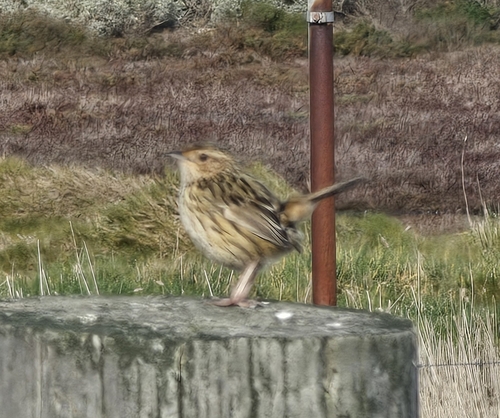 Striated Fieldwren
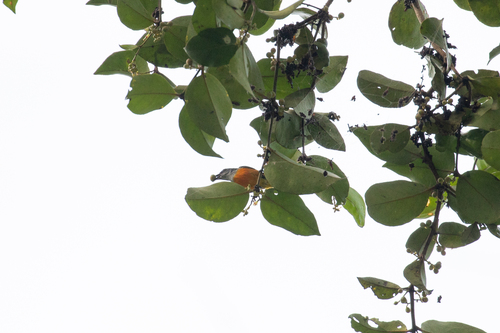 Orange-bellied Flowerpecker
In breve
Il segno di campo più affidabile tra Striated Fieldwren e Orange-bellied Flowerpecker è il piumaggio complessivo: il fieldwren mostra forti striature e una coda sollevata e striata, mentre il maschio del flowerpecker è colorato in modo audace con parti superiori blu-ardesia e un ventre arancione infuocato, e la femmina del flowerpecker è di un semplice oliva-marrone con un ventre giallo. I modelli di ali giovanili o immaturi non sono descritti per nessuna delle due specie, quindi concentrati sulla colorazione del corpo e della testa, sulla forma della coda e sulla struttura del becco. I fieldwren vivono a terra, spesso nascondendosi in vegetazione densa, mentre i flowerpecker sono attivi nella chioma o a livelli intermedi. Il flowerpecker è molto più piccolo e compatto, con un becco corto e leggermente ricurvo, rispetto all'aspetto più lungo e slanciato del fieldwren e al suo becco dritto.
Consigli di identificazione
- Striature: Il Striated Fieldwren di tutte le età mostra forti striature nere e marroni sul corpo, specialmente sulle parti inferiori e sulla coda; l'Orange-bellied Flowerpecker non è mai striato, indipendentemente dall'età o dal sesso.
- Forma della coda e comportamento: Il fieldwren ha una coda lunga e sollevata spesso scossa da un lato all'altro, con striature; il flowerpecker ha una coda corta e dritta, mai sollevata o striata.
- Struttura del becco: Il fieldwren ha un becco dritto e snello; il becco del flowerpecker è corto, tozzo e leggermente ricurvo all'estremità—particolarmente evidente quando visto di profilo.
- Colorazione del maschio flowerpecker: Il maschio del flowerpecker è blu-ardesia sopra con una grande macchia arancione sul mantello e un ventre che va dall'arancione infuocato al giallo—nessun fieldwren australiano mostra questa combinazione di colori.
- Colorazione della femmina flowerpecker: La femmina del flowerpecker è di un semplice oliva-marrone con un ventre giallo e un sottocoda arancione chiaro, priva di striature o forti marcature facciali; il fieldwren è sempre striato e mai così semplice.
- Supercilium: Il fieldwren ha una linea biancastra distintiva sopra l'occhio (supercilium); il flowerpecker non ha alcuna marcatura facciale di questo tipo.
- Habitat e altezza di foraggiamento: Il fieldwren è sempre a terra o vicino al suolo in copertura densa; il flowerpecker si trova in alberi e arbusti, solitamente sopra il livello degli occhi.
- Volo e movimento: Il fieldwren si alza basso e scende rapidamente nella copertura; il flowerpecker si muove rapidamente e direttamente tra i posatoi nella chioma.
- Impressione di dimensione: Il fieldwren è più grande e lungo; il flowerpecker è minuscolo e compatto, anche rispetto ad altri uccelli piccoli.
- Canto: Il canto forte e frusciante del fieldwren 'whit whit chee...' è distintivo nel suo habitat; i richiami del flowerpecker non sono descritti, quindi non fare affidamento sulla voce per la separazione a meno che il fieldwren non stia cantando.
- Distribuzione: Il fieldwren si trova solo in Australia; il flowerpecker non si trova mai in Australia, ma in tutta l'Asia meridionale e sudorientale—la posizione da sola può essere diagnostica.
- Visibilità stagionale: Il fieldwren può essere più visibile e vocale in primavera quando canta dalle cime dei cespugli; il flowerpecker è attivo tutto l'anno nel suo areale, spesso visto mentre si nutre di fiori o frutta.
- Differenze sessuali: Solo il maschio del flowerpecker è colorato in modo vivace; la femmina è opaca ma ancora priva di striature. I sessi del fieldwren sono simili, entrambi striati.
- Trappole del piumaggio: Una femmina del flowerpecker opaca potrebbe essere scambiata per un fieldwren senza striature, ma l'assenza di striature e il ventre giallo sono fondamentali; il fieldwren non mostra mai un ventre giallo o parti superiori di un semplice oliva-marrone.
- Confusione giovanile: Non sono descritti modelli specifici di ali giovanili o immaturi per nessuna delle due specie, quindi fai affidamento sui segni sopra per tutte le età.
Taglia
L'Orange-bellied Flowerpecker è sostanzialmente più piccolo, con una massa corporea di circa 7 grammi [wikidata], mentre il Striated Fieldwren è più grande con una lunghezza di circa 140 mm [wikipedia] (nessuna massa fornita, ma chiaramente più pesante e lungo). Il flowerpecker è compatto e tozzo, mentre il fieldwren è più lungo, con un corpo e una coda più allungati. Sul campo, il flowerpecker apparirà minuscolo e veloce, mentre il fieldwren è visibilmente più grande e più allungato.
Piumaggio
Non sono descritte differenze specifiche di piumaggio o modelli di volo per età per nessuna delle due specie. Per tutte le età, il Striated Fieldwren è marrone chiaro e oliva sopra, con forti striature nere sul corpo e sulla coda, un ventre bianco e un fronte color sabbia striato. Le sue ali sono marroni e grigie con forti striature, ma le piume di volo hanno bordi pallidi fini, non striature. È presente un supercilium biancastro (sopracciglio). Il maschio dell'Orange-bellied Flowerpecker è inconfondibile: blu-ardesia sopra (cima, nuca, ali, coda), grande macchia arancione sul mantello, e un gradiente dall'arancione infuocato (petto inferiore) al giallo (ventre) sotto. La femmina del flowerpecker è molto più semplice: di un oliva-marrone opaco, con un sottocoda arancione chiaro e un ventre giallo, priva delle striature del fieldwren. Entrambi i sessi del flowerpecker non mostrano alcuna striatura o marcature facciali audaci. In sintesi, il fieldwren è striato e di tonalità terrose; il flowerpecker è o di un blu-arancione sorprendente (maschio) o di un semplice oliva/giallo (femmina), mai striato.
Comportamento
Il Striated Fieldwren è tipicamente riservato, foraggiando silenziosamente a terra o vicino al suolo in vegetazione densa, spesso con la coda sollevata e scossa da un lato all'altro. Quando canta, può posarsi in alto ma rimane comunque basso. Se disturbato, vola per una breve distanza e torna nella copertura. L'Orange-bellied Flowerpecker è molto più attivo e visibile, muovendosi rapidamente tra cespugli e alberi, spesso nella chioma medio-alta, e raramente a terra. Il suo foraggiamento è energico, scattando tra fiori e frutta, e non solleva la coda. Il modo di muoversi del flowerpecker è compatto e frenetico, mentre il fieldwren è allungato e più furtivo.
Habitat
Il Striated Fieldwren è endemico dell'Australia e si trova in vegetazione terrestre fitta, spesso in brughiera, prateria o macchia costiera. È uno specialista del suolo. L'Orange-bellied Flowerpecker si trova in un'ampia gamma nell'Asia meridionale e sudorientale (Bangladesh, Brunei, Indonesia, Malesia, Myanmar, Filippine, Singapore, Thailandia), e occupa i margini delle foreste, giardini e crescita secondaria, solitamente in alberi e arbusti ben sopra il suolo. I loro areali non si sovrappongono e i loro microhabitat tipici sono molto diversi: il fieldwren a terra in copertura densa, il flowerpecker nella chioma o nel sottobosco.
Voce
Il Striated Fieldwren ha un canto forte e frusciante descritto come 'whit whit chee whit whit pee chew,' spesso emesso da una cima di cespuglio in primavera e inverno. Il suo canto è forte e si diffonde, ma è variabile. Le vocalizzazioni dell'Orange-bellied Flowerpecker non sono descritte nelle note fornite, quindi non possono essere confrontate in modo affidabile qui.
Striated Fieldwren · Orange-bellied Flowerpecker · I miei uccelli difficili