

spoon-billed sandpiper vs gray-crowned yellowthroat
Calidris pygmaea versus Geothlypis poliocephala
Jogue um quiz com spoon-billed sandpiper e gray-crowned yellowthroat
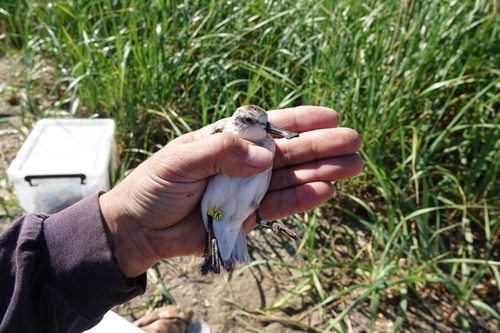 spoon-billed sandpiper
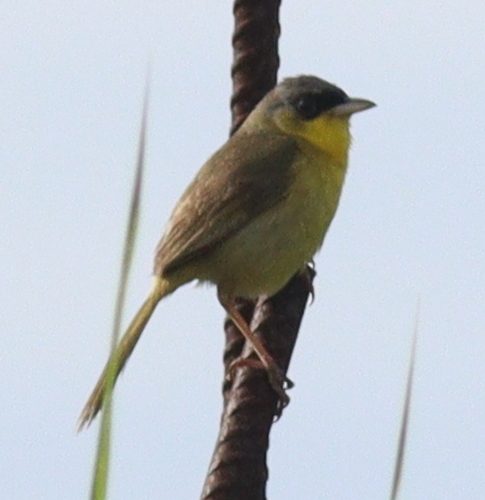 gray-crowned yellowthroat
Em resumo
A maneira mais confiável de separar o spoon-billed sandpiper do gray-crowned yellowthroat é pela forma do bico: o bico do sandpiper é exclusivamente espatulato na ponta, enquanto o yellowthroat tem um bico robusto e ligeiramente curvado, típico de um papa-moscas. Em voo ou em repouso, o spoon-billed sandpiper é uma ave costeira compacta e de pernas curtas, com pernas pretas e uma barriga branca, enquanto o gray-crowned yellowthroat é um pássaro cantor de cauda mais longa e barriga amarela, com tons de oliva e cinza. Ambos são semelhantes em comprimento, mas sua estrutura, habitat e comportamento são completamente diferentes. Se você ver uma ave sondando as planícies lamacentas com um bico em forma de colher, é o sandpiper; se você ver uma ave voando em campos ou arbustos com uma garganta amarela forte e uma cabeça de chapéu escuro, é o yellowthroat.
Dicas de identificação
- A forma do bico é diagnóstica: O spoon-billed sandpiper tem um bico largo, plano e em forma de colher em todas as idades e estações; o gray-crowned yellowthroat tem um bico robusto, ligeiramente curvado e pontudo. Se você ver um bico espatulato, é sempre o sandpiper.
- Cor e comprimento das pernas: O spoon-billed sandpiper tem pernas curtas e pretas; o gray-crowned yellowthroat tem pernas marrons escuras que são proporcionalmente mais longas em relação ao tamanho do corpo, mas não tão óbvias quanto as do sandpiper.
- Forma e comprimento da cauda: O sandpiper tem uma cauda curta e reta; o yellowthroat tem uma cauda longa e graduada, frequentemente levantada ou balançada.
- Estrutura do corpo: O spoon-billed sandpiper é compacto e agachado, típico de pequenas aves costeiras; o gray-crowned yellowthroat é mais alongado, ereto e pousa na vegetação.
- Plumagem (adulto em reprodução): O spoon-billed sandpiper tem uma cabeça e peito marrom-avermelhados com listras escuras, partes superiores escuras com bordas ruivas/bege, e partes inferiores brancas; os machos do gray-crowned yellowthroat têm uma coroa cinza, lore preto, semicírculos brancos ao redor dos olhos, partes superiores cinza-oliva e partes inferiores amarelas.
- Plumagem (adulto não em reprodução): O spoon-billed sandpiper torna-se cinza-marrom pálido acima com bordas esbranquiçadas, mas sempre tem uma barriga branca e o bico espatulato; o yellowthroat permanece amarelo embaixo e oliva/cinza acima.
- Padrão facial: O spoon-billed sandpiper tem um rosto liso com listras escuras; os machos do gray-crowned yellowthroat têm uma coroa cinza contrastante, lore preto e semicírculos brancos ao redor dos olhos, nunca vistos em sandpipers.
- Separação de juvenil/imaturo: Nenhum padrão detalhado de asa superior é descrito para ambos, mas o bico do sandpiper permanece diagnóstico em todas as idades.
- Habitat: O sandpiper está sempre em planícies lamacentas, estuários ou áreas de maré; o yellowthroat está em campos, pântanos ou campos arbustivos, nunca em lama aberta.
- Comportamento: O sandpiper sonda a lama com um movimento de varredura; o yellowthroat se move pela vegetação, pousando e balançando sua cauda.
- Voo: O voo do sandpiper é direto e baixo sobre a água ou lama; o voo do yellowthroat é curto, saltitante e geralmente entre a vegetação.
- Voz: O sandpiper emite chamadas simples e silenciosas e um trinado zumbidor em exibição; o yellowthroat provavelmente canta uma canção de papa-moscas mais complexa (não descrita aqui).
- Dimorfismo sexual: Os machos do yellowthroat têm padrões faciais marcantes; as fêmeas são mais apagadas, mas ainda mostram partes inferiores amarelas e partes superiores oliva/cinza. O sandpiper apresenta pouco dimorfismo sexual.
- Contexto sazonal: Se estiver no Sudeste Asiático em uma planície de maré no inverno, procure o spoon-billed sandpiper; se estiver na América Central em campo ou pântano, espere encontrar o gray-crowned yellowthroat.
- Erros comuns: Não confunda as partes inferiores amarelas do yellowthroat com a barriga branca do sandpiper; não ignore o bico único do sandpiper, que nunca é igualado por qualquer papa-moscas.
Tamanho
Ambas as espécies têm cerca de 14–16 cm de comprimento ([wikipedia]), mas o spoon-billed sandpiper é um limícola pequeno e compacto com uma cauda curta e pernas pretas, enquanto o gray-crowned yellowthroat é um papa-moscas de corpo ligeiramente mais pesado e cauda mais longa (13–16 g) com pernas marrons escuras e uma postura mais ereta. As proporções do sandpiper são típicas de uma pequena ave costeira, enquanto o yellowthroat é mais alongado e pousa ereto.
Plumagem
Nenhum padrão específico de asa superior é descrito para ambas as espécies, portanto, a separação depende da plumagem do corpo e da cabeça. O spoon-billed sandpiper (adulto em reprodução) apresenta uma cabeça, pescoço e peito marrom-avermelhados com listras escuras, partes superiores escuras com bordas bege e ruivas, e uma barriga branca; os adultos não em reprodução são cinza-marrom pálido acima com bordas esbranquiçadas, sempre com partes inferiores brancas. A característica mais distintiva em todas as idades é a ponta do bico larga e plana. Os machos do gray-crowned yellowthroat têm uma cabeça cinza-oliva com uma coroa cinza, lore preto e semicírculos brancos ao redor dos olhos, com garganta, peito e coberturas da cauda inferiores amarelas, e partes superiores cinza-oliva-marrom. As fêmeas são mais apagadas, com lores cinza e menos contraste. Ambos os sexos têm partes inferiores amarelas e partes superiores oliva/cinza, sem qualquer parte superior ruiva ou escura. O padrão facial do yellowthroat (coroa cinza, lores pretos, semicírculos brancos) é único entre os papa-moscas, mas nunca se assemelha ao rosto liso de um sandpiper. As plumagens juvenis/imaturas não são descritas em detalhes para ambas as espécies, mas o bico espatulato do sandpiper está presente em todas as idades.
Comportamento
O spoon-billed sandpiper é tipicamente visto forrageando em planícies lamacentas costeiras, sondando com seu bico único, frequentemente em pequenos grupos ou sozinho, e mostra um movimento de alimentação rápido e agachado. Em voo, é compacto e direto. O gray-crowned yellowthroat é um pássaro cantor terrestre, geralmente encontrado em pares ou pequenos grupos em campos, bordas de pântano ou campos arbustivos, movendo-se pela vegetação com voos curtos e pousos frequentes. Ele não sonda lama nem se molha.
Habitat
O spoon-billed sandpiper é estritamente um especialista em planícies lamacentas costeiras e estuários, reproduzindo-se na tundra ártica perto do Mar de Bering e invernando em planícies de maré do Sudeste Asiático. O gray-crowned yellowthroat é um papa-moscas terrestre de campos, pântanos e áreas arbustivas do México ao Panamá, nunca encontrado em planícies lamacentas abertas ou praias. Se você estiver em um pântano ou campo gramado longe de planícies de maré, é muito mais provável que veja um yellowthroat.
Voz
O spoon-billed sandpiper emite chamadas silenciosas de 'preep' ou agudas de 'wheer', e a canção de exibição do macho é um trinado zumbidor e descendente ('preer-prr-prr'). As vocalizações do gray-crowned yellowthroat não são descritas aqui, mas como um papa-moscas, é provável que seja mais musical e variado do que as chamadas simples do sandpiper. Se você ouvir um trinado zumbidor de uma ave em voo sobre planícies lamacentas, considere o spoon-billed sandpiper.
spoon-billed sandpiper · gray-crowned yellowthroat · Minhas aves difíceis