

Correlimos Cuchareta vs Mascarita Coronigrís
Calidris pygmaea frente a Geothlypis poliocephala
Juega un quiz con Correlimos Cuchareta y Mascarita Coronigrís
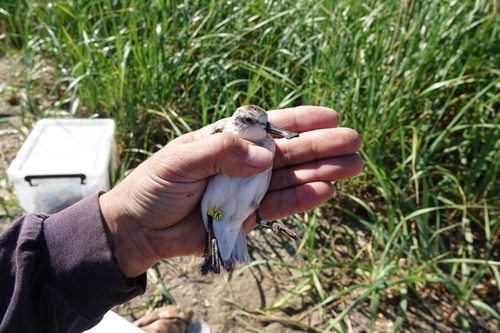 Correlimos Cuchareta
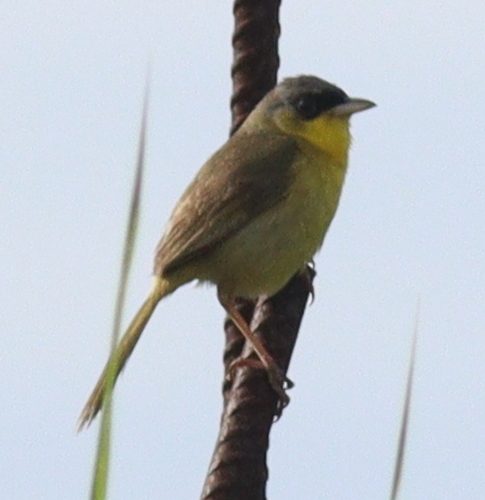 Mascarita Coronigrís
En breve
La forma más confiable de separar el Correlimos Cuchareta de la Mascarita Coronigrís es por la forma del pico: el pico del correlimos es exclusivamente espatulado en la punta, mientras que la mascarita tiene un pico robusto y ligeramente curvado típico de los cantores. En vuelo o en reposo, el Correlimos Cuchareta es un ave costera compacta y de patas cortas con patas negras y un vientre blanco, mientras que la Mascarita Coronigrís es un ave cantora de cola más larga y vientre amarillo con tonos oliváceos y grises. Ambas son similares en longitud, pero su estructura, hábitat y comportamiento son completamente diferentes. Si ves un ave sondeando llanuras de barro con un pico en forma de cuchara, es el correlimos; si ves un ave revoloteando en praderas o arbustos con una garganta amarilla intensa y una cabeza con una corona oscura, es la mascarita.
Consejos de identificación
- La forma del pico es diagnóstica: el Correlimos Cuchareta tiene un pico amplio, plano y en forma de cuchara en todas las edades y estaciones; la Mascarita Coronigrís tiene un pico robusto, ligeramente curvado y puntiagudo típico de los cantores. Si ves un pico espatulado, siempre es el correlimos.
- Color y longitud de las patas: el Correlimos Cuchareta tiene patas cortas y negras; la Mascarita Coronigrís tiene patas de color marrón oscuro que son proporcionalmente más largas en relación al tamaño del cuerpo, pero no tan evidentes como las del correlimos.
- Forma y longitud de la cola: el correlimos tiene una cola corta y recta; la mascarita tiene una cola larga y graduada que a menudo se levanta o se agita.
- Estructura del cuerpo: el Correlimos Cuchareta es compacto y encorvado, típico de las aves costeras pequeñas; la Mascarita Coronigrís es más alargada, erguida y se posa en la vegetación.
- Plumaje (adulto en época de cría): el Correlimos Cuchareta tiene una cabeza y pecho de color marrón rojizo con rayas oscuras, partes superiores negruzcas con bordes rufos/amarillos, y partes inferiores blancas; los machos de la Mascarita Coronigrís tienen una corona gris, lóbulos negros, medias lunas blancas en los ojos, partes superiores de color gris oliváceo y partes inferiores amarillas.
- Plumaje (adulto fuera de época de cría): el Correlimos Cuchareta se vuelve de un gris marrón pálido por encima con bordes blanquecinos, pero siempre tiene un vientre blanco y el pico espatulado; la mascarita permanece amarilla por debajo y olivácea/gris por encima.
- Patrón facial: el Correlimos Cuchareta tiene una cara simple con rayas oscuras; los machos de la Mascarita Coronigrís tienen una corona gris contrastante, lóbulos negros y medias lunas blancas en los ojos, que nunca se ven en los correlimos.
- Separación de juveniles/inmaduros: no se describe un patrón detallado en la parte superior del ala para ninguno de los dos, pero el pico del correlimos sigue siendo diagnóstico en todas las edades.
- Hábitat: el correlimos siempre está en llanuras de barro, estuarios o áreas intermareales; la mascarita se encuentra en praderas, pantanos o campos arbustivos, nunca en barro abierto.
- Comportamiento: el correlimos sondea el barro con un movimiento de barrido; la mascarita se mueve a través de la vegetación, posándose y agitando su cola.
- Vuelo: el vuelo del correlimos es directo y bajo sobre el agua o el barro; el vuelo de la mascarita es corto, saltarín y generalmente entre la vegetación.
- Voz: el correlimos emite llamados simples y silenciosos y un trino zumbante en la exhibición; la mascarita probablemente canta una canción de cantor más compleja (no descrita aquí).
- Dimorfismo sexual: los machos de la mascarita tienen patrones faciales audaces; las hembras son más apagadas pero aún muestran partes inferiores amarillas y partes superiores oliváceas/grises. El correlimos muestra poco dimorfismo sexual.
- Contexto estacional: si estás en el sudeste asiático en una llanura intermareal en invierno, busca el Correlimos Cuchareta; si estás en América Central en pradera o pantano, espera ver la Mascarita Coronigrís.
- Errores comunes: no confundas las partes inferiores amarillas de la mascarita con el vientre blanco de un correlimos; no pases por alto el pico único del correlimos, que nunca es igualado por ningún cantor.
Tamaño
Ambas especies miden aproximadamente 14–16 cm de largo ([wikipedia]), pero el Correlimos Cuchareta es un zancudo pequeño y compacto con una cola corta y patas negras, mientras que la Mascarita Coronigrís es un cantor de cuerpo ligeramente más pesado y cola más larga (13–16 g) con patas de color marrón oscuro y una postura más erguida. Las proporciones del correlimos son típicas de un ave costera pequeña, mientras que la mascarita es más alargada y se posa erguida.
Plumaje
No se describe un patrón específico de la parte superior del ala para ninguna de las especies, por lo que la separación se basa en el plumaje del cuerpo y la cabeza. El Correlimos Cuchareta (adulto en época de cría) muestra una cabeza, cuello y pecho de color marrón rojizo con rayas oscuras, partes superiores negruzcas con bordes amarillos y rufos, y un vientre blanco; los adultos fuera de época de cría son de un gris marrón pálido por encima con bordes blanquecinos, siempre con partes inferiores blancas. La característica más distintiva en todas las edades es la punta del pico ancha y plana. Los machos de la Mascarita Coronigrís tienen una cabeza gris olivácea con una corona gris, lóbulos negros y medias lunas blancas en los ojos, con garganta, pecho y cobertores de la cola amarillos, y partes superiores de color gris oliváceo-marrón. Las hembras son más apagadas, con lóbulos grisáceos y menos contraste. Ambos sexos tienen partes inferiores amarillas y partes superiores oliváceas/grises, careciendo de cualquier parte superior rufa o negruzca. El patrón facial de la mascarita (corona gris, lóbulos negros, medias lunas blancas) es único entre los cantores, pero nunca se asemeja a la cara simple de un correlimos. Los plumajes de juveniles/inmaduros no se describen en detalle para ninguna de las especies, pero el pico espatulado del correlimos está presente en todas las edades.
Comportamiento
El Correlimos Cuchareta se ve típicamente forrajeando en llanuras de barro costeras, sondeando con su pico único, a menudo en pequeños grupos o solo, y muestra un movimiento de alimentación rápido y encorvado. En vuelo, es compacto y directo. La Mascarita Coronigrís es un ave cantora terrestre, que generalmente se encuentra en parejas o pequeños grupos en praderas, bordes de pantanos o campos arbustivos, moviéndose a través de la vegetación con vuelos cortos y posándose con frecuencia. No sondea el barro ni se zambulle.
Hábitat
El Correlimos Cuchareta es estrictamente un especialista en llanuras de barro costeras y estuarios, criando en la tundra ártica cerca del mar de Bering y invernando en llanuras intermareales del sudeste asiático. La Mascarita Coronigrís es un cantor terrestre de praderas, pantanos y áreas arbustivas desde México hasta Panamá, nunca se encuentra en llanuras de barro abiertas o playas. Si estás en un humedal o campo de hierba lejos de llanuras intermareales, es mucho más probable que veas una mascarita.
Voz
El Correlimos Cuchareta emite llamados silenciosos de 'preep' o agudos de 'wheer', y la canción de exhibición del macho es un trino zumbante y descendente ('preer-prr-prr'). Las vocalizaciones de la Mascarita Coronigrís no se describen aquí, pero como un cantor, es probable que sea más musical y variada que los simples llamados del correlimos. Si escuchas un trino zumbante de un ave en vuelo sobre llanuras de barro, considera el Correlimos Cuchareta.
Correlimos Cuchareta · Mascarita Coronigrís · Mis aves difíciles