

southern tchagra vs southern boubou
Tchagra tchagra versus Laniarius ferrugineus
Jogue um quiz com southern tchagra e southern boubou
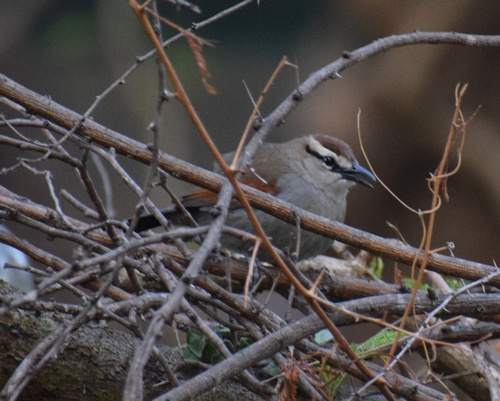 southern tchagra
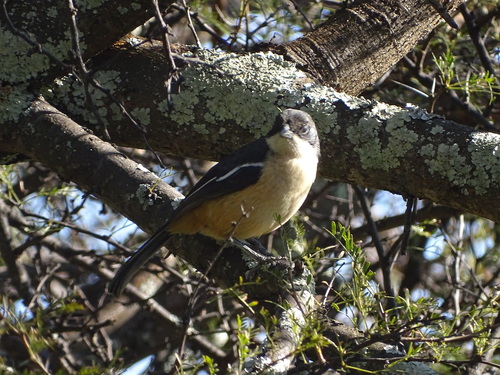 southern boubou
Em resumo
A marca de campo mais confiável para separar o southern tchagra do southern boubou é o padrão da cabeça: o southern tchagra apresenta uma coroa marrom com um supercílios branco ousado e uma faixa ocular preta, enquanto o southern boubou tem uma cabeça uniformemente escura (preta ou cinza escuro) sem um supercílios forte. Em voo ou empoleirado, a faixa branca da asa e os flancos ruivos do southern boubou são distintos, enquanto o southern tchagra tem asas castanhas e partes inferiores claras. Os juvenis podem ser confusos, mas a faixa ocular clara do tchagra e os tons mais apagados contrastam com o padrão riscado e manchado do boubou. A estrutura e o tamanho também ajudam: o southern boubou é mais pesado, mais robusto e tem um bico mais robusto. Ambas as espécies preferem cobertura densa, mas seu comportamento e vocalizações diferem, com o boubou sendo mais tímido e mais furtivo.
Dicas de identificação
- Padrão da cabeça (todas as idades): O southern tchagra tem uma coroa marrom, supercílios branco ousado e faixa ocular preta—esta é a maneira mais rápida de separá-lo do southern boubou, que tem uma cabeça uniformemente escura (preta ou cinza escuro) e sem supercílios forte.
- Cor da coroa (adultos): A coroa do tchagra é marrom (exceto em algumas subespécies com marrom avermelhado), enquanto a cabeça e as costas do boubou são pretas (macho) ou cinza escuro (fêmea).
- Supercílios (todas as idades): O tchagra sempre mostra um supercílios branco amplo; o boubou não possui essa característica.
- Padrão das asas (adultos): O southern boubou tem uma faixa branca ousada na asa, visível quando empoleirado ou em voo; as asas dobradas do tchagra são castanhas sem faixa branca.
- Padrão da cauda (adultos): Ambos têm caudas pretas com branco, mas a cauda do boubou é mais longa e tem penas externas brancas, enquanto a cauda do tchagra é com ponta branca.
- Partes inferiores (adultos): O tchagra é cinza claro embaixo; o boubou é branco embaixo, com sombreamento ruivo na parte inferior do ventre, flancos e subcauda (especialmente em machos e fêmeas, menos em juvenis).
- Marcas de juvenil/imaturo: O jovem boubou é manchado de marrom claro em cima, com uma barra de asa clara e forte risca embaixo—nunca mostrada pelo tchagra. O juvenil tchagra é mais apagado que o adulto, com uma faixa ocular clara, mas nunca riscado ou manchado embaixo.
- Estrutura do bico: O bico do boubou é mais robusto e pesado; o do tchagra é alongado e preto, mas mais fino.
- Tamanho e bulk: O boubou é mais pesado e robusto (~58 g vs ~47 g), com uma cauda mais longa e aparência mais robusta. Isso é sutil, a menos que ambos sejam vistos juntos.
- Comportamento: O boubou é tímido, furtivo, e forrageia baixo em vegetação densa; o tchagra é mais propenso a empoleirar-se em áreas abertas, especialmente ao cantar ou exibir.
- Canto: O canto do tchagra é um assobio descendente, frequentemente de um poleiro ou em voo de exibição; o dueto do boubou é mais complexo, líquido e variável, com frases ooo-whee-ooo.
- Diferenças sexuais: As fêmeas do boubou são cinza escuro em cima com um tom ruivo no peito; os sexos do tchagra são semelhantes, mas os jovens são mais apagados.
- Sobreposição de habitat: Ambas preferem arbustos densos, mas o tchagra é mais costeiro em sua distribuição, enquanto o boubou é mais amplamente distribuído no sudeste da África.
- Armadilhas comuns: A mancha e a risca do juvenil boubou podem ser confundidas com um tchagra apagado, mas a falta de um supercílios forte e a presença de riscas são fundamentais. O juvenil picanço-assobiador (não nesta comparação) também pode mostrar uma coroa marrom, mas é maior e tem um bico mais curto que o southern tchagra.
- Dicas de contexto: Se o pássaro estiver cantando um dueto ou forrageando muito baixo e escondido, suspeite do boubou; se empoleirado abertamente e emitindo um assobio descendente, suspeite do tchagra.
Tamanho
O southern boubou é visivelmente maior e mais pesado (massa corporal ~58 g) em comparação com o southern tchagra (~47 g). O boubou mede 20–22 cm de comprimento, enquanto o tchagra é ligeiramente menor, com 17–21 cm. O boubou parece mais robusto e mais forte, com uma cauda relativamente mais longa e um bico mais robusto. No campo, essa diferença de tamanho é mais aparente quando ambas as espécies são vistas lado a lado, mas pode ser sutil quando vistas sozinhas.
Plumagem
- Pássaros juvenis/imaturos: Os juvenis do southern tchagra são mais apagados que os adultos, com uma faixa clara através do olho, e não possuem riscas ou manchas fortes. Os juvenis do southern boubou são manchados de marrom claro em cima, têm um tom claro na barra da asa e são riscado embaixo—essa risca é uma marca chave para os jovens boubous e nunca mostrada pelo tchagra.
- Adultos: O southern tchagra apresenta uma coroa marrom, faixa ocular preta, supercílios branco amplo, partes inferiores cinza claro, partes superiores marrons claras, asas dobradas castanhas e uma cauda preta com ponta branca. Os machos adultos do southern boubou são pretos em cima (da cabeça à cauda), com uma faixa branca impressionante na asa, cauda preta longa com penas externas brancas e partes inferiores brancas que sombream para ruivo na parte inferior do ventre, subcauda e flancos. As fêmeas são semelhantes, mas cinza escuro em cima e têm um tom ruivo no peito. O tchagra nunca mostra a faixa branca do boubou ou os flancos ruivos, e o boubou nunca mostra o forte supercílios do tchagra ou as asas castanhas.
Comportamento
O southern boubou é notavelmente tímido e furtivo, forrageando baixo em vegetação densa e raramente empoleirando-se de forma conspícua. O southern tchagra, embora também favoreça arbustos densos, é mais propenso a ser visto empoleirado em áreas abertas, especialmente durante a exibição. A forrageação do boubou é principalmente no solo ou perto dele, rastejando através de arbustos, enquanto o tchagra pode ser mais ativo e visível durante voos de canto ou exibições territoriais.
Habitat
Ambas as espécies ocorrem em arbustos densos e matas, mas o southern tchagra está mais associado a arbustos costeiros e matas densas no sul e sudeste da África do Sul e Eswatini. O southern boubou tem uma distribuição mais ampla no sudeste da África, incluindo o sudeste do Zimbábue, leste de Botswana, Moçambique e sul/leste da África do Sul. Ambas preferem cobertura espessa, mas o boubou pode ser encontrado em uma gama mais ampla de habitats densos.
Voz
O canto do macho do southern tchagra é um assobio descendente (ttttrtr te te te teuuu), frequentemente dado de um poleiro ou em voo de exibição; a fêmea responde com um tzerrrrrrrr trinado. O southern boubou é mais conhecido por seus chamados em dueto: um líquido ooo-whee-ooo, seguido por um assobio ooo-ooo-wheee ou wheee-wheee seguido por ooo-whee-ooo, com muitas variações. O dueto do boubou é mais complexo e pode ser confundido com o oriol de cabeça preta, enquanto o canto do tchagra é mais simples e mais descendente.