

Southern Tchagra vs Southern Boubou
Tchagra tchagra contro Laniarius ferrugineus
Fai un quiz con Southern Tchagra e Southern Boubou
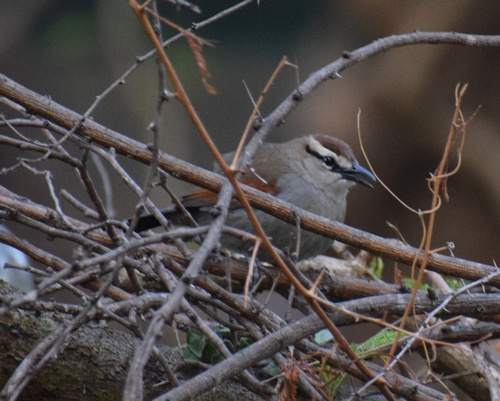 Southern Tchagra
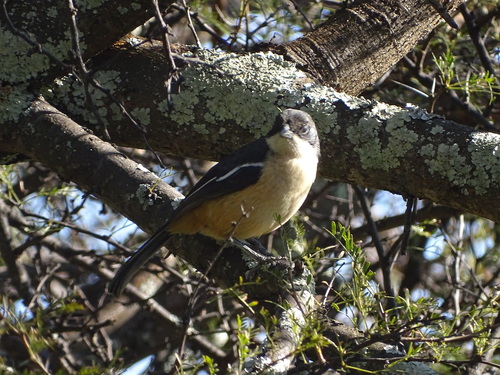 Southern Boubou
In breve
Il segno distintivo più affidabile per separare il Southern Tchagra dal Southern Boubou è il motivo della testa: il Southern Tchagra mostra una corona marrone con un forte sopracciglio bianco e una striscia nera attorno all'occhio, mentre il Southern Boubou ha una testa uniformemente scura (nera o grigia scura) senza un forte sopracciglio. In volo o posato, la striscia bianca sulle ali e i fianchi rugginosi del Southern Boubou sono distintivi, mentre il Southern Tchagra ha ali castanee e parti inferiori chiare. I giovani possono essere confusi, ma la striscia oculare color crema del Tchagra e le tonalità più opache contrastano con il motivo barrato e maculato del Boubou. Anche la struttura e la dimensione aiutano: il Southern Boubou è più pesante, più robusto e ha un becco più robusto. Entrambe le specie preferiscono una copertura densa, ma il loro comportamento e le vocalizzazioni differiscono, con il Boubou che è più timido e più schivo.
Consigli di identificazione
- Motivo della testa (tutte le età): Il Southern Tchagra ha una corona marrone, un forte sopracciglio bianco e una striscia nera attorno all'occhio—questo è il modo più rapido per separarlo dal Southern Boubou, che ha una testa uniformemente scura (nera o grigia scura) e nessun forte sopracciglio.
- Colore della corona (adulti): La corona del Tchagra è marrone (eccetto in alcune sottospecie con marrone rossiccio), mentre la testa e il dorso del Boubou sono neri (maschio) o grigio scuro (femmina).
- Sopracciglio (tutte le età): Il Tchagra mostra sempre un ampio sopracciglio bianco; il Boubou manca completamente di questa caratteristica.
- Motivo delle ali (adulti): Il Southern Boubou ha una forte striscia bianca sulle ali, visibile quando è posato o in volo; le ali ripiegate del Tchagra sono castanee senza una striscia bianca.
- Motivo della coda (adulti): Entrambi hanno code nere con bianco, ma la coda del Boubou è più lunga e ha piume esterne bianche, mentre la coda del Tchagra è con punta bianca.
- Parti inferiori (adulti): Il Tchagra è grigio chiaro sotto; il Boubou è bianco sotto, sfumando a rugginoso sul ventre inferiore, i fianchi e il sottocoda (soprattutto nei maschi e nelle femmine, meno nei giovani).
- Segni giovanili/immaturi: Il giovane Boubou è maculato di marrone chiaro sopra, con una striscia color crema sull'ala e forti barre sotto—mai mostrato dal Tchagra. Il giovane Tchagra è più opaco dell'adulto, con una striscia oculare color crema, ma mai barrato o maculato sotto.
- Struttura del becco: Il becco del Boubou è più robusto e pesante; quello del Tchagra è lungo e nero, ma più snello.
- Dimensione e bulk: Il Boubou è più pesante e bulkier (~58 g vs ~47 g), con una coda più lunga e un aspetto più robusto. Questo è sottile a meno che entrambi non siano visti insieme.
- Comportamento: Il Boubou è timido, schivo e cerca cibo in basso nella vegetazione densa; il Tchagra è più propenso a posarsi in aperto, specialmente quando canta o si esibisce.
- Canto: Il canto del Tchagra è un fischio discendente, spesso da un posatoio o in volo di esibizione; il duetto del Boubou è più complesso, liquido e variabile, con frasi ooo-whee-ooo.
- Differenze sessuali: Le femmine del Boubou sono grigio scuro sopra con una sfumatura rugginosa sul petto; i sessi del Tchagra sono simili, ma i giovani uccelli sono più opachi.
- Sovrapposizione dell'habitat: Entrambi preferiscono la macchia densa, ma il Tchagra è più costiero nella sua distribuzione, mentre il Boubou è più diffuso nel sud-est dell'Africa.
- Trappole comuni: La maculatura e le barre del giovane Boubou possono essere scambiate per un Tchagra opaco, ma la mancanza di un forte sopracciglio e la presenza di barre sono fondamentali. Il giovane Black-crowned Tchagra (non in questa coppia) può anche mostrare una corona marrone, ma è più grande e ha un becco più corto del Southern Tchagra.
- Indizi contestuali: Se l'uccello sta cantando un duetto o cercando cibo molto in basso e nascosto, sospetta il Boubou; se è posato in modo aperto e emette un fischio discendente, sospetta il Tchagra.
Taglia
Il Southern Boubou è visibilmente più grande e pesante (massa corporea ~58 g) rispetto al Southern Tchagra (~47 g). Il Boubou misura 20–22 cm di lunghezza, mentre il Tchagra è leggermente più piccolo a 17–21 cm. Il Boubou appare più robusto e massiccio, con una coda relativamente più lunga e un becco più robusto. Sul campo, questa differenza di dimensione è più evidente quando entrambe le specie sono viste fianco a fianco, ma può essere sottile quando viste da sole.
Piumaggio
- Uccelli giovanili/immaturi: I giovani Southern Tchagra sono più opachi degli adulti, con una striscia color crema attraverso l'occhio, e mancano di forti barre o maculature. I giovani Southern Boubou sono maculati di marrone chiaro sopra, hanno una sfumatura color crema sulla striscia dell'ala e sono barrati sotto—questo barrato è un segno chiave per i giovani Boubou e mai mostrato dal Tchagra.
- Adulti: Il Southern Tchagra mostra una corona marrone, una striscia nera attorno all'occhio, un ampio sopracciglio bianco, parti inferiori grigio chiaro, parti superiori marrone chiaro, ali ripiegate castanee e una coda nera con punta bianca. I maschi adulti del Southern Boubou sono neri sopra (dalla testa alla coda), con una striking striscia bianca sulle ali, una lunga coda nera con piume esterne bianche e parti inferiori bianche che sfumano a rugginoso sul ventre inferiore, sul sottocoda e sui fianchi. Le femmine sono simili ma grigio scuro sopra e hanno una sfumatura rugginosa sul petto. Il Tchagra non mostra mai la striscia bianca del Boubou o i fianchi rugginosi, e il Boubou non mostra mai il forte sopracciglio del Tchagra o le ali castanee.
Comportamento
Il Southern Boubou è notevolmente timido e schivo, cercando cibo in basso nella vegetazione densa e raramente posandosi in modo evidente. Il Southern Tchagra, pur preferendo anche la macchia densa, è più propenso a essere visto posato in aperto, specialmente durante l'esibizione. La ricerca di cibo del Boubou avviene principalmente a terra o vicino al suolo, strisciando tra i cespugli, mentre il Tchagra può essere più attivo e visibile durante i voli di canto o le esibizioni territoriali.
Habitat
Entrambe le specie si trovano in macchia densa e cespugli, ma il Southern Tchagra è più strettamente associato a cespugli costieri e macchia densa nel sud e sud-est del Sudafrica e in Eswatini. Il Southern Boubou ha una distribuzione più ampia nel sud-est dell'Africa, inclusi il sud-est dello Zimbabwe, l'est del Botswana, il Mozambico e il sud/est del Sudafrica. Entrambi preferiscono una copertura spessa, ma il Boubou può essere trovato in una gamma più ampia di habitat densi.
Voce
Il canto maschile del Southern Tchagra è un fischio discendente (ttttrtr te te te teuuu), spesso emesso da un posatoio o in volo di esibizione; la femmina risponde con un trillo tzerrrrrrrr. Il Southern Boubou è meglio conosciuto per le sue chiamate in duetto: un liquido ooo-whee-ooo, seguito da un fischio ooo-ooo-wheee o wheee-wheee seguito da ooo-whee-ooo, con molte variazioni. Il duetto del Boubou è più complesso e può essere confuso con l'oriolo dal capo nero, mentre il canto del Tchagra è più semplice e più discendente.
Southern Tchagra · Southern Boubou · I miei uccelli difficili